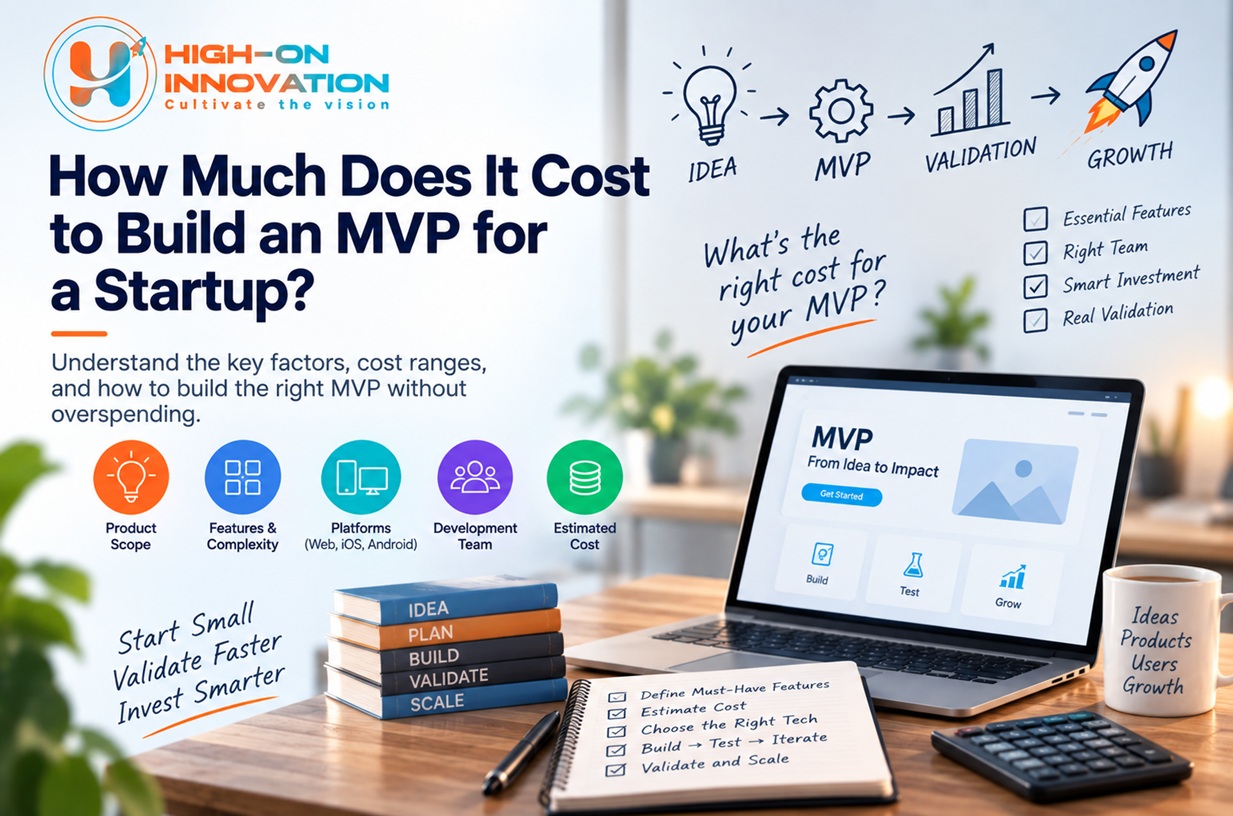
How Much Does It Cost to Build an MVP for a Startup?
Keyword Takeaways
MVP development cost depends on product complexity, features, platforms, integrations, and development team.
A simple startup MVP can cost around $10,000 to $25,000.
A medium-complexity MVP can cost around $25,000 to $60,000.
Complex MVPs involving AI, marketplaces, fintech, or multiple platforms can cost $60,000 to $150,000 or more.
Development rates are generally higher in the USA and Western Europe than in other development markets.
A lower hourly rate does not always mean a lower total MVP development cost.
The best MVP cost estimate comes from a clearly defined product scope.
The goal of an MVP is to validate a business idea, not to build the entire final product.
Introduction
For most startups, building an MVP is the first serious step from an idea toward a real product.
But before development starts, founders usually want to know one thing: how much will it cost?
The answer is not a single number.
The MVP development cost depends on what you are building, how complex the product is, how many features it requires, which platforms you want to support, and who you hire to build it.
For startups targeting customers in the USA, Canada, and Europe, a focused MVP can typically cost anywhere from $10,000 to $60,000, while complex products can require $100,000 or more.
The important question is not simply, "What is the average startup MVP cost?"
A better question is, "What is the smallest product I can build that will actually help me validate my business idea?"
That distinction can save a startup a significant amount of time and money.
What Is an MVP?
An MVP, or Minimum Viable Product, is the first usable version of a product that contains enough functionality to solve a specific customer problem.
It is not the complete version of your product.
The purpose of an MVP is to launch the core idea, put it in front of real users, collect feedback, and learn what should be improved or developed next.
For example, imagine a startup wants to build a food delivery marketplace.
The final product might eventually include loyalty programs, AI recommendations, advanced analytics, delivery optimization, multiple payment methods, promotional tools, and dedicated mobile applications.
The MVP may only need customer registration, restaurant listings, menu browsing, cart functionality, payments, order placement, and basic order management.
This approach allows the startup to validate demand before investing heavily in additional features.
How Much Does It Cost to Build an MVP?
There is no fixed MVP development pricing model that applies to every startup.
As a general planning range, a simple MVP may cost around $10,000 to $25,000.
A medium-complexity MVP can cost approximately $25,000 to $60,000.
A complex MVP can cost $60,000 to $150,000 or more.
Products involving artificial intelligence, multiple user roles, real-time functionality, complex payment systems, advanced integrations, or multiple platforms can require significantly more development effort.
These numbers are estimates rather than fixed prices.
The actual MVP cost estimate should be based on the product requirements, development hours, technology stack, design requirements, and team structure.
What Factors Affect MVP Development Cost?
1. Product Complexity
Product complexity is one of the biggest factors affecting MVP development cost.
A basic application with registration, forms, dashboards, and simple database operations is relatively straightforward.
A platform involving AI, real-time communication, payments, complex workflows, multiple user roles, and third-party integrations requires considerably more engineering.
Two products can have the same number of screens and completely different development costs.
The functionality behind the screens matters more than the screen count.
2. Feature Scope
Every feature adds development and testing requirements.
A single feature may require UI/UX design, frontend development, backend logic, database changes, testing, and documentation.
This is why adding "just a few more features" can quickly increase your startup MVP cost.
A good MVP focuses on the features that are necessary to test the core business assumption.
3. Number of Platforms
A web MVP is different from a product that requires web, iOS, and Android applications.
Supporting multiple platforms increases development, testing, deployment, and maintenance requirements.
For some startups, beginning with one platform can be a practical way to control MVP development pricing while still validating the product.
4. UI/UX Design
UI/UX design is another important part of the MVP budget.
Depending on the product, design work may include user flows, wireframes, prototypes, responsive layouts, interface design, and design systems.
Your MVP doesn't need excessive animations or unnecessary visual complexity.
It does need to be easy for users to understand and use.
5. Backend and Architecture
The backend is where much of the product's business logic lives.
It may include authentication, authorization, APIs, databases, payment processing, notifications, file storage, business rules, and integrations.
For a complex product, backend development can represent a significant portion of the total MVP software development cost.
6. Third-Party Integrations
Many startups use existing services instead of building everything themselves.
These can include payment gateways, CRM platforms, email services, SMS providers, mapping services, analytics platforms, cloud infrastructure, and AI APIs.
Using existing services can reduce development time, but integrations still require authentication, API development, webhooks, error handling, security, and testing.
Startup MVP Development Cost in USA, Canada, and Europe
Development location can have a major impact on MVP development pricing.
US development companies generally have higher hourly rates than many other markets. Canada and Western Europe also tend to have higher rates, while Central and Eastern European markets can offer different pricing levels.
However, hourly rate alone should not determine your decision.
For example, a developer charging $50 per hour and taking 1,000 hours costs $50,000.
A developer charging $100 per hour but completing the same scope in 400 hours costs $40,000.
The better comparison is the total cost of delivering a reliable MVP.
Startups should consider technical expertise, communication, development process, quality assurance, delivery timeline, and post-launch support alongside price.
MVP Development Cost by Product Type
SaaS MVP
A SaaS MVP may include authentication, user accounts, dashboards, subscriptions, payment processing, core functionality, notifications, and an admin panel.
A simple SaaS MVP can cost approximately $20,000 to $50,000.
More advanced SaaS products with automation, AI, multiple user roles, analytics, and complex workflows can cost considerably more.
Mobile App MVP
A mobile MVP can require mobile applications, backend APIs, databases, authentication, push notifications, payments, and administration tools.
A typical mobile MVP can cost around $20,000 to $70,000 or more.
Supporting both iOS and Android can increase the budget, although cross-platform technologies can reduce duplicated development work in some cases.
Marketplace MVP
A marketplace typically supports customers, sellers, service providers, and administrators.
The MVP may require profiles, listings, search, filters, payments, orders, messaging, reviews, notifications, and administration.
Marketplace MVP development can cost approximately $30,000 to $80,000 or more.
AI MVP
AI products can require additional engineering for AI APIs, large language models, document processing, vector databases, retrieval systems, AI agents, and automated workflows.
AI MVP development can start around $40,000 and can exceed $100,000 for technically complex products.
The AI API is only one part of the cost. Building a reliable product around the AI functionality is where much of the engineering work happens.
How to Reduce Your MVP Development Cost
Focus on One Core Problem
The easiest way to control your MVP development budget is to keep the scope focused.
Identify the primary customer problem your product needs to solve.
If a feature doesn't contribute to solving that problem or validating an important business assumption, consider moving it to a later release.
Prioritize Features
Separate features into essential and non-essential functionality.
Your first release should contain the features required to deliver the core value of your product.
Additional features can be added after you have real customer feedback.
Use Existing Technologies
You don't need to build every component from scratch.
Existing services can handle payments, authentication, email, SMS, cloud storage, analytics, maps, and AI functionality.
Using proven services can reduce unnecessary development work.
Avoid Premature Scaling
Your MVP doesn't need to support millions of users on launch day.
The architecture should be designed sensibly so it can evolve, but investing heavily in infrastructure for users you don't have yet can unnecessarily increase your initial MVP project cost.
How Long Does It Take to Build an MVP?
The development timeline depends on product complexity and scope.
A simple MVP may take around six to ten weeks.
A medium-complexity MVP may take approximately ten to sixteen weeks.
A complex product involving AI, multiple platforms, advanced integrations, or complicated workflows can take sixteen to twenty-four weeks or longer.
A shorter timeline isn't automatically better.
Rushing development can result in poor testing, technical debt, and bugs that become more expensive to fix after launch.
Clear requirements and realistic planning are usually more valuable than simply trying to build faster.
How HOI Can Help With MVP Development
High On Innovation helps startups turn product ideas into practical, scalable software.
The process starts by understanding the business problem and identifying what the MVP actually needs to accomplish.
From there, the team can help define the product scope, prioritize features, design the user experience, develop the core functionality, integrate required services, test the product, and prepare it for launch.
HOI works across different types of products, including SaaS platforms, AI applications, marketplaces, mobile applications, and custom software solutions.
The focus is not on adding as many features as possible.
The focus is on building the functionality that matters, launching it with real users, and creating a foundation that can evolve as the product is validated.
If you are unsure about your MVP development cost, defining the scope before development is the best place to start.
Frequently Asked Questions About MVP Development Cost
1. What is the average MVP development cost for a startup?
A simple MVP can cost around $10,000 to $25,000, while medium-complexity products can cost approximately $25,000 to $60,000. Complex products can cost $60,000 to $150,000 or more.
2. What is included in MVP development pricing?
Depending on the development company, pricing may include product planning, UI/UX design, frontend development, backend development, database development, integrations, QA, deployment, and post-launch support.
Always confirm exactly what is included before accepting a development quote.
3. Is it cheaper to build an MVP with freelancers?
Freelancers can have lower hourly rates, but that doesn't automatically mean a lower total cost. Managing multiple freelancers for design, development, QA, and deployment can also increase project-management requirements.
4. How can I get an accurate MVP cost estimate?
Start with a clear product scope. Define your target users, core problem, essential features, platforms, integrations, and expected workflows. A development team can then estimate the required effort and provide a more reliable cost estimate.
5. How much does an MVP cost in the USA?
The cost can vary significantly depending on the product and development team. A focused MVP may cost tens of thousands of dollars, while complex products can exceed $100,000.
6. Should I build every planned feature into my MVP?
No. That defeats the purpose of an MVP.
Build the features necessary to test your core business idea. Features that aren't essential can be added after you have evidence that users want the product.
Conclusion
MVP development cost depends on the product, not simply on the fact that it is an MVP.
A simple startup MVP may cost around $10,000 to $25,000, while a medium-complexity product can require $25,000 to $60,000. Complex applications involving AI, marketplaces, multiple platforms, or advanced integrations can require $60,000 to $150,000 or more.
The biggest factor you can control is scope.
Instead of trying to build the complete product immediately, focus on the smallest reliable version that can solve a real customer problem and generate useful feedback.
A good MVP isn't the cheapest product you can build.
It is the smallest useful product you can launch, learn from, and improve.
If you're planning an MVP and need help understanding the scope, development effort, and expected investment, High On Innovation can help you turn your idea into a practical development plan.
Harsit Gupta is the Founder of High-On Innovation and is responsible for shaping the company's vision, business model, growth strategy, and market expansion initiatives. He specializes in identifying emerging opportunities, driving innovation, and helping businesses navigate digital transformation in a rapidly evolving technology landscape. His expertise includes business strategy, digital innovation, startup growth, market positioning, and future-focused technology adoption.
Comments
Loading comments…
Latest Market Trends
Sep 8, 2026
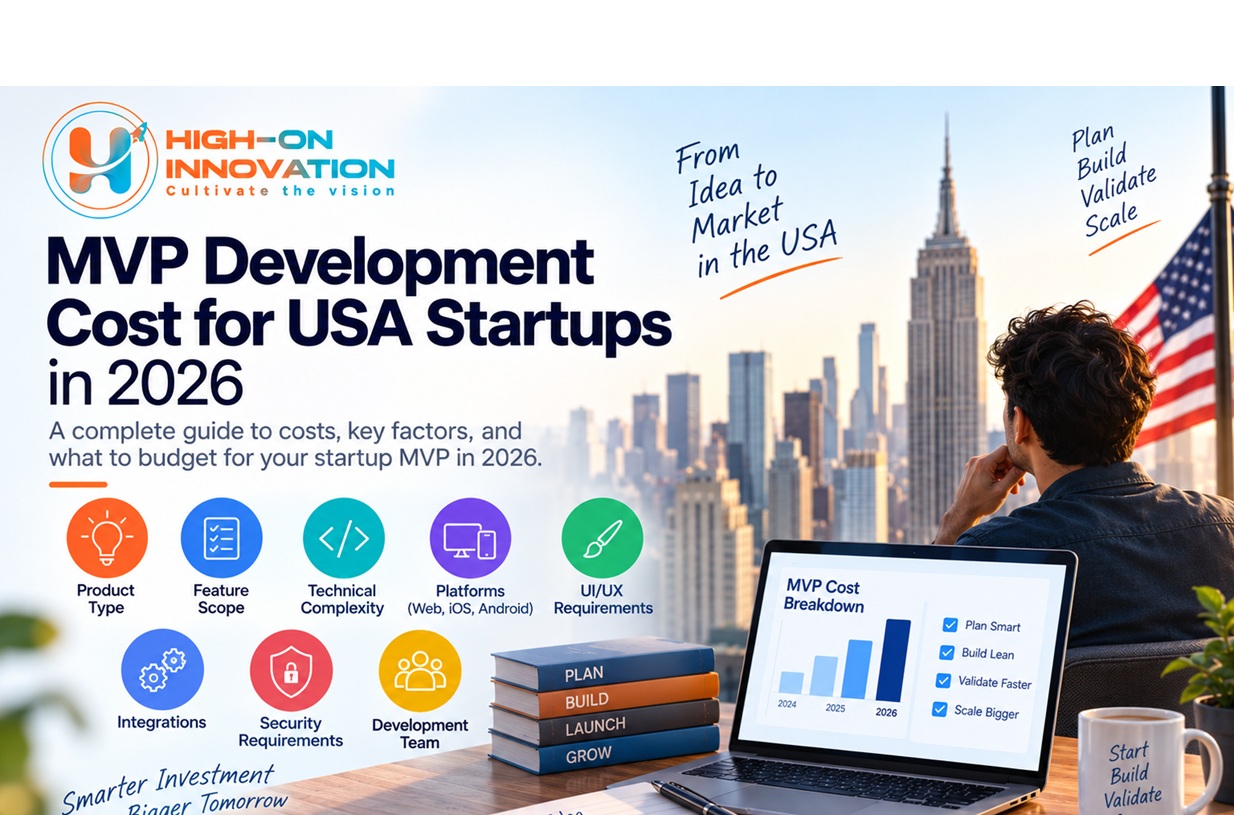
MVP Development Cost for USA Startups in 2026
An MVP, or Minimum Viable Product, gives founders a way to turn an idea into a usable product, launch it with real users, collect feedback, and understand whether the market actually wants the solution.
Sep 4, 2026
MVP Development for Early-Stage Startups: From Product Idea to Market Validation
Learn how MVP development for early-stage startups works, what to include in an MVP, development costs, technology, testing, launch, and how to validate your startup idea.
Sep 3, 2026
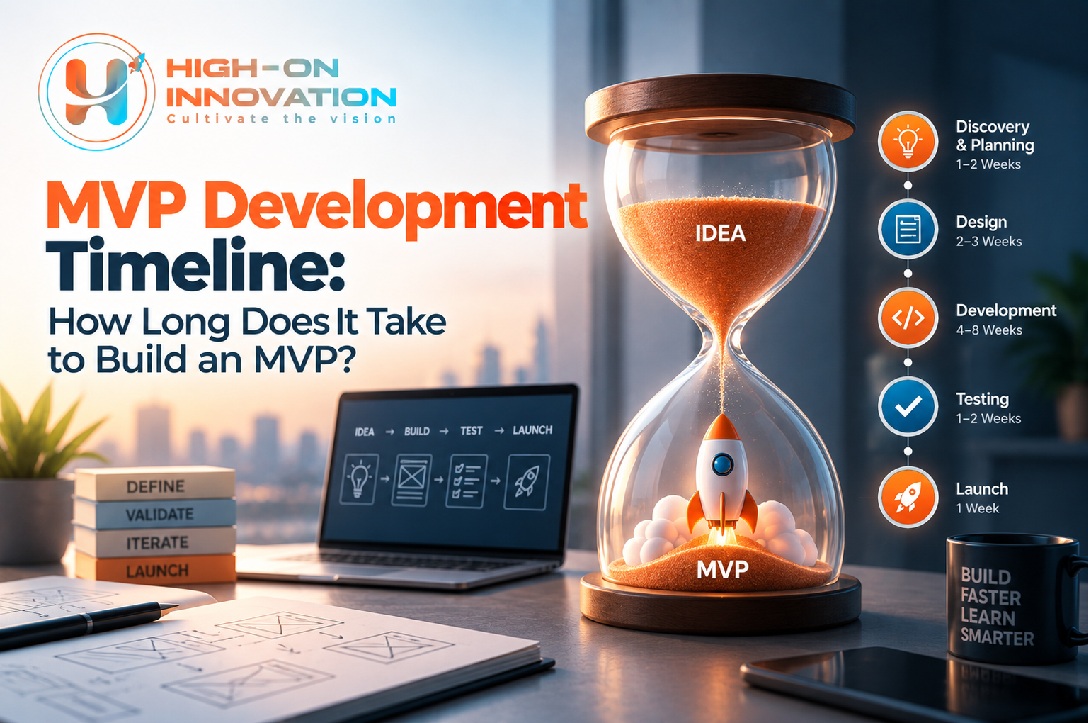
MVP Development Timeline: How Long Does It Take to Build an MVP?
For a startup, knowing how long MVP development takes is critical for planning investment, coordinating teams, preparing a launch strategy, and setting realistic expectations with stakeholders.
There is no universal MVP development timeline. A simple MVP with a limited number of features can be launched in a matter of weeks, while a complex SaaS platform, marketplace, fintech product, or AI-powered application may take several months.
Popular Post
MVP Development Cost for USA Startups in 2026
An MVP, or Minimum Viable Product, gives founders a way to turn an idea into a usable product, launch it with real users, collect feedback, and understand whether the market actually wants the solution.
MVP Development for Early-Stage Startups: From Product Idea to Market Validation
Learn how MVP development for early-stage startups works, what to include in an MVP, development costs, technology, testing, launch, and how to validate your startup idea.
MVP Development Timeline: How Long Does It Take to Build an MVP?
For a startup, knowing how long MVP development takes is critical for planning investment, coordinating teams, preparing a launch strategy, and setting realistic expectations with stakeholders.
There is no universal MVP development timeline. A simple MVP with a limited number of features can be launched in a matter of weeks, while a complex SaaS platform, marketplace, fintech product, or AI-powered application may take several months.
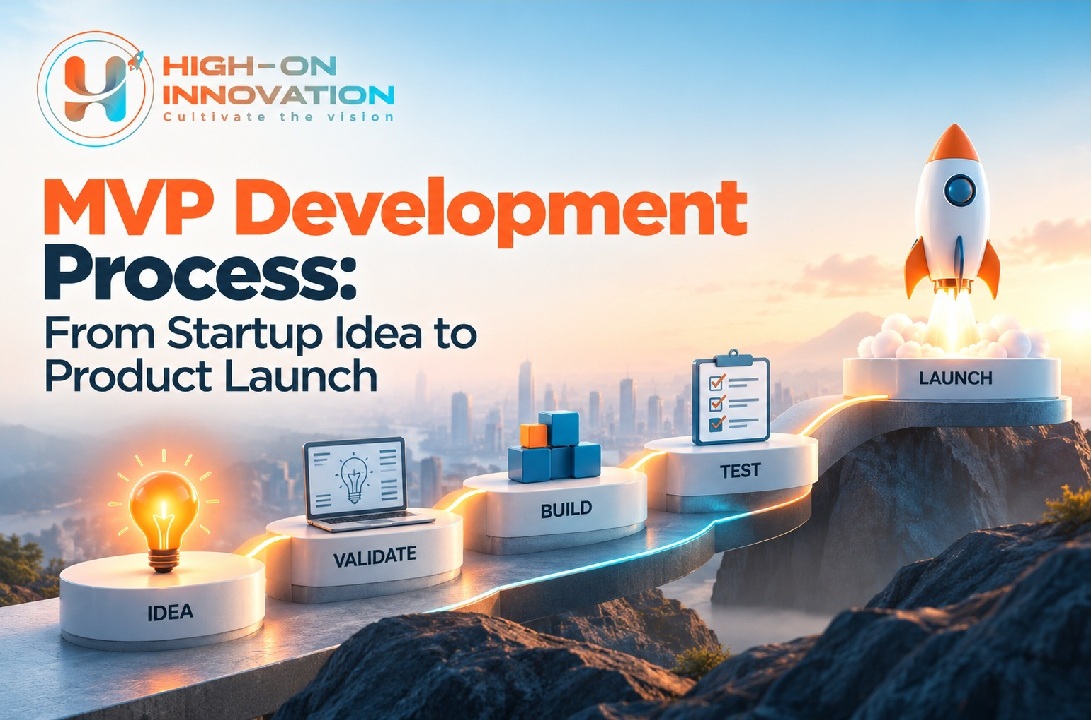
MVP Development Process: From Startup Idea to Product Launch
A great startup idea is only the beginning. Turning that idea into a functional product requires a structured MVP development process that validates assumptions, prioritizes essential features, controls development costs, and gets the product in front of real users quickly.
A Minimum Viable Product (MVP) is not simply a smaller version of a finished product. It is a focused product built around the core problem your startup wants to solve. The goal is to launch with enough functionality to attract early users, collect feedback, and determine whether the product has genuine market potential.