MVP Development for Early-Stage Startups: From Product Idea to Market Validation
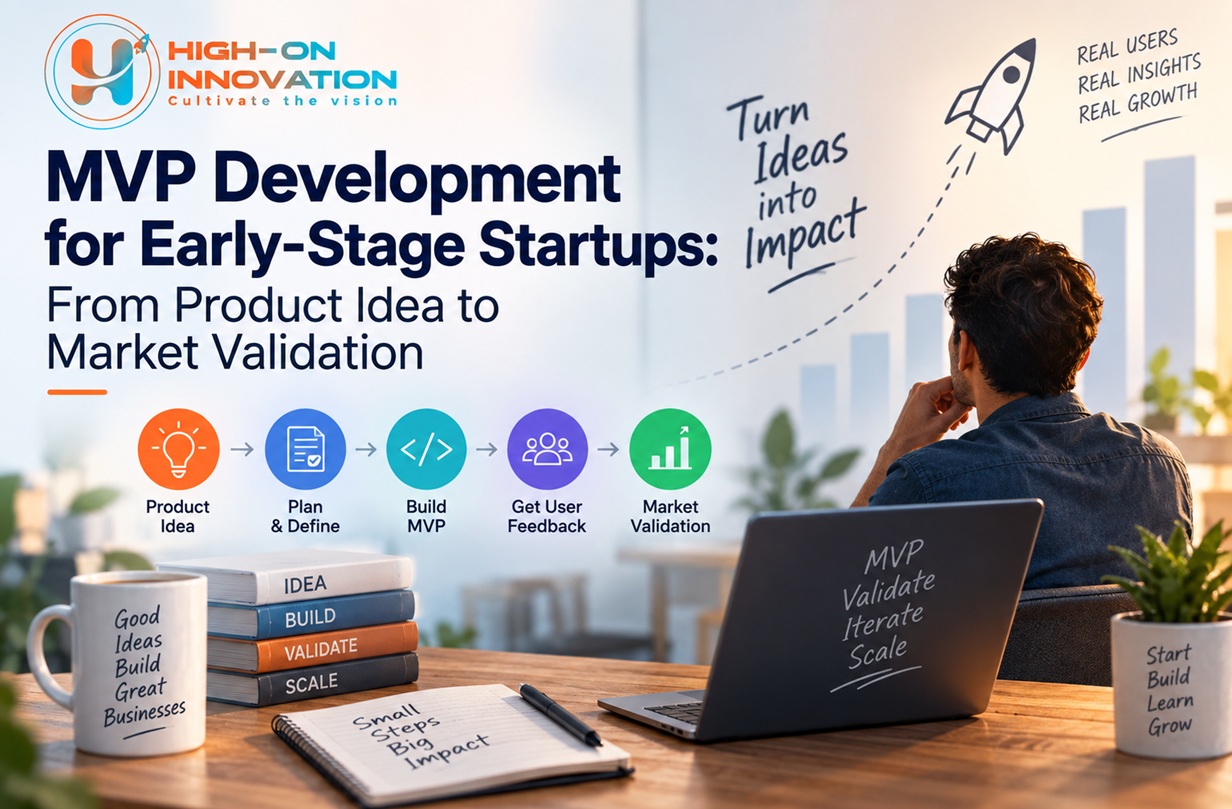
MVP Development for Early-Stage Startups
Building a startup product does not require building everything at once. For an early-stage startup, the smarter approach is to identify the core problem, build the smallest useful version of the solution, launch it to real users, and use their feedback to decide what comes next.
This is the fundamental idea behind MVP development for early-stage startups.
A Minimum Viable Product (MVP) allows founders to turn an idea into a functional product without investing the time and money required for a fully developed platform. However, an MVP is not simply a product with fewer features. A successful MVP contains the right features needed to solve a specific customer problem and validate the business hypothesis.
For startups, this distinction is critical.
A well-planned MVP can help validate product-market fit, attract early users, demonstrate the concept to investors, generate real-world feedback, and establish a foundation for future product development.
In this guide, we explain everything an early-stage startup should consider when planning, designing, developing, launching, and improving an MVP.
Key Takeaways
An MVP is the smallest functional version of a product that delivers meaningful value to its target users.
MVP development for early-stage startups should focus on problem validation rather than feature quantity.
Startups should define their target users, core problem, value proposition, and primary user journey before development begins.
An MVP should contain only the features necessary to test the most important business and product assumptions.
UX/UI design, technology architecture, security, analytics, testing, and scalability should not be ignored simply because the product is an MVP.
A good MVP should be simple enough to launch quickly but technically sound enough to evolve.
Post-launch feedback and product analytics are essential for deciding which features to build next.
The right startup product development services partner can help founders move from idea validation to product launch and continuous improvement.
What Is an MVP for a Startup?
A Minimum Viable Product, or MVP, is an initial version of a product that includes enough functionality to solve a meaningful customer problem and collect real-world feedback.
The objective is not to build the final product.
The objective is to answer important questions such as:
Does the target customer actually have this problem?
Does the proposed solution solve it?
Will users adopt the product?
Which features do users actually need?
Will users pay for the solution?
What should be developed next?
For example, imagine a startup wants to build an AI-powered platform that helps small businesses manage customer inquiries.
The complete product might eventually include:
AI chatbot
CRM
WhatsApp integration
Email automation
Lead scoring
Customer analytics
Sales pipeline
Marketing automation
Reporting
Mobile applications
Multiple integrations
Building all of these features immediately could require significant time and investment.
An MVP might instead focus on:
Customer registration
Business profile setup
AI-powered inquiry handling
Lead capture
Basic conversation history
Simple dashboard
That may be enough to determine whether businesses actually want the solution.
The MVP is therefore a learning vehicle, not merely a cheaper version of the final product.
Why Do Early-Stage Startups Need an MVP?
Early-stage startups typically operate under three constraints:
Limited resources + uncertain market demand + pressure to learn quickly.
An MVP helps address all three.
1. Validate the Business Idea
An idea can look highly promising on paper but fail when exposed to real users.
An MVP allows founders to test the idea in the real market before making a larger investment.
Instead of asking:
"Do you think this is a good idea?"
the startup can ask:
"Will you actually use this product?"
Real user behavior provides much stronger validation than assumptions.
2. Reduce Development Risk
Building a complete product before validating demand creates a major risk.
A startup could spend months developing dozens of features only to discover that users do not need the product.
An MVP reduces this risk by introducing the product to the market earlier.
3. Get Real Customer Feedback
Early users can reveal:
What they like
What they dislike
Where they struggle
Which features they expect
Which features they ignore
What prevents them from converting
What would make them recommend the product
This feedback becomes the foundation for subsequent development.
4. Attract Investors and Stakeholders
A functional MVP can make a startup's proposition much easier to understand.
Instead of presenting only:
Business plans
Wireframes
Pitch decks
Market research
founders can demonstrate an actual product.
An MVP can help demonstrate:
Product feasibility
User adoption
Early traction
Customer feedback
Revenue potential
Technology capability
What Should an Early-Stage Startup MVP Include?
One of the biggest challenges in early stage startup MVP development is determining what should actually be included.
The answer is not "as few features as possible."
The better question is:
What is the minimum functionality required to deliver the core value proposition and validate the most important assumptions?
A strong MVP generally includes the following components.
1. Clearly Defined Target User
Before developing anything, the startup should identify exactly who the MVP is intended for.
For example:
Weak definition:
Small businesses
Better definition:
Small e-commerce businesses with 5–20 employees that receive more than 100 customer inquiries per month.
The more specific the initial audience, the easier it becomes to design the product around a genuine problem.
2. A Clearly Defined Problem
The MVP should solve one primary problem.
Ask:
What problem are users experiencing?
How are they solving it today?
Why are existing solutions inadequate?
How frequently does the problem occur?
How valuable would solving it be?
A startup should avoid trying to solve multiple unrelated problems in version one.
3. Core Value Proposition
The value proposition explains why customers should care about the product.
A simple framework is:
For [target customer], our product helps [solve problem] by [solution], resulting in [benefit].
This becomes the foundation for MVP feature selection.
4. Core User Journey
The MVP should support a complete user journey.
For example:
Sign up → Set up account → Perform core action → Receive result → Complete desired outcome
This is more important than having a large number of isolated features.
A startup should ensure that a user can enter the product and actually experience its core value.
5. Essential Features
Once the core journey is defined, features can be categorized into three groups:
Must Have
Features without which the core product cannot work.
Should Have
Useful features that improve the experience but are not essential for initial validation.
Later
Features that can be developed after the MVP demonstrates demand.
This prioritization prevents feature creep, one of the most common problems in startup product development.
MVP Feature Prioritization Framework
A practical approach is to evaluate every proposed feature against four questions:
QuestionPurposeDoes it solve the core customer problem?Customer valueIs it required for the primary user journey?Product necessityDoes it help validate our business hypothesis?Learning valueCan we launch without it?MVP prioritization
If a feature fails most of these tests, it probably does not belong in version one.
6. UX/UI Design
An MVP still needs good user experience.
"Minimum viable" does not mean "poorly designed."
Users should be able to:
Understand the product
Navigate easily
Complete important actions
Understand system responses
Recover from errors
Access the product across relevant devices
For most startups, the MVP design process should include:
User flow → Wireframes → UI design → Prototype → Usability review → Development
The goal is not to create unnecessary visual complexity. The goal is to make the core product experience intuitive.
7. Technology Architecture
Technology decisions made during MVP development can affect the startup for years.
The startup does not necessarily need an enterprise-scale architecture on day one, but the MVP should have a technical foundation that allows reasonable growth.
Depending on the product, this may include:
Frontend application
Backend/API layer
Database
Authentication
Cloud infrastructure
Third-party integrations
Payment processing
Analytics
Monitoring
Security controls
The technology stack should be selected based on:
Product requirements
Development speed
Available expertise
Scalability requirements
Integration requirements
Security
Long-term maintenance
8. Authentication and User Management
If the product requires accounts, the MVP may need:
Registration
Login
Password recovery
Email verification
User profile
Account management
Role-based access
However, authentication should remain as simple as possible while meeting the product's security requirements.
9. Data and Database Structure
Even an MVP generates valuable business data.
The database should be designed around the product's actual requirements while avoiding unnecessary complexity.
Important considerations include:
User data
Product data
Transaction data
Activity history
Permissions
Data relationships
Backups
Data retention
Poor database planning can make future product expansion unnecessarily difficult.
10. Security
Security should not be treated as a feature reserved for the final product.
An MVP may handle:
Customer information
Login credentials
Payment information
Business data
Internal documents
Personal information
Depending on the product and market, security requirements may include:
Secure authentication
Encryption
Access controls
Secure APIs
Data backups
Vulnerability management
Audit logging
Privacy compliance
The exact requirements depend on the product, industry, geography, and type of data being processed.
11. Analytics and Product Tracking
One of the biggest mistakes startups make is launching an MVP without knowing how users interact with it.
Product analytics can help answer:
How many users register?
How many complete onboarding?
Which feature is used most?
Where do users leave?
How frequently do users return?
How many users complete the core action?
Which acquisition channel produces better users?
The startup should define key metrics before launch, not after.
12. Feedback Mechanism
The MVP should make it easy for early users to provide feedback.
This can include:
Feedback forms
In-product surveys
Support channels
User interviews
Email feedback
Rating prompts
Feature requests
The objective is to create a continuous loop:
Build → Launch → Measure → Learn → Improve
What Should NOT Be Included in an MVP?
Knowing what to exclude is just as important as knowing what to include.
Common features that can often wait include:
Advanced personalization
Complex dashboards
Numerous third-party integrations
Multiple payment options
Extensive automation
Advanced reporting
Complex AI features without validated demand
Multiple mobile platforms when one is sufficient
Highly granular permission systems
Rarely used administrative functions
This does not mean these features are unnecessary.
It means they may not be necessary for the first validation cycle.
MVP Development Process for Early-Stage Startups
A structured MVP development process typically follows these stages.
Stage 1: Discovery
The first step is understanding:
Business idea
Target audience
Customer problem
Competitors
Business model
Product objectives
Technical requirements
The outcome should be a clear product definition.
Stage 2: Market and User Research
Research helps validate the assumptions behind the product.
This may include:
Competitor analysis
Customer interviews
Market research
User personas
Problem validation
Existing solution analysis
The goal is to understand what users already have and where the opportunity exists.
Stage 3: Define the MVP Scope
At this stage, features are prioritized.
The team defines:
Core features
User journeys
MVP boundaries
Technical requirements
Success metrics
Future features
A clear scope protects the project from uncontrolled expansion.
Stage 4: UX/UI Design
The team converts requirements into:
User flows
Wireframes
Prototypes
Interface designs
Design system components
Usability should be tested before significant development effort is invested.
Stage 5: MVP Development
Development generally involves:
Frontend development
Backend development
Database development
API development
Third-party integrations
Authentication
Cloud setup
Analytics implementation
Agile development can allow startups to review progress continuously instead of waiting until the end.
Stage 6: Quality Assurance
Testing should cover:
Functional testing
Usability testing
Responsive testing
Integration testing
Performance testing
Security testing
Cross-browser testing
The MVP should be minimal, but it should still be reliable.
Stage 7: Launch
The initial launch can be controlled rather than immediately targeting a large audience.
Possible approaches include:
Private beta
Invite-only launch
Limited geographic launch
Early adopter program
Pilot customers
This allows the startup to identify issues before scaling acquisition.
Stage 8: Measure and Learn
After launch, the team reviews:
User behavior
Activation
Engagement
Retention
Conversion
Feedback
Revenue
Product issues
The results determine what should happen next.
MVP vs Full Product Development
An MVP and a full-scale product are not competing approaches.
They are different stages of product development.
MVP Development Full Product Development
Focuses on core functionality Includes broader functionality
Validates assumptions Optimizes and scales the product
Smaller initial investment Larger investment
Faster launch Longer development cycle
Focused user segment Broader market
Learning-oriented Growth-oriented
Frequent iteration Structured product expansion
For an early-stage startup, starting with an MVP can reduce the risk of making a large investment before understanding customer demand.
How Much Does MVP Development Cost?
There is no single fixed cost for an MVP.
The budget depends on factors such as:
Product complexity
Number of platforms
Number of features
UX/UI requirements
Backend complexity
Third-party integrations
AI requirements
Security requirements
Development team location
Testing requirements
Infrastructure
A simple web-based MVP can be substantially less expensive than a platform requiring sophisticated AI, real-time communication, complex integrations, and mobile applications.
The better approach is to estimate cost after defining the MVP scope rather than choosing an arbitrary budget first.
How Long Does MVP Development Take?
The development timeline also varies significantly.
A simple MVP may be developed relatively quickly, while a technically complex product can require considerably more time.
The timeline generally depends on:
Discovery + Design + Development + Integration + Testing + Launch
Startups should be cautious of agencies that promise an unrealistically short timeline without first understanding the product requirements.
The goal should be:
Launch as quickly as possible without compromising the core product experience, security, and technical foundation.
Common MVP Development Mistakes Startups Should Avoid
1. Building Too Many Features
Feature overload increases:
Cost
Development time
Complexity
Testing requirements
Launch risk
Start with the core problem.
2. Building Without User Validation
A technically impressive product can still fail if it solves a problem users do not care about.
Validate the problem before scaling development.
3. Treating MVP as a Cheap Prototype
An MVP should be functional enough for real users.
A clickable prototype and a working MVP serve different purposes.
4. Ignoring UX
Users do not judge your product based on the amount of code behind it.
They judge whether it solves their problem easily.
5. Ignoring Analytics
Without data, startups may rely entirely on assumptions when deciding what to build next.
6. Choosing Technology Only Because It Is Popular
The "latest" technology is not automatically the right technology.
Technology decisions should support:
Product requirements
Development speed
Reliability
Scalability
Maintenance
7. No Post-Launch Roadmap
An MVP launch is not the end of the project.
The startup should already have a process for:
Feedback → Prioritization → Development → Testing → Release
How to Measure MVP Success
Launching the product is only the beginning.
The startup should define success metrics based on its business model.
Important metrics may include:
Acquisition
How many relevant users discover and register for the product?
Activation
How many users experience the product's core value?
Engagement
How frequently do users interact with the product?
Retention
Do users continue using the product?
Conversion
How many users become paying customers or complete the desired business action?
Revenue
Does the product generate measurable commercial value?
Customer Feedback
Do users consider the product valuable enough to continue using or recommending it?
A startup should avoid measuring MVP success purely by the number of features delivered.
The real measure is what the startup learns and whether users demonstrate meaningful demand.
What Happens After the MVP?
After launch, startups generally have three possible outcomes.
1. Strong Validation
Users demonstrate clear demand.
The startup can invest in:
Scaling
Additional features
Marketing
Automation
Infrastructure
Customer acquisition
2. Partial Validation
Users like the concept but identify significant problems.
The startup can modify the product and run another validation cycle.
3. Weak Validation
Users do not demonstrate meaningful demand.
The startup may need to:
Change the value proposition
Target a different audience
Solve a different problem
Pivot the product
Stop development before making a larger investment
This is one of the major advantages of MVP development.
It allows startups to discover these answers earlier and with less investment.
How HOI Helps Startups With MVP Development
At High-On Innovation (HOI), MVP development can be approached as a complete product journey rather than simply a software development assignment.
Our approach can support startups from the initial idea through product launch and subsequent product evolution.
1. Product Discovery
We help translate the startup idea into a structured product concept by defining:
Target users
Business problem
Product objectives
Core value proposition
Primary user journeys
MVP requirements
2. MVP Strategy and Scope
The product scope is organized around the features that matter most for initial validation.
This helps reduce unnecessary development while keeping the product commercially useful.
3. UX/UI Design
The product experience is designed around the user's actual journey, from onboarding through the core product interaction.
4. Custom MVP Development
HOI can support development across the required technology layers, including:
Web applications
Mobile applications
Backend systems
APIs
Databases
Cloud infrastructure
Third-party integrations
AI-powered functionality
5. Quality Assurance
Testing helps ensure that the MVP is stable, usable, and ready for real-world users.
6. Launch and Continuous Improvement
After launch, the product can be evaluated using user feedback and performance data.
The next development cycle can then focus on features that demonstrate genuine customer value.
Why Choose HOI for Startup Product Development Services?
The right product development partner should understand that startups are not simply buying software development.
They are trying to reduce uncertainty and discover whether their product can succeed in the market.
HOI's approach can therefore combine:
Business understanding + Product strategy + UX/UI + Technology + Development + Testing + Continuous improvement
This allows startups to move from:
Idea → Product Definition → MVP → Launch → Validation → Product Growth
rather than treating development as an isolated technical activity.
Frequently Asked Questions About MVP Development
What is MVP development for early-stage startups?
MVP development for early-stage startups is the process of creating the smallest functional version of a product that solves a core customer problem and allows the startup to validate its business and product assumptions using real users.
What should an early-stage startup include in its MVP?
An MVP should generally include a clearly defined target audience, core problem, value proposition, primary user journey, essential features, usable UX/UI, appropriate technology architecture, security, analytics, testing, and a mechanism for collecting user feedback.
How many features should an MVP have?
There is no universal number of features. The MVP should contain only the features required to deliver the core value and test the startup's most important assumptions.
Is an MVP the final product?
No. An MVP is the first functional version of a product designed to generate learning and validation. The product can evolve based on user behavior and feedback.
How long does it take to develop an MVP?
The timeline depends on product complexity, features, technology, integrations, platforms, design requirements, and testing. A simple MVP may take considerably less time than a complex platform with AI, real-time functionality, or multiple integrations.
How much does startup MVP development cost?
MVP development costs vary based on product scope and technical complexity. The most reliable way to estimate cost is to define and prioritize the MVP requirements before development begins.
Should an MVP be scalable?
An MVP does not need to be built for unlimited scale from day one. However, its architecture should be designed intelligently enough to support reasonable future growth without requiring a complete rebuild.
Can an MVP help attract investors?
Yes. A working MVP can provide investors with tangible evidence of the product concept, technology feasibility, user feedback, traction, and potential commercial demand.
What are startup product development services?
Startup product development services can cover the complete process of turning a business idea into a working digital product. Depending on the provider, services can include product discovery, MVP strategy, UX/UI design, software development, testing, deployment, analytics, and ongoing product improvement.
Final Thoughts
Building a startup product is not about developing the largest possible feature set.
It is about learning what customers actually need before making a large investment.
A well-designed MVP gives early-stage startups a practical way to test their assumptions, launch faster, collect real user feedback, and make better product decisions.
The most effective approach is to start with one clearly defined problem, identify the smallest set of features required to solve it, build a reliable product experience, launch it to real users, measure what happens, and continuously improve.
For startups looking for MVP development for early stage startups, the objective should therefore not simply be:
"How quickly can we build our product?"
It should be:
"How quickly can we build, launch, learn, and move toward a product customers genuinely want?"
That is what makes an MVP valuable.
Author Bio
Harsit Gupta
Harsit Gupta is a technology and digital product professional focused on helping businesses turn ideas into practical digital solutions. His perspective covers product development, emerging technologies, software solutions, and the evolving needs of modern businesses. Through his work, he focuses on connecting business objectives with technology to create practical, scalable digital products.
Harsit Gupta is the Founder of High-On Innovation and is responsible for shaping the company's vision, business model, growth strategy, and market expansion initiatives. He specializes in identifying emerging opportunities, driving innovation, and helping businesses navigate digital transformation in a rapidly evolving technology landscape. His expertise includes business strategy, digital innovation, startup growth, market positioning, and future-focused technology adoption.
Comments
Loading comments…
Latest Market Trends
Sep 3, 2026
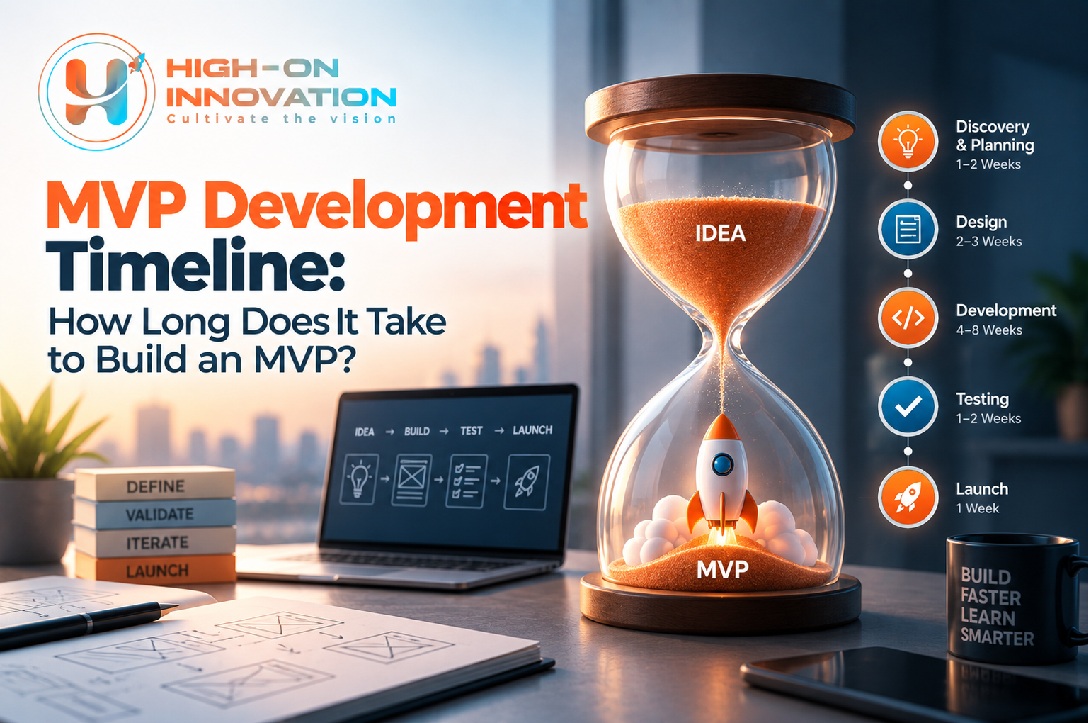
MVP Development Timeline: How Long Does It Take to Build an MVP?
For a startup, knowing how long MVP development takes is critical for planning investment, coordinating teams, preparing a launch strategy, and setting realistic expectations with stakeholders.
There is no universal MVP development timeline. A simple MVP with a limited number of features can be launched in a matter of weeks, while a complex SaaS platform, marketplace, fintech product, or AI-powered application may take several months.
Sep 3, 2026
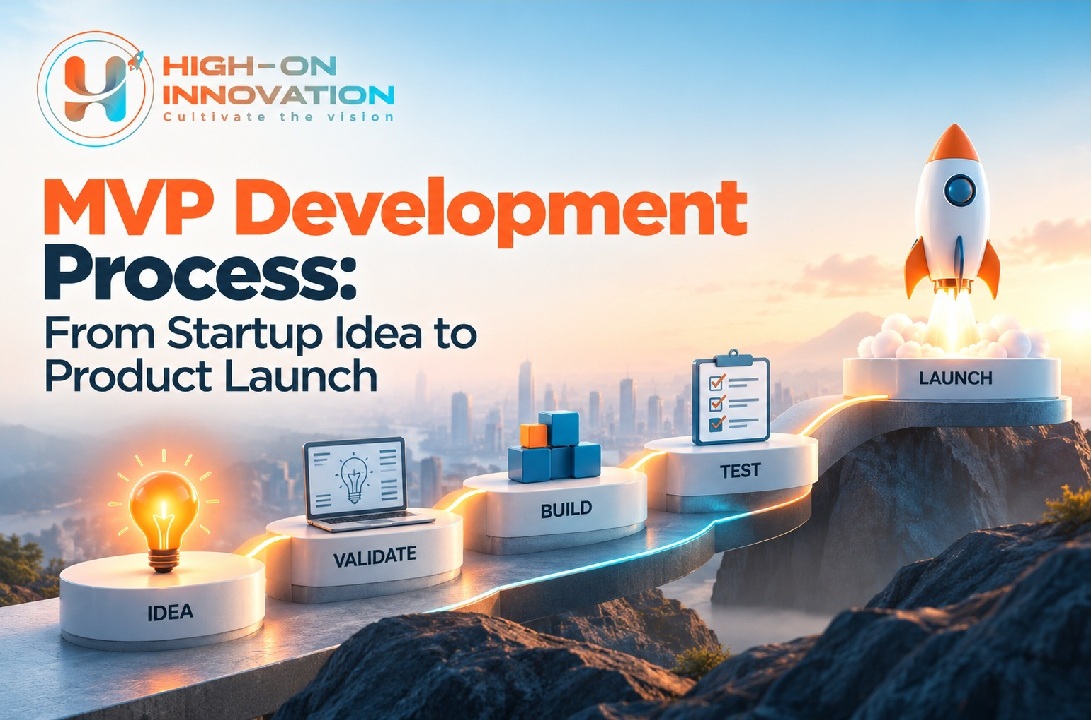
MVP Development Process: From Startup Idea to Product Launch
A great startup idea is only the beginning. Turning that idea into a functional product requires a structured MVP development process that validates assumptions, prioritizes essential features, controls development costs, and gets the product in front of real users quickly.
A Minimum Viable Product (MVP) is not simply a smaller version of a finished product. It is a focused product built around the core problem your startup wants to solve. The goal is to launch with enough functionality to attract early users, collect feedback, and determine whether the product has genuine market potential.
Aug 26, 2026
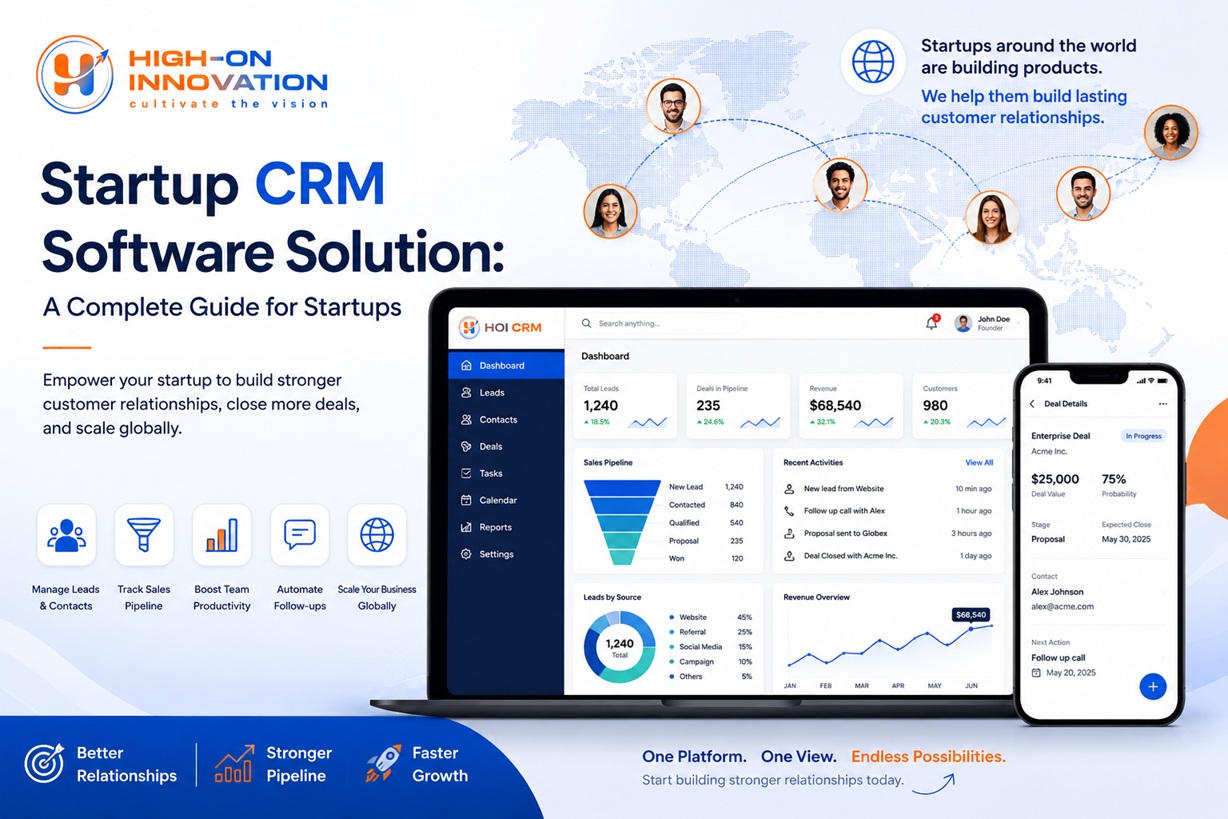
Startup CRM Software Solution: A Complete Guide for Startups around the world are building products
Startups around the world are building products, entering new markets, and scaling teams faster than ever. As a company grows, managing leads, customers, sales conversations, follow-ups, and business relationships through spreadsheets, email, and messaging apps becomes increasingly difficult. This is where a startup CRM software solution can become an important part of a company's growth infrastructure.
Popular Post
MVP Development Timeline: How Long Does It Take to Build an MVP?
For a startup, knowing how long MVP development takes is critical for planning investment, coordinating teams, preparing a launch strategy, and setting realistic expectations with stakeholders.
There is no universal MVP development timeline. A simple MVP with a limited number of features can be launched in a matter of weeks, while a complex SaaS platform, marketplace, fintech product, or AI-powered application may take several months.
MVP Development Process: From Startup Idea to Product Launch
A great startup idea is only the beginning. Turning that idea into a functional product requires a structured MVP development process that validates assumptions, prioritizes essential features, controls development costs, and gets the product in front of real users quickly.
A Minimum Viable Product (MVP) is not simply a smaller version of a finished product. It is a focused product built around the core problem your startup wants to solve. The goal is to launch with enough functionality to attract early users, collect feedback, and determine whether the product has genuine market potential.
Startup CRM Software Solution: A Complete Guide for Startups around the world are building products
Startups around the world are building products, entering new markets, and scaling teams faster than ever. As a company grows, managing leads, customers, sales conversations, follow-ups, and business relationships through spreadsheets, email, and messaging apps becomes increasingly difficult. This is where a startup CRM software solution can become an important part of a company's growth infrastructure.
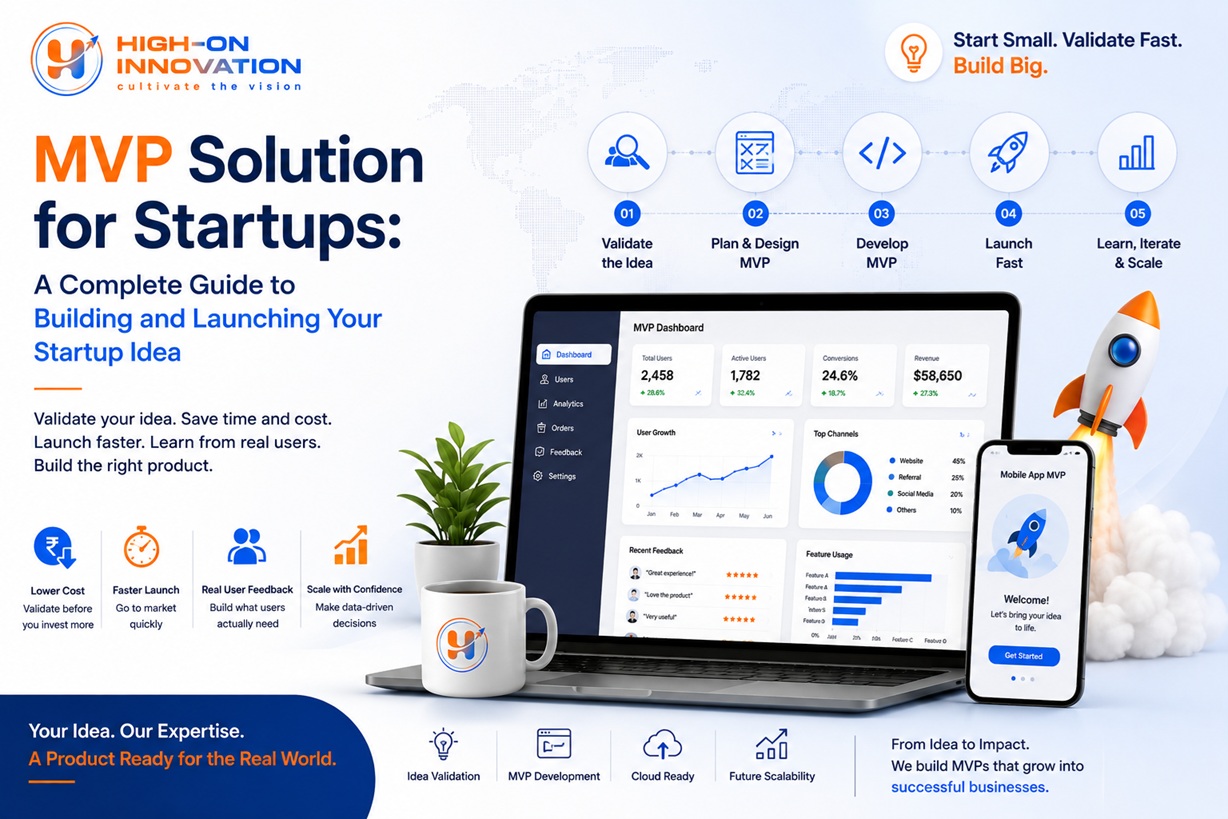
MVP Solution for Startups: A Complete Guide to Building and Launching Your Startup Idea — A Minimum Viable Product (MVP)
A Minimum Viable Product (MVP) allows startups to build a functional version of their product with the essential features required to solve a specific customer problem. Instead of investing heavily in a complete product from day one, founders can launch an MVP, collect real-world feedback, and improve the product based on actual user behavior.