AI Solutions for Manufacturing Companies: A Complete Guide to Modern Manufacturing Automation
Manufacturing companies are under constant pressure to produce more, reduce costs, maintain quality, and respond quickly to changing customer demands. Traditional manufacturing systems, built around manual processes and disconnected software, often struggle to keep pace with these expectations.
Artificial Intelligence (AI) is changing that.
Modern AI solutions help manufacturers automate repetitive tasks, optimize operations, improve decision-making, and connect departments through intelligent, data-driven workflows. From production planning and inventory management to CRM automation and supply chain optimization, AI enables businesses to operate more efficiently while preparing for future growth.
Whether you're a manufacturing startup, an SME, a mid-sized company, or a global enterprise, the right AI solution can transform the way your business operates.
This guide explores the most effective AI solutions available for manufacturing companies, their business benefits, and how to choose the right implementation strategy.
What Are AI Solutions for Manufacturing?
AI solutions are software platforms, automation tools, and intelligent business systems that use artificial intelligence to automate processes, analyze data, predict outcomes, and support operational decision-making.
Unlike conventional software that relies solely on predefined rules, AI systems continuously learn from operational data, allowing them to improve recommendations and optimize business performance over time.
AI solutions can be implemented across nearly every department within a manufacturing organization.
Why Manufacturing Companies Are Investing in AI
Manufacturers today face a wide range of operational challenges:
Rising labor costs
Manual administrative processes
Increasing customer expectations
Supply chain disruptions
Inventory inaccuracies
Production inefficiencies
Lack of real-time business visibility
Difficulty scaling operations
Disconnected software systems
AI helps solve these problems by creating connected, intelligent business operations that improve efficiency, reduce costs, and enable faster decision-making.
Core AI Solutions Every Manufacturing Company Should Consider
1. AI Process Automation
Manufacturing businesses often rely on repetitive administrative and operational tasks.
AI process automation streamlines activities such as:
Purchase approvals
Vendor onboarding
Document routing
Order processing
Production approvals
Financial workflows
This reduces manual effort while improving speed and consistency.
2. AI Workflow Automation
Many delays occur because information must move between departments.
AI workflow automation automatically routes tasks, approvals, notifications, and documents to the appropriate stakeholders.
Common workflows include:
Production requests
Maintenance approvals
Procurement workflows
Quality inspections
HR approvals
Finance approvals
The result is faster collaboration and fewer process bottlenecks.
3. AI-Powered CRM Solutions
Manufacturers depend on strong relationships with customers, distributors, dealers, and suppliers.
AI-powered CRM solutions help businesses:
Capture leads automatically
Track customer interactions
Generate quotations
Schedule follow-ups
Forecast sales
Manage customer support
Sales teams gain better visibility into opportunities while improving customer satisfaction.
4. AI Inventory Management
Inventory directly affects production continuity and working capital.
AI inventory solutions help manufacturers:
Forecast demand
Monitor stock levels
Automate replenishment
Reduce excess inventory
Prevent stock shortages
Improve warehouse visibility
Optimized inventory reduces carrying costs while ensuring materials are available when needed.
5. AI Supply Chain Management
Supply chains have become increasingly complex.
AI improves supply chain operations through:
Demand forecasting
Procurement automation
Vendor performance monitoring
Logistics optimization
Shipment tracking
Supplier risk analysis
These capabilities improve resilience and reduce operational disruptions.
6. AI Production Planning
Production scheduling is one of the most critical manufacturing activities.
AI analyzes:
Customer demand
Machine availability
Workforce capacity
Inventory levels
Production priorities
The system generates optimized schedules that improve resource utilization and reduce delays.
7. AI Business Intelligence
Manufacturing leaders require accurate information to make informed decisions.
AI business intelligence platforms consolidate data from:
ERP
CRM
Inventory systems
Production software
Finance applications
Executives gain real-time dashboards with actionable insights rather than waiting for manual reports.
8. AI Quality Management
Maintaining product quality is essential for customer satisfaction and regulatory compliance.
AI supports quality management by:
Detecting production anomalies
Identifying quality trends
Automating inspection workflows
Tracking corrective actions
Improving traceability
This leads to more consistent products and fewer defects.
9. AI Predictive Maintenance
Unexpected equipment failures can disrupt production and increase maintenance costs.
AI predictive maintenance solutions analyze machine performance to identify potential failures before they occur.
Benefits include:
Reduced downtime
Lower repair costs
Longer equipment lifespan
Improved production reliability
10. AI Executive Decision Support
Modern manufacturing generates enormous amounts of data.
AI transforms this information into strategic insights by monitoring:
Operational performance
Financial metrics
Production efficiency
Sales trends
Inventory risks
Customer behavior
Executives can make faster, data-driven decisions with greater confidence.
AI Solutions by Business Function
Production
Production scheduling
Capacity planning
Resource allocation
Process optimization
Performance monitoring
Sales and Customer Management
CRM automation
Lead management
Quotation generation
Customer communication
Sales forecasting
Inventory and Warehousing
Inventory forecasting
Warehouse optimization
Stock visibility
Automated replenishment
Material tracking
Supply Chain
Procurement automation
Vendor management
Logistics optimization
Shipment tracking
Demand forecasting
Finance
Invoice processing
Expense approvals
Financial reporting
Budget forecasting
Cash flow analysis
Human Resources
Employee onboarding
Recruitment automation
Attendance management
Leave approvals
Performance tracking
Benefits of AI Solutions for Manufacturing Companies
Organizations implementing AI solutions commonly achieve:
Increased productivity
Reduced operational costs
Improved production planning
Better inventory accuracy
Faster workflow approvals
Enhanced customer experience
Improved business visibility
More accurate forecasting
Stronger compliance
Better scalability
Higher employee productivity
Smarter strategic decision-making
These benefits extend across the entire organization rather than being limited to the factory floor.
Choosing the Right AI Solution
Every manufacturing company has different operational challenges.
When evaluating AI solutions, consider:
Business Objectives
Clearly define the outcomes you want to achieve, such as reducing production delays, improving inventory accuracy, or increasing sales efficiency.
Integration
Choose solutions that integrate with your ERP, CRM, accounting software, production systems, and other business applications.
Scalability
Select technology that can support business growth without requiring major system changes.
User Adoption
Even the most advanced solution will fail if employees cannot use it effectively. Prioritize intuitive interfaces and practical workflows.
Customization
Manufacturing processes vary significantly between organizations. Flexible solutions that adapt to your operations typically deliver greater long-term value than rigid, one-size-fits-all platforms.
Should You Choose Off-the-Shelf or Custom AI Solutions?
Many manufacturers begin by evaluating commercially available software.
While off-the-shelf products can address common requirements, they often require businesses to modify their existing processes.
Custom AI solutions are built around your manufacturing workflows, allowing seamless integration with current systems and supporting the unique needs of your organization.
For manufacturers with specialized production processes, multiple facilities, or complex approval structures, custom solutions often provide greater flexibility and a stronger return on investment over time.
AI Solutions for Different Types of Manufacturers
Manufacturing Startups
Focus on CRM automation, inventory management, workflow automation, and quotation management to establish efficient operations from the outset.
Small and Medium Manufacturers (SMEs)
Prioritize production planning, inventory optimization, procurement workflows, and business reporting to improve efficiency without significantly increasing headcount.
Mid-Sized Manufacturers
Integrate AI across departments to eliminate information silos and support business growth through centralized visibility and standardized processes.
Large Enterprises
Deploy enterprise-grade AI solutions across multiple plants, optimize global supply chains, standardize workflows, and strengthen governance through advanced analytics.
How HOI Delivers AI Solutions for Manufacturing Companies
At High-On Innovation (HOI), we design AI solutions that align with the realities of modern manufacturing. Our focus is on solving operational challenges, integrating existing systems, and delivering measurable business outcomes.
Our manufacturing expertise includes:
AI Automation
Manufacturing Process Automation
CRM Automation
Workflow Automation
Inventory Management Automation
Supply Chain Automation
Production Process Automation
Custom Manufacturing Software
Digital Transformation Consulting
ERP and Third-Party System Integration
Every implementation begins with understanding your business processes, identifying automation opportunities, and developing a phased roadmap that minimizes disruption while maximizing return on investment.
Final Thoughts
AI is rapidly becoming a core capability for successful manufacturing companies. The organizations seeing the greatest results are not simply adopting new technology—they are redesigning how work gets done.
From automating workflows and optimizing production to improving inventory management and strengthening customer relationships, AI solutions create measurable improvements across every department.
The most effective strategy is to start with high-impact business processes, implement AI in manageable phases, and expand automation as your organization grows. By choosing solutions that integrate with your existing systems and align with your operational goals, manufacturers can build more efficient, agile, and competitive businesses for the future.
Sandesh Gupta is the CEO of High-On Innovation, where he leads the company's strategic direction, operational excellence, and business innovation initiatives. With extensive experience in digital transformation, enterprise technology adoption, and business growth, he works closely with organizations to help them modernize operations, improve efficiency, and leverage emerging technologies for long-term success. His expertise spans digital transformation strategy, AI-driven business solutions, process optimization, and scalable technology ecosystems.
Comments
Loading comments…
Latest Market Trends

Sep 9, 2026
MVP Development Cost for Australian Businesses in 2026
A simple customer portal, booking application, SaaS dashboard, marketplace, AI-powered platform, fintech product, healthcare application, or enterprise workflow system can all be described as an "MVP", but their development requirements can be dramatically different.

Sep 3, 2026
How to Choose an MVP Development Company for Your Startup
Choosing the right MVP development company can have a major impact on your startup's first product launch. The right development partner does more than write code. They help translate your business idea into a focused product, identify technical risks, prioritize features, and create an MVP that can be tested with real users.

Sep 8, 2026
MVP Development Cost for Canadian Businesses in 2026: Complete Guide to Pricing, Features and Process
Discover MVP development cost Canada in 2026, including startup MVP cost, development factors, timelines, features, technology, compliance, and how to choose the right MVP development company.
Popular Post
MVP Development Cost for Australian Businesses in 2026
A simple customer portal, booking application, SaaS dashboard, marketplace, AI-powered platform, fintech product, healthcare application, or enterprise workflow system can all be described as an "MVP", but their development requirements can be dramatically different.
How to Choose an MVP Development Company for Your Startup
Choosing the right MVP development company can have a major impact on your startup's first product launch. The right development partner does more than write code. They help translate your business idea into a focused product, identify technical risks, prioritize features, and create an MVP that can be tested with real users.
MVP Development Cost for Canadian Businesses in 2026: Complete Guide to Pricing, Features and Process
Discover MVP development cost Canada in 2026, including startup MVP cost, development factors, timelines, features, technology, compliance, and how to choose the right MVP development company.
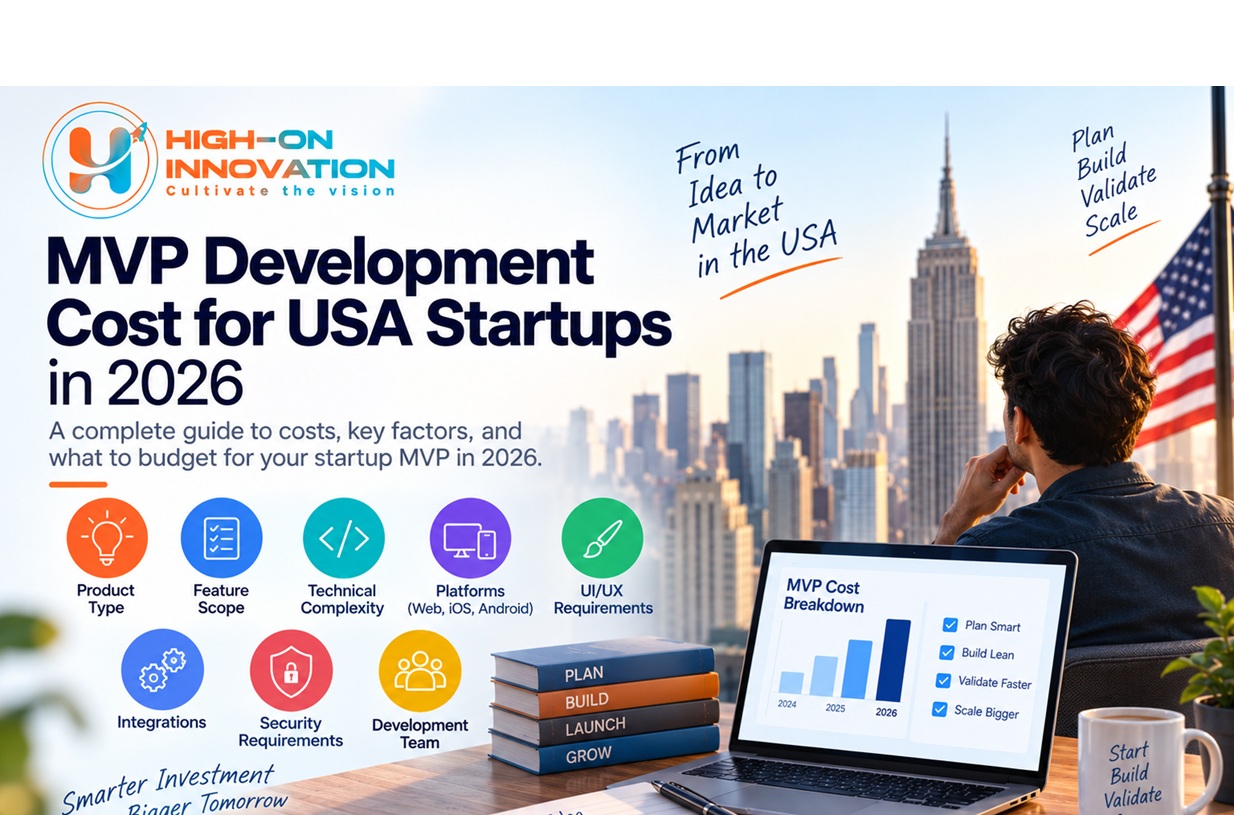
MVP Development Cost for USA Startups in 2026
An MVP, or Minimum Viable Product, gives founders a way to turn an idea into a usable product, launch it with real users, collect feedback, and understand whether the market actually wants the solution.