Benefits of AI Automation in Manufacturing: 15 Ways AI Is Transforming Modern Factories
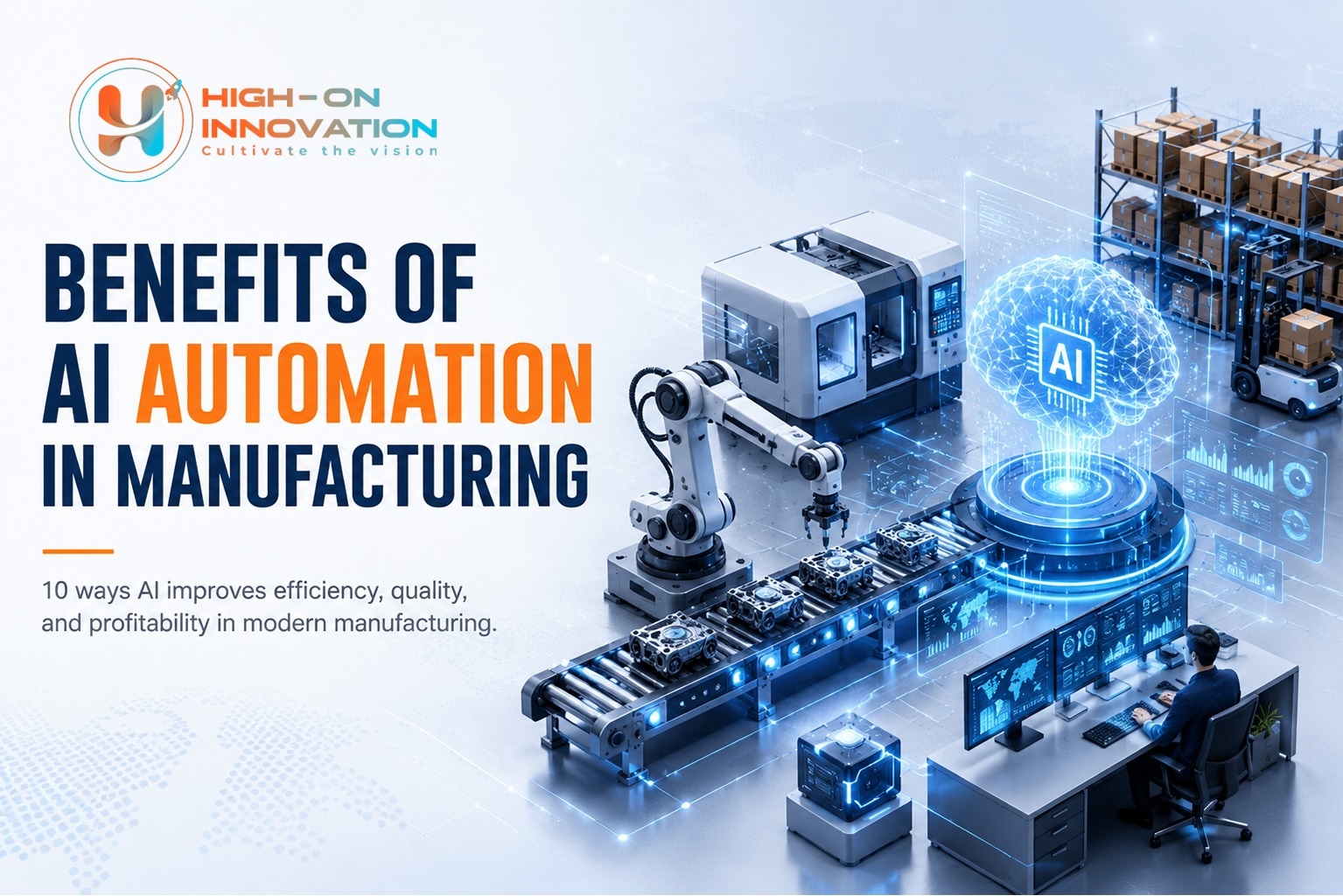
Manufacturing has always been driven by efficiency. From the first assembly lines to today's connected factories, every technological advancement has aimed to produce better products faster and at lower costs.
Today, Artificial Intelligence (AI) automation is driving the next major transformation.
Manufacturers worldwide are using AI to automate repetitive tasks, optimize production schedules, improve inventory management, streamline supply chains, and make smarter business decisions based on real-time data.
The result isn't simply automation—it's a more intelligent manufacturing operation that continuously improves itself.
Whether you're a startup building your first production facility, an SME looking to increase efficiency, or a large enterprise managing multiple plants, AI automation can create measurable improvements across your business.
In this article, we'll explore the key benefits of AI automation in manufacturing and why it has become a strategic investment rather than just another technology trend.
What Is AI Automation in Manufacturing?
AI automation combines artificial intelligence with business and production processes to reduce manual work, improve decision-making, and optimize operations.
Unlike traditional automation, which follows fixed rules, AI systems learn from data, identify patterns, predict outcomes, and continuously improve performance over time.
AI can automate activities across:
Production planning
Inventory management
Supply chain operations
CRM and sales processes
Workflow approvals
Quality management
Business reporting
Customer service
Procurement
Administrative operations
Instead of replacing employees, AI helps teams work faster, make better decisions, and focus on higher-value activities.
Why Manufacturers Are Investing in AI Automation
Manufacturers today face several ongoing challenges:
Rising operational costs
Labor shortages
Increasing customer expectations
Complex supply chains
Manual business processes
Equipment downtime
Inventory inaccuracies
Demand fluctuations
Competitive pricing pressure
AI automation helps organizations address these challenges by creating connected, data-driven operations that are more agile, efficient, and scalable.
15 Key Benefits of AI Automation in Manufacturing
1. Increased Productivity
AI automates repetitive tasks that traditionally consume employee time, such as data entry, production reporting, inventory updates, quotation generation, and workflow approvals.
Employees can spend more time solving problems, improving processes, and serving customers instead of performing routine administrative work.
2. Reduced Operational Costs
One of the most immediate benefits of AI automation is cost reduction.
Manufacturers can lower expenses by:
Reducing manual processing
Eliminating repetitive work
Minimizing production delays
Optimizing resource utilization
Reducing waste
Improving production efficiency
Lower operating costs directly improve profitability without sacrificing quality.
3. Better Production Planning
Production planning becomes significantly more accurate when AI analyzes:
Historical production data
Customer demand
Inventory availability
Machine capacity
Workforce schedules
Supplier lead times
Instead of relying on manual spreadsheets, manufacturers can generate optimized production schedules that adapt as business conditions change.
4. Improved Inventory Management
Inventory is one of the largest operational investments for manufacturers.
AI helps optimize inventory by:
Forecasting demand
Monitoring stock levels
Automating replenishment
Preventing stock shortages
Reducing excess inventory
This leads to healthier cash flow while maintaining production continuity.
5. Smarter Supply Chain Management
Supply chains involve numerous moving parts, from suppliers and procurement to logistics and warehouse operations.
AI automation improves visibility across the entire supply chain by helping businesses:
Monitor supplier performance
Forecast purchasing requirements
Optimize procurement
Improve logistics planning
Track shipments in real time
Greater visibility enables faster responses to disruptions and changing customer demand.
6. Faster Decision-Making
Manufacturing leaders often wait hours—or even days—for reports before making important decisions.
AI-powered dashboards provide real-time insights into:
Production performance
Inventory status
Sales activity
Customer orders
Operational bottlenecks
Financial metrics
Decision-makers gain immediate access to actionable information instead of relying on outdated reports.
7. Higher Product Quality
Maintaining consistent quality is critical in manufacturing.
AI can analyze inspection data, identify quality trends, and support visual inspection systems that detect defects with greater consistency.
This helps reduce:
Product defects
Rework
Customer complaints
Warranty claims
Higher quality strengthens customer trust and protects brand reputation.
8. Streamlined Workflow Automation
Manufacturing businesses rely on countless internal approvals every day.
Examples include:
Purchase approvals
Production requests
Quality inspections
Vendor approvals
Maintenance requests
Expense approvals
AI automation routes these tasks automatically to the right people, reducing delays and improving collaboration across departments.
9. Better Customer Relationship Management
Manufacturing success isn't only about production—it also depends on strong customer relationships.
AI-powered CRM automation helps manufacturers:
Manage leads
Track customer interactions
Automate follow-ups
Generate quotations
Improve after-sales support
Forecast sales opportunities
Sales teams spend less time on administrative work and more time building customer relationships.
10. Improved Forecasting Accuracy
Forecasting affects every aspect of manufacturing.
AI analyzes historical trends and current business conditions to improve predictions for:
Customer demand
Inventory requirements
Procurement
Production schedules
Revenue planning
More accurate forecasts reduce uncertainty and improve operational stability.
11. Enhanced Business Visibility
Many manufacturers operate with disconnected software systems that create information silos.
AI integrates data across CRM, ERP, inventory, production, finance, and supply chain systems to provide a centralized view of business performance.
This improves transparency and enables cross-functional collaboration.
12. Greater Scalability
As manufacturers grow, manual processes become increasingly difficult to manage.
AI automation scales operations without requiring proportional increases in administrative staff.
Businesses can handle more customers, more production, and more transactions while maintaining operational efficiency.
13. Increased Employee Satisfaction
Employees often spend considerable time on repetitive administrative work.
AI automation reduces routine tasks, allowing teams to focus on strategic planning, innovation, customer engagement, and continuous improvement.
Rather than replacing employees, AI enhances their productivity and job satisfaction.
14. Improved Compliance and Traceability
Manufacturers often operate under strict regulatory and quality standards.
AI automation helps maintain compliance by:
Recording process activities
Tracking approvals
Maintaining audit trails
Standardizing workflows
Reducing manual errors
This simplifies audits and improves operational accountability.
15. Stronger Competitive Advantage
Perhaps the greatest benefit of AI automation is long-term competitiveness.
Manufacturers that adopt AI are often able to:
Respond faster to market changes
Reduce operating costs
Improve customer experience
Increase production efficiency
Scale operations confidently
Make smarter strategic decisions
These advantages compound over time, making AI automation a key differentiator in increasingly competitive markets.
Which Manufacturing Businesses Benefit the Most?
Manufacturing Startups
Startups can automate customer management, quotations, inventory, and internal workflows without building large administrative teams.
Small and Medium Manufacturers (SMEs)
SMEs often see quick returns by automating inventory management, CRM, workflow approvals, and production planning.
Mid-Sized Manufacturers
Growing businesses benefit from integrating AI across production, supply chain, finance, and customer management to improve coordination and efficiency.
Large Manufacturing Enterprises
Large organizations use AI to standardize operations across multiple facilities, improve reporting, optimize global supply chains, and support enterprise-wide decision-making.
How to Start Your AI Automation Journey
A successful implementation typically follows these steps:
Assess current business processes.
Identify repetitive, time-consuming tasks.
Define measurable business goals.
Prioritize high-impact automation opportunities.
Integrate existing software systems.
Implement automation in phases.
Measure performance and continuously optimize.
Starting with a focused pilot project often delivers quick wins and builds confidence for broader adoption.
Why Customized AI Automation Delivers Better Results
Every manufacturer has unique products, workflows, approval processes, and operational requirements.
While generic software can automate common tasks, customized AI automation is tailored to your business processes, integrates with your existing systems, and adapts as your organization grows.
This approach typically results in higher user adoption, smoother implementation, and greater long-term value.
How HOI Helps Manufacturers Unlock the Benefits of AI Automation
At High-On Innovation (HOI), we design AI automation solutions that address real manufacturing challenges—not just technology requirements.
Our expertise includes:
AI Automation
Manufacturing Process Automation
CRM Automation
Workflow Automation
Inventory Management Automation
Supply Chain Automation
Production Process Automation
Custom Software Development
Digital Transformation Consulting
Whether you're taking your first step toward automation or expanding an existing digital transformation initiative, our team helps build scalable solutions aligned with your operational goals.
Final Thoughts
AI automation has moved beyond being an emerging technology—it's becoming a core capability for modern manufacturing businesses.
By automating routine work, improving operational visibility, optimizing production, strengthening customer relationships, and enabling data-driven decision-making, AI helps manufacturers become more resilient, efficient, and competitive.
The organizations that embrace AI today are laying the foundation for smarter factories, more agile operations, and sustainable long-term growth. For manufacturers seeking to improve productivity without compromising quality or customer satisfaction, AI automation offers one of the most impactful opportunities available today.
Harshit Gupta is the Founder of High-On Innovation and is responsible for shaping the company's vision, business model, growth strategy, and market expansion initiatives. He specializes in identifying emerging opportunities, driving innovation, and helping businesses navigate digital transformation in a rapidly evolving technology landscape. His expertise includes business strategy, digital innovation, startup growth, market positioning, and future-focused technology adoption.
Comments
Loading comments…
Latest Market Trends

Sep 9, 2026
MVP Development Cost for Australian Businesses in 2026
A simple customer portal, booking application, SaaS dashboard, marketplace, AI-powered platform, fintech product, healthcare application, or enterprise workflow system can all be described as an "MVP", but their development requirements can be dramatically different.

Sep 3, 2026
How to Choose an MVP Development Company for Your Startup
Choosing the right MVP development company can have a major impact on your startup's first product launch. The right development partner does more than write code. They help translate your business idea into a focused product, identify technical risks, prioritize features, and create an MVP that can be tested with real users.

Sep 8, 2026
MVP Development Cost for Canadian Businesses in 2026: Complete Guide to Pricing, Features and Process
Discover MVP development cost Canada in 2026, including startup MVP cost, development factors, timelines, features, technology, compliance, and how to choose the right MVP development company.
Popular Post
MVP Development Cost for Australian Businesses in 2026
A simple customer portal, booking application, SaaS dashboard, marketplace, AI-powered platform, fintech product, healthcare application, or enterprise workflow system can all be described as an "MVP", but their development requirements can be dramatically different.
How to Choose an MVP Development Company for Your Startup
Choosing the right MVP development company can have a major impact on your startup's first product launch. The right development partner does more than write code. They help translate your business idea into a focused product, identify technical risks, prioritize features, and create an MVP that can be tested with real users.
MVP Development Cost for Canadian Businesses in 2026: Complete Guide to Pricing, Features and Process
Discover MVP development cost Canada in 2026, including startup MVP cost, development factors, timelines, features, technology, compliance, and how to choose the right MVP development company.
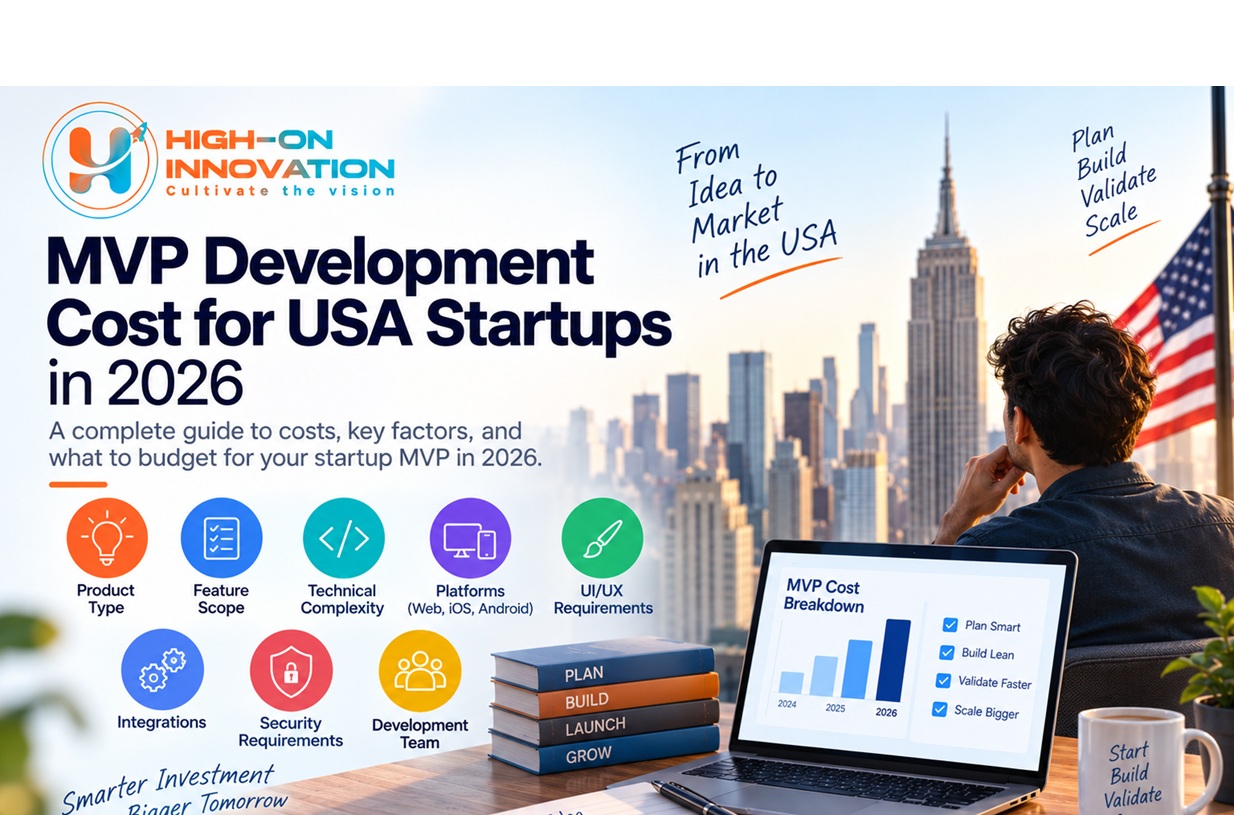
MVP Development Cost for USA Startups in 2026
An MVP, or Minimum Viable Product, gives founders a way to turn an idea into a usable product, launch it with real users, collect feedback, and understand whether the market actually wants the solution.