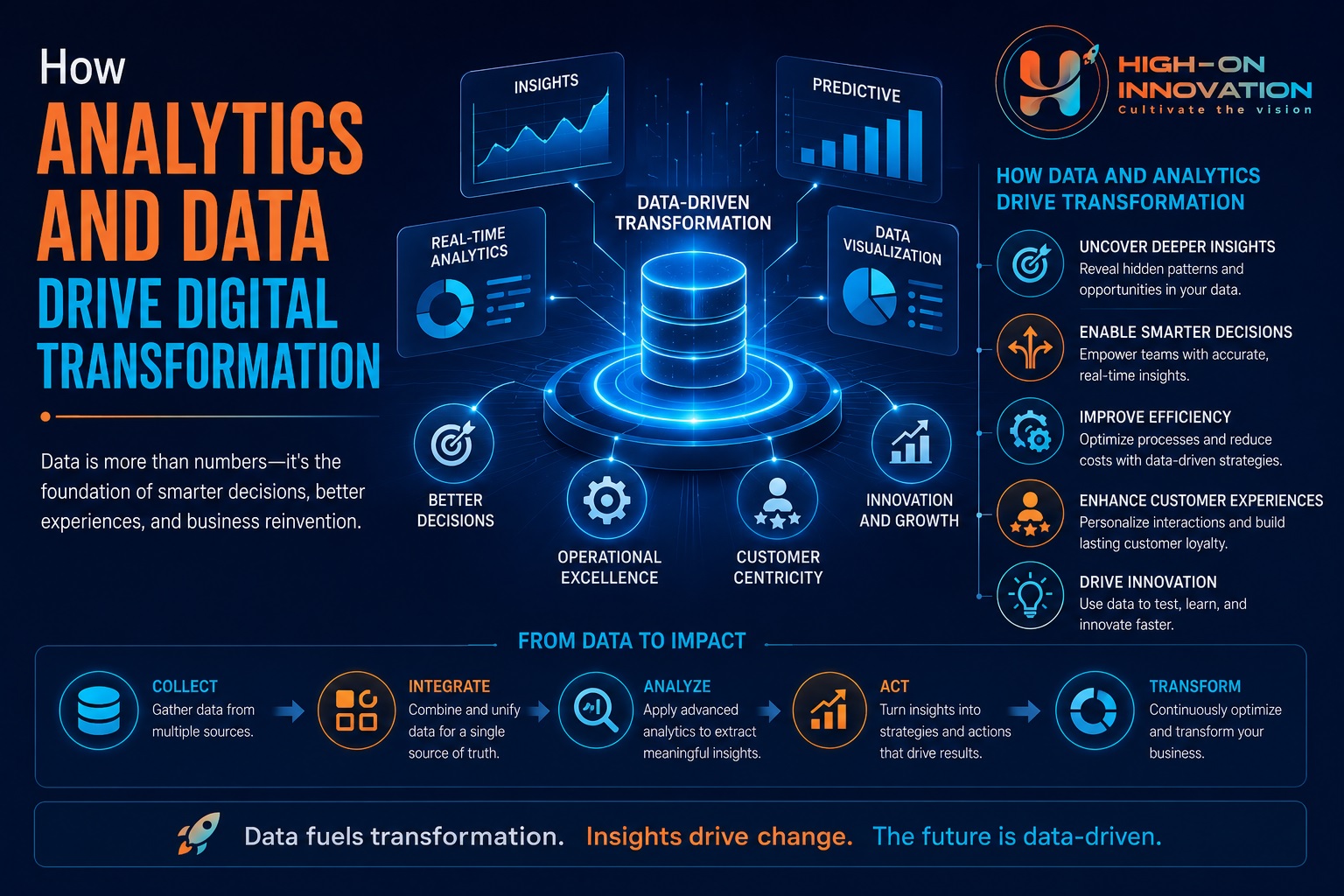
How Analytics and Data Drive Digital Transformation
Key Takeaways
Analytics is a major driver of digital transformation.
Businesses use data to improve decision-making and operational efficiency.
Customer analytics enables personalized digital experiences.
AI and automation rely heavily on data and predictive analytics.
Real-time insights improve business agility and scalability.
Data-driven organizations gain stronger competitive advantages.
Introduction
Modern businesses generate enormous amounts of data every day through websites, mobile applications, customer interactions, sales systems, digital marketing campaigns, cloud platforms, and connected devices.
However, raw data alone has little value unless businesses can transform it into actionable insights.
This is where analytics becomes one of the most powerful drivers of digital transformation.
Organizations today rely on analytics and data-driven strategies to improve operational efficiency, understand customer behavior, automate decision-making, predict future trends, and create personalized digital experiences.
In the digital economy, businesses that effectively use data and analytics gain a significant competitive advantage over organizations that rely only on assumptions or manual decision-making.
Analytics is no longer just a reporting tool. It has become the foundation of intelligent digital transformation.
What Is Data-Driven Digital Transformation?
Data-driven digital transformation is the process of using analytics, business intelligence, artificial intelligence, and real-time data insights to improve business operations, customer experiences, and strategic decision-making.
Instead of making decisions based only on intuition or historical assumptions, businesses use data to:
Identify trends
Understand customer behavior
Optimize operations
Improve forecasting
Reduce inefficiencies
Personalize experiences
Automate workflows
Modern digital transformation strategies heavily depend on accurate, accessible, and actionable data.
Why Analytics Is Essential for Digital Transformation
Digital transformation involves:
Automation
AI implementation
Cloud computing
Customer experience optimization
Business modernization
All of these technologies rely on data to function effectively.
Analytics helps organizations:
Measure performance
Identify opportunities
Detect risks
Improve decision-making
Track customer engagement
Optimize digital operations
Without analytics, businesses cannot accurately evaluate the effectiveness of their digital transformation efforts.
Types of Analytics Used in Digital Transformation
1. Descriptive Analytics
Descriptive analytics helps businesses understand what has already happened.
It uses historical data to identify:
Sales performance
Customer engagement
Operational efficiency
Marketing performance
Example
An ecommerce company analyzes monthly sales reports to identify top-selling products.
Benefits
Better visibility
Performance tracking
Operational insights
2. Diagnostic Analytics
Diagnostic analytics helps businesses understand why something happened.
It identifies:
Root causes
Performance issues
Customer behavior patterns
Operational bottlenecks
Example
A business investigates why website conversions dropped after a marketing campaign update.
Benefits
Problem identification
Better optimization
Smarter strategic adjustments
3. Predictive Analytics
Predictive analytics uses AI and machine learning to forecast future outcomes.
Businesses use predictive models to:
Forecast demand
Predict customer behavior
Identify business risks
Improve inventory planning
Anticipate operational issues
Example
Retail companies use predictive analytics to forecast seasonal product demand.
Benefits
Better forecasting
Reduced risks
Improved planning
Faster decision-making
4. Prescriptive Analytics
Prescriptive analytics recommends actions businesses should take based on data insights.
It combines:
AI
Machine learning
Automation
Predictive modeling
Example
AI systems automatically recommend marketing strategies based on customer engagement data.
Benefits
Smarter automation
Improved optimization
Faster strategic execution
How Analytics Drives Digital Transformation
1. Improving Business Decision-Making
One of the biggest benefits of analytics is smarter decision-making.
Traditional decision-making often relied on:
Assumptions
Delayed reports
Limited visibility
Analytics provides real-time insights that help organizations make accurate and informed decisions quickly.
Businesses Use Analytics To:
Evaluate performance
Track KPIs
Monitor operations
Analyze customer behavior
Optimize marketing campaigns
Real Business Impact
Data-driven organizations respond faster to market changes and business opportunities.
2. Enhancing Customer Experience
Modern customers expect personalized, seamless, and fast digital experiences.
Analytics helps businesses understand:
Customer preferences
Browsing behavior
Purchase patterns
Engagement trends
Customer pain points
Examples of Customer Analytics
Personalized product recommendations
AI-powered customer support
Dynamic content experiences
Targeted marketing campaigns
Benefits
Improved customer satisfaction
Better engagement
Increased retention
Higher conversions
Customer analytics has become a critical part of modern digital transformation strategies.
3. Optimizing Business Operations
Analytics improves operational efficiency by identifying inefficiencies, delays, and workflow bottlenecks.
Businesses analyze operational data to improve:
Supply chain management
Employee productivity
Inventory control
Financial performance
Resource allocation
Example
Manufacturing companies use analytics to monitor production performance and reduce downtime.
Benefits
Reduced operational costs
Improved efficiency
Better productivity
Faster workflows
4. Supporting AI and Automation
Artificial intelligence systems depend heavily on data and analytics.
AI uses analytics to:
Learn from historical data
Predict outcomes
Automate workflows
Improve recommendations
Optimize business operations
AI and Analytics Examples
Chatbots
Fraud detection systems
Recommendation engines
Predictive maintenance
Intelligent automation
Analytics acts as the intelligence layer behind AI-powered digital transformation.
5. Enabling Real-Time Business Insights
Modern analytics platforms provide real-time dashboards and monitoring systems.
Businesses can instantly track:
Website traffic
Customer interactions
Sales performance
Operational KPIs
Marketing ROI
Why Real-Time Data Matters
Organizations can react quickly to:
Customer behavior changes
Operational issues
Market fluctuations
Sales trends
Real-time visibility improves business agility significantly.
6. Improving Marketing Performance
Digital marketing heavily depends on analytics.
Businesses use marketing analytics to measure:
Campaign performance
Customer acquisition
Engagement metrics
Conversion rates
ROI
Example
A company uses analytics to identify which marketing channels generate the highest conversions.
Benefits
Better targeting
Improved campaign optimization
Lower acquisition costs
Higher ROI
7. Supporting Scalable Digital Growth
As businesses grow, data becomes increasingly important for managing operations efficiently.
Analytics helps organizations scale by:
Improving forecasting
Automating reporting
Optimizing workflows
Monitoring business performance
Scalable digital transformation requires scalable analytics infrastructure.
Industries Using Analytics for Digital Transformation
Healthcare
Healthcare providers use analytics for:
Patient monitoring
Predictive diagnostics
Operational efficiency
Healthcare planning
Banking and Finance
Financial institutions use analytics for:
Fraud detection
Risk analysis
Customer insights
Investment forecasting
Retail and Ecommerce
Retailers use analytics for:
Customer personalization
Demand forecasting
Inventory optimization
Sales performance analysis
Manufacturing
Manufacturers use analytics for:
Predictive maintenance
Quality control
Production monitoring
Supply chain optimization
Logistics
Logistics companies analyze:
Delivery performance
Shipment tracking
Route optimization
Inventory movement
Technologies Supporting Analytics-Driven Transformation
Artificial Intelligence (AI)
AI improves predictive modeling and intelligent decision-making.
Cloud Computing
Cloud platforms support scalable analytics infrastructure and real-time data access.
Big Data Platforms
Big data technologies process large volumes of structured and unstructured information.
Business Intelligence Tools
BI platforms visualize analytics and operational performance.
Internet of Things (IoT)
IoT devices generate real-time operational data.
Challenges of Data-Driven Transformation
Despite its advantages, analytics-driven transformation also presents challenges.
Data Silos
Disconnected systems limit data accessibility and integration.
Data Quality Issues
Inaccurate or incomplete data reduces analytics reliability.
Security and Privacy Risks
Businesses must protect sensitive customer and operational data.
Skill Gaps
Organizations require analytics expertise and data literacy.
Infrastructure Complexity
Large-scale analytics systems may require advanced infrastructure.
A strong data governance strategy helps organizations overcome these challenges effectively.
Best Practices for Analytics-Driven Digital Transformation
Define Clear Business Objectives
Align analytics initiatives with business goals and KPIs.
Centralize Data Systems
Improve accessibility through integrated data infrastructure.
Invest in Data Quality
Accurate data improves analytics reliability and business decisions.
Use Real-Time Dashboards
Enable faster responses and operational visibility.
Build Data Literacy
Train employees to understand and use analytics effectively.
Prioritize Data Security
Protect customer and business information through strong security policies.
The Future of Analytics in Digital Transformation
Analytics will continue evolving through:
AI-powered insights
Predictive intelligence
Real-time automation
Intelligent business ecosystems
Advanced customer personalization
Autonomous decision-making systems
Businesses that effectively use analytics will become more agile, intelligent, and competitive in the future digital economy.
Data will remain one of the most valuable assets for modern organizations.
Conclusion
Analytics and data are at the core of successful digital transformation strategies. From customer experience optimization and operational efficiency to AI implementation and strategic decision-making, businesses rely on analytics to drive innovation and growth.
Organizations that embrace data-driven transformation can make smarter decisions, improve agility, optimize operations, and deliver better customer experiences.
In today’s digital-first world, businesses that understand and use data effectively are building stronger, more scalable, and future-ready organizations.
Analytics is no longer optional. It is a strategic requirement for modern business transformation.
Frequently Asked Questions
How does analytics support digital transformation?
Analytics helps businesses make data-driven decisions, improve customer experiences, optimize operations, and support AI-powered automation.
What is predictive analytics in digital transformation?
Predictive analytics uses historical and real-time data to forecast future outcomes and business trends.
Why is data important for modern businesses?
Data helps organizations understand customers, improve operations, identify opportunities, and make smarter strategic decisions.
What industries benefit most from analytics?
Industries like healthcare, finance, retail, manufacturing, logistics, and ecommerce benefit significantly from analytics-driven transformation.
Author Bio
Sachikanta Mohanty – Digital Marketing Manager & Lead Strategist, High-On Innovation
Sachikanta Mohanty is the Digital Marketing Manager and Lead Strategist at High-On Innovation, responsible for driving digital growth initiatives for both internal and client projects. He specializes in SEO, content strategy, digital transformation marketing, lead generation, performance marketing, and online brand growth. With extensive experience in developing data-driven marketing strategies, he helps businesses improve visibility, customer acquisition, and long-term digital success.
Comments
Loading comments…
Latest Market Trends

Sep 9, 2026
MVP Development Cost for Australian Businesses in 2026
A simple customer portal, booking application, SaaS dashboard, marketplace, AI-powered platform, fintech product, healthcare application, or enterprise workflow system can all be described as an "MVP", but their development requirements can be dramatically different.

Sep 3, 2026
How to Choose an MVP Development Company for Your Startup
Choosing the right MVP development company can have a major impact on your startup's first product launch. The right development partner does more than write code. They help translate your business idea into a focused product, identify technical risks, prioritize features, and create an MVP that can be tested with real users.

Sep 8, 2026
MVP Development Cost for Canadian Businesses in 2026: Complete Guide to Pricing, Features and Process
Discover MVP development cost Canada in 2026, including startup MVP cost, development factors, timelines, features, technology, compliance, and how to choose the right MVP development company.
Popular Post
MVP Development Cost for Australian Businesses in 2026
A simple customer portal, booking application, SaaS dashboard, marketplace, AI-powered platform, fintech product, healthcare application, or enterprise workflow system can all be described as an "MVP", but their development requirements can be dramatically different.
How to Choose an MVP Development Company for Your Startup
Choosing the right MVP development company can have a major impact on your startup's first product launch. The right development partner does more than write code. They help translate your business idea into a focused product, identify technical risks, prioritize features, and create an MVP that can be tested with real users.
MVP Development Cost for Canadian Businesses in 2026: Complete Guide to Pricing, Features and Process
Discover MVP development cost Canada in 2026, including startup MVP cost, development factors, timelines, features, technology, compliance, and how to choose the right MVP development company.
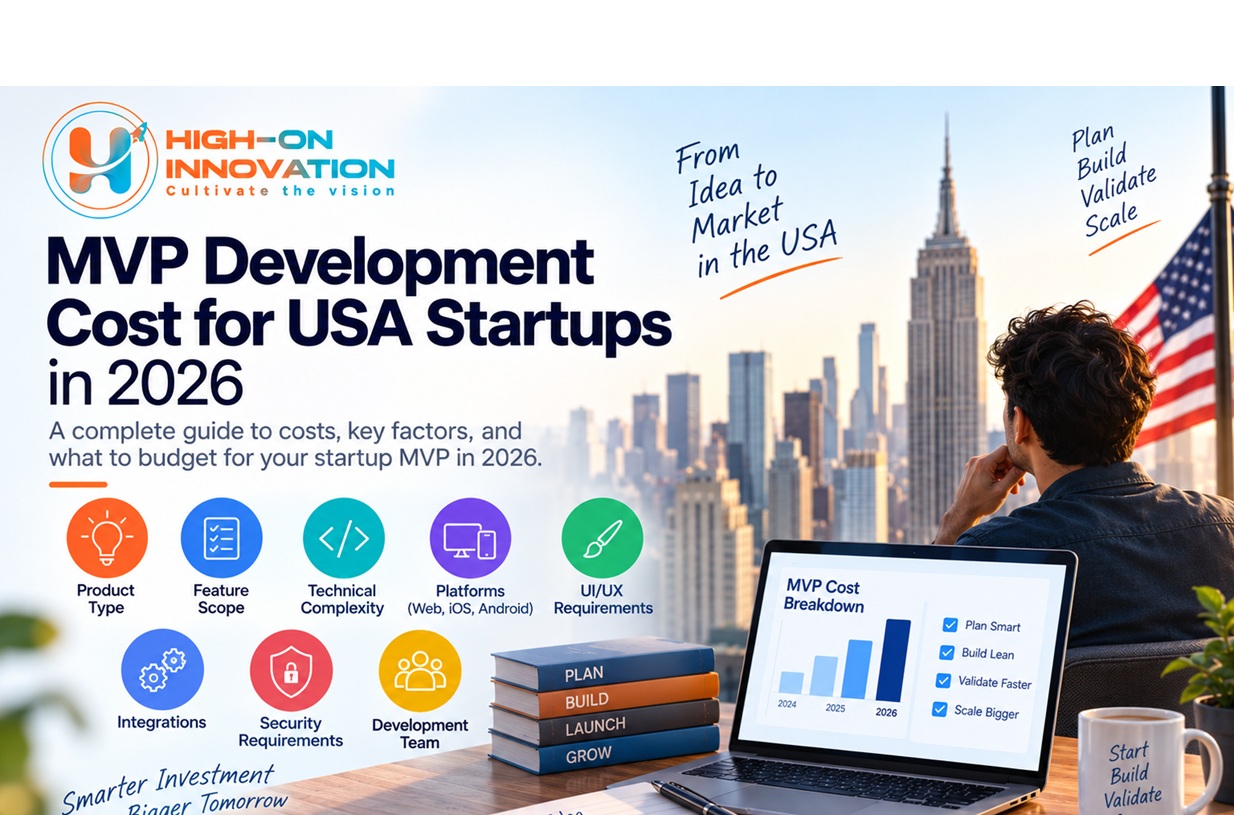
MVP Development Cost for USA Startups in 2026
An MVP, or Minimum Viable Product, gives founders a way to turn an idea into a usable product, launch it with real users, collect feedback, and understand whether the market actually wants the solution.