Industrial IoT Applications in Automotive Manufacturing: Transforming the Connected Factory
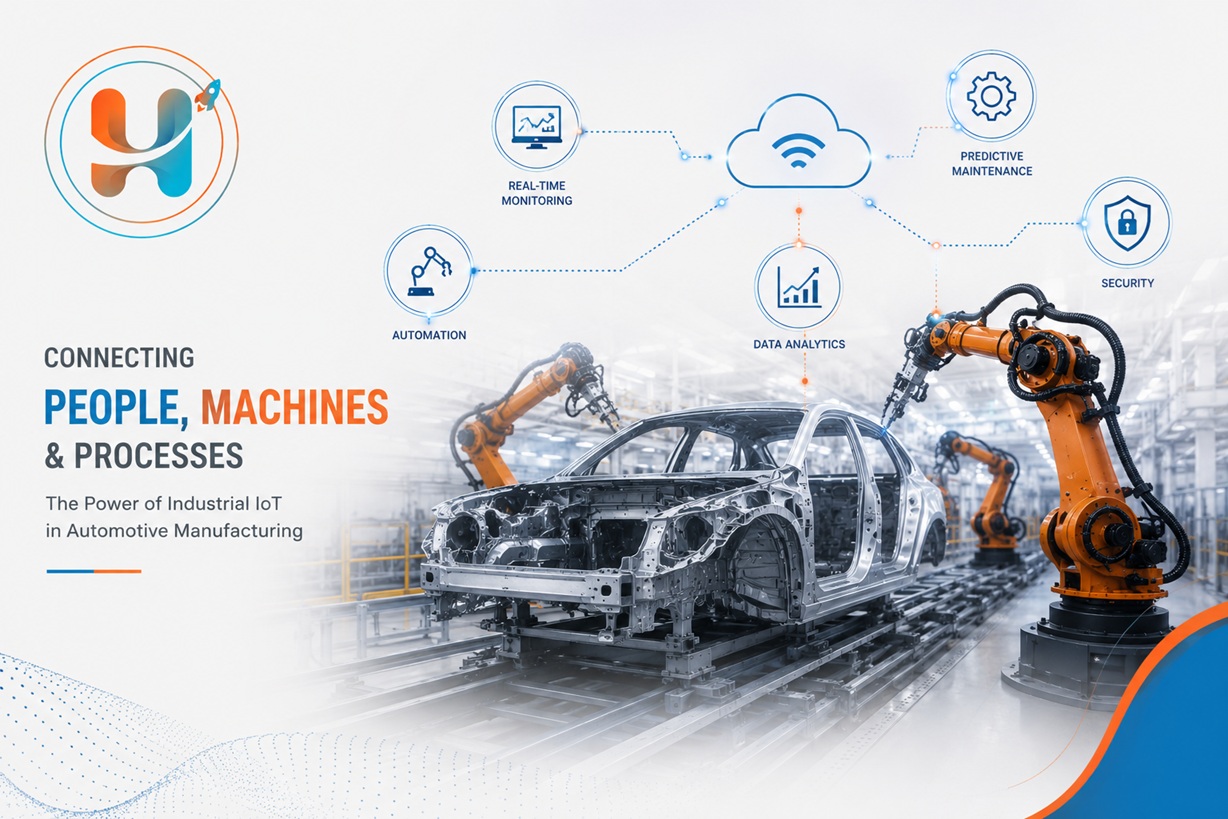
Key Takeaways
Industrial IoT connects machines, sensors, and enterprise systems to create intelligent, data-driven manufacturing environments.
Automotive manufacturers use IIoT to improve equipment monitoring, predictive maintenance, quality control, energy management, and supply chain visibility.
Successful IIoT implementation requires secure connectivity, high-quality data, workforce readiness, and scalable architecture.
A phased deployment strategy helps organizations reduce risk while delivering measurable operational improvements.
Combined with AI, digital twins, and edge computing, IIoT is enabling the next generation of smart automotive factories.
The automotive industry has entered an era where data is as valuable as machinery. Modern manufacturing plants no longer rely solely on automation—they depend on connected devices, intelligent systems, and real-time information to improve productivity, quality, and operational efficiency. At the center of this transformation is the Industrial Internet of Things (IIoT).
Industrial IoT connects machines, sensors, production lines, and enterprise systems into an intelligent ecosystem where data flows continuously across the factory floor. This connectivity enables manufacturers to monitor operations in real time, predict equipment failures, optimize production schedules, and make informed decisions based on live operational insights.
For automotive manufacturers navigating the shift toward electric vehicles, connected mobility, and software-defined vehicles, IIoT has become a critical building block of digital transformation. Whether it's improving Overall Equipment Effectiveness (OEE), reducing downtime, or enhancing product traceability, IIoT is helping manufacturers build more resilient and agile operations.
In this article, we'll explore what Industrial IoT is, why it matters in automotive manufacturing, its core applications, and how it enables the next generation of smart factories.
What Is Industrial IoT?
The Industrial Internet of Things (IIoT) refers to the network of connected industrial devices, machines, sensors, and software systems that collect, exchange, and analyze operational data in real time.
Unlike consumer IoT devices such as smart speakers or wearable technology, IIoT focuses on industrial environments where reliability, scalability, security, and precision are essential.
A typical IIoT ecosystem consists of:
Smart sensors
PLCs (Programmable Logic Controllers)
Industrial gateways
Edge computing devices
Cloud platforms
Manufacturing Execution Systems (MES)
Enterprise Resource Planning (ERP) software
Analytics and AI platforms
Together, these technologies create a connected manufacturing environment capable of self-monitoring and continuous optimization.
Related Reading: The Complete Guide to Digital Transformation in the Automotive Industry (Pillar Blog)
Why IIoT Is Critical for Automotive Manufacturing
Automotive production involves thousands of interconnected processes—from stamping and welding to painting, assembly, testing, and logistics.
Any disruption in one process can impact the entire production line.
IIoT addresses these challenges by providing complete visibility into manufacturing operations.
Growing Manufacturing Complexity
Today's vehicles include advanced electronics, embedded software, battery systems, ADAS technologies, and connected services.
As production complexity increases, manufacturers require continuous operational visibility that traditional monitoring systems cannot provide.
IIoT enables engineers to monitor production equipment, environmental conditions, material movement, and quality metrics in real time.
Demand for Higher Production Efficiency
Manufacturers continuously seek ways to:
Increase throughput
Reduce downtime
Improve machine utilization
Lower operational costs
Enhance product quality
IIoT delivers the operational intelligence needed to optimize production without compromising quality.
Better Operational Visibility
Traditional manufacturing often relies on historical production reports.
IIoT shifts manufacturers toward real-time operational awareness.
Plant managers can instantly monitor:
Equipment health
Production output
Energy consumption
Machine utilization
Inventory movement
Environmental conditions
This enables faster decision-making and proactive problem-solving.
How Industrial IoT Works
Industrial IoT operates through a layered architecture where operational data moves seamlessly from physical assets to enterprise decision-makers.
Step 1: Data Collection
Smart sensors installed on machines collect information such as:
Temperature
Pressure
Humidity
Motor current
Vibration
Energy usage
Production speed
Step 2: Edge Processing
Edge devices process critical operational data close to production equipment.
This minimizes latency and supports real-time control applications.
Examples include:
Robot coordination
Automated inspection
Safety monitoring
Step 3: Secure Data Transmission
Industrial communication protocols transfer operational data to centralized systems using secure industrial networks.
Step 4: Cloud Analytics
Cloud platforms aggregate information from multiple production lines and manufacturing facilities.
AI and analytics tools identify patterns, detect anomalies, and generate actionable insights.
Step 5: Operational Decision-Making
Managers access intuitive dashboards displaying:
Machine health
OEE
Downtime events
Production KPIs
Energy consumption
Maintenance alerts
This real-time intelligence enables continuous operational improvement.
Major Industrial IoT Applications in Automotive Manufacturing
IIoT supports nearly every stage of automotive production.
Below are the most impactful applications.
1. Real-Time Equipment Monitoring
Continuous equipment monitoring is one of the most common IIoT applications.
Connected sensors collect operational data from manufacturing assets around the clock.
Examples include:
CNC machines
Welding robots
Paint booths
Press machines
Conveyors
Injection molding equipment
Manufacturers gain visibility into:
Machine utilization
Equipment availability
Production rates
Cycle times
Operating temperatures
Business Benefits
Faster issue detection
Reduced production interruptions
Improved equipment utilization
Better maintenance planning
2. Predictive Maintenance
Rather than servicing equipment at fixed intervals, IIoT continuously evaluates machine health.
Sensors monitor:
Bearing vibration
Lubrication quality
Motor current
Hydraulic pressure
Acoustic signals
AI models analyze this data to identify early signs of equipment degradation.
Maintenance teams receive alerts before failures occur, enabling repairs during scheduled downtime.
Business Benefits
Reduced maintenance costs
Longer equipment lifespan
Higher production reliability
Fewer emergency repairs
Related Blog: Predictive Maintenance for Automotive Manufacturing Plants
3. Production Line Optimization
IIoT provides complete visibility across production lines.
Manufacturers can monitor:
Bottlenecks
Idle machines
Material shortages
Throughput
Workstation performance
Analytics platforms identify opportunities to improve workflow efficiency.
Production managers can adjust schedules, redistribute workloads, and optimize machine utilization based on live operational data.
4. Asset Tracking
Automotive manufacturing facilities contain thousands of tools, components, pallets, containers, and finished vehicles.
IIoT technologies such as:
RFID
Bluetooth Low Energy (BLE)
Ultra-Wideband (UWB)
GPS
enable real-time asset tracking throughout manufacturing and logistics operations.
Benefits include:
Reduced inventory losses
Faster warehouse operations
Better material flow
Improved traceability
5. Smart Energy Management
Energy represents one of the largest operational expenses in automotive manufacturing.
IIoT continuously monitors electricity, compressed air, water, and gas consumption.
Manufacturers can identify:
Energy-intensive equipment
Peak demand periods
Utility inefficiencies
Equipment operating outside optimal conditions
These insights support sustainability initiatives while reducing operating costs.
6. Automated Quality Monitoring
IIoT integrates seamlessly with AI-powered inspection systems.
Connected cameras and sensors continuously collect quality data during production.
Manufacturers can detect:
Surface defects
Component misalignment
Weld inconsistencies
Paint imperfections
Dimensional deviations
Real-time alerts allow operators to correct issues immediately before defects propagate through the production process.
Related Blog: Computer Vision Applications in Automotive Manufacturing
Business Benefits of IIoT
Organizations implementing Industrial IoT typically experience measurable operational improvements.
Traditional Manufacturing
IIoT-Enabled Manufacturing
Manual equipment monitoring
Real-time monitoring
Reactive maintenance
Predictive maintenance
Limited production visibility
Live operational dashboards
Periodic reporting
Continuous data collection
Manual asset tracking
Automated location tracking
Static production planning
Data-driven optimization
Common business outcomes include:
Increased Overall Equipment Effectiveness (OEE)
Reduced downtime
Improved product quality
Enhanced supply chain visibility
Better resource utilization
Lower operating costs
Improved sustainability performance
Challenges of Implementing Industrial IoT
While Industrial IoT offers significant operational advantages, successful implementation requires careful planning, robust infrastructure, and organizational readiness. Automotive manufacturers often face several challenges when deploying IIoT solutions across production facilities.
1. Integrating Legacy Equipment
Many automotive plants still operate legacy machines that lack built-in connectivity or modern communication protocols. Replacing these assets entirely is often impractical due to cost and production constraints.
A practical approach is to modernize existing equipment by:
Installing smart sensors
Using Industrial IoT gateways
Retrofitting legacy PLCs
Connecting operational technology (OT) with enterprise IT systems
This phased modernization strategy enables manufacturers to capture operational data without disrupting production.
2. Managing Large Volumes of Data
A connected factory generates millions of data points every day.
Without proper governance, organizations may struggle with:
Data silos
Duplicate records
Inconsistent formats
Low-quality data
Limited visibility across departments
Establishing standardized data models, centralized data management, and strong governance practices ensures that analytics and AI platforms produce reliable insights.
3. Cybersecurity Risks
As production systems become increasingly connected, cybersecurity becomes a critical business priority.
Potential risks include:
Unauthorized access to production equipment
Malware targeting industrial control systems
Ransomware attacks
Data breaches
Supply chain vulnerabilities
Automotive manufacturers should adopt a security-by-design approach that includes:
Zero Trust Architecture
Multi-factor authentication (MFA)
Network segmentation
Encryption for data in transit and at rest
Continuous monitoring and threat detection
Regular security audits and vulnerability assessments
Strong cybersecurity safeguards operational continuity and protects intellectual property.
4. Workforce Readiness
Industrial IoT changes how manufacturing teams monitor, maintain, and optimize production systems.
Organizations should prepare employees through:
Digital skills development
IIoT platform training
Data literacy programs
Cross-functional collaboration between IT and operations teams
Continuous learning initiatives
A skilled workforce helps maximize the value of connected manufacturing technologies.
5. Scaling Across Multiple Facilities
Many manufacturers successfully deploy IIoT in one production line but face challenges when expanding across multiple plants.
Scaling requires:
Standardized architectures
Common communication protocols
Centralized device management
Consistent cybersecurity policies
Unified analytics platforms
A scalable implementation framework ensures long-term operational consistency across global manufacturing operations.
A Practical IIoT Implementation Roadmap
Rather than attempting a full-scale transformation immediately, automotive manufacturers often achieve better outcomes through a phased deployment strategy.
Phase
Objective
Example Activities
Assess
Evaluate digital readiness
Identify high-value assets, production bottlenecks, and connectivity requirements
Connect
Enable machine communication
Install sensors, deploy gateways, and integrate MES, ERP, and production systems
Analyze
Generate actionable insights
Build dashboards, implement analytics, and establish performance baselines
Optimize
Improve operational performance
Use predictive maintenance, production optimization, and energy management solutions
Scale
Expand across facilities
Standardize IIoT architecture, governance, and cybersecurity practices
This incremental approach reduces implementation risk while demonstrating measurable business value at every stage.
Real-World IIoT Use Cases in Automotive Manufacturing
Industrial IoT supports a wide range of operational improvements across the automotive value chain.
Connected Welding Operations
Welding quality directly affects vehicle safety and structural integrity.
IIoT-enabled welding stations continuously monitor:
Temperature
Voltage
Current
Weld duration
Equipment health
Real-time monitoring enables manufacturers to identify deviations before defective welds impact production quality.
Paint Shop Monitoring
Paint facilities require precise environmental control.
IIoT sensors monitor:
Humidity
Temperature
Airflow
Paint viscosity
Drying conditions
These insights help maintain consistent finish quality while reducing paint waste and rework.
Battery Manufacturing for Electric Vehicles
Battery production demands extremely high precision.
IIoT systems monitor:
Cell temperature
Pressure
Humidity
Charging conditions
Production traceability
Continuous monitoring helps improve battery quality, manufacturing consistency, and regulatory compliance.
Smart Warehouse Operations
Connected sensors, RFID tags, and automated guided vehicles (AGVs) improve warehouse visibility and inventory management.
Benefits include:
Faster material movement
Accurate inventory tracking
Reduced picking errors
Improved production scheduling
Environmental and Energy Monitoring
IIoT supports sustainability initiatives by tracking resource consumption throughout manufacturing facilities.
Manufacturers can monitor:
Electricity usage
Water consumption
Compressed air systems
Gas utilization
Carbon emissions
These insights help reduce operating costs while supporting environmental objectives.
Best Practices for Successful IIoT Adoption
Organizations that realize the greatest value from IIoT typically follow several proven practices.
Define Clear Business Objectives
Begin with measurable goals such as:
Reducing equipment downtime
Improving production quality
Lowering maintenance costs
Increasing Overall Equipment Effectiveness (OEE)
Optimizing energy consumption
Business outcomes should drive technology investments.
Start with High-Impact Use Cases
Pilot projects allow organizations to validate IIoT capabilities before enterprise-wide deployment.
Common starting points include:
Equipment monitoring
Predictive maintenance
Energy management
Asset tracking
Quality inspection
Successful pilots create a strong foundation for scaling.
Build an Integrated Data Ecosystem
IIoT delivers maximum value when operational data flows seamlessly across enterprise systems.
Integrate:
Manufacturing Execution Systems (MES)
Enterprise Resource Planning (ERP)
Product Lifecycle Management (PLM)
Quality Management Systems (QMS)
AI and analytics platforms
Cloud infrastructure
An integrated ecosystem improves visibility and enables better decision-making.
Measure Performance Continuously
Track KPIs to evaluate the effectiveness of IIoT initiatives.
Common metrics include:
Overall Equipment Effectiveness (OEE)
Machine availability
Mean Time Between Failures (MTBF)
Mean Time to Repair (MTTR)
Energy consumption per vehicle
Production throughput
First-pass yield
Scrap rate
Continuous measurement helps identify opportunities for further optimization.
Future Trends in Industrial IoT
Industrial IoT continues to evolve alongside advances in artificial intelligence, connectivity, and automation.
AI-Powered IIoT
The convergence of AI and IIoT enables manufacturing systems to move beyond monitoring toward predictive and prescriptive decision-making.
AI can:
Detect anomalies automatically
Predict maintenance requirements
Optimize production schedules
Improve quality inspection accuracy
Edge AI
Processing data directly at the edge allows manufacturers to make real-time decisions without relying on cloud latency.
Applications include:
Robotic control
Machine safety
Autonomous inspection
Real-time process optimization
5G-Enabled Smart Factories
Private 5G networks provide low-latency, high-bandwidth connectivity for thousands of connected devices across manufacturing facilities.
This supports:
Mobile robotics
Autonomous guided vehicles
Connected quality inspection systems
High-speed industrial communication
Digital Twins Integrated with IIoT
Digital twins become significantly more valuable when continuously updated with live sensor data from IIoT devices.
Manufacturers can simulate production scenarios, evaluate process improvements, and predict equipment behavior before implementing changes in the physical environment.
Sustainable Connected Manufacturing
Industrial IoT will play an increasingly important role in helping manufacturers achieve sustainability goals by optimizing energy usage, reducing waste, improving resource utilization, and supporting carbon reduction initiatives.
Frequently Asked Questions
What is Industrial IoT in automotive manufacturing?
Industrial IoT (IIoT) refers to the use of connected sensors, machines, software platforms, and communication networks to collect and analyze real-time manufacturing data, improving efficiency, quality, and operational decision-making.
How is IIoT different from traditional automation?
Traditional automation performs predefined tasks based on fixed programming, while IIoT enables machines to communicate, share real-time data, and support predictive analytics and intelligent decision-making across the manufacturing ecosystem.
What are the benefits of IIoT for automotive manufacturers?
Key benefits include improved equipment utilization, predictive maintenance, better quality control, enhanced supply chain visibility, reduced downtime, optimized energy consumption, and higher operational efficiency.
Is IIoT essential for Industry 4.0?
Yes. IIoT serves as the data foundation for Industry 4.0 by connecting physical assets with digital systems, enabling technologies such as AI, digital twins, robotics, and advanced analytics to function effectively.
Can legacy manufacturing equipment be integrated with IIoT?
Yes. Many manufacturers retrofit existing equipment with sensors, gateways, and communication modules, allowing legacy assets to participate in connected manufacturing environments without requiring complete replacement.
Conclusion
Industrial IoT is transforming automotive manufacturing by connecting machines, people, and processes into intelligent production ecosystems. Through real-time monitoring, predictive maintenance, asset tracking, and advanced analytics, IIoT enables manufacturers to improve operational efficiency, reduce downtime, enhance product quality, and respond more quickly to changing market demands.
However, the true value of IIoT extends beyond connectivity. When integrated with AI, cloud computing, edge computing, and digital twins, it creates the digital foundation for smart factories capable of continuous learning and optimization. Manufacturers that invest in secure, scalable, and data-driven IIoT strategies today will be better positioned to compete in the era of electric vehicles, connected mobility, and software-defined manufacturing.
How High On Innovation Can Help
High On Innovation helps automotive manufacturers accelerate their Industry 4.0 journey through robust Industrial IoT solutions designed to improve operational visibility and manufacturing performance.
Our expertise includes:
Industrial IoT Strategy and Implementation
Smart Factory Development
AI-Powered Predictive Maintenance
Manufacturing Data Analytics
Edge and Cloud Computing
Digital Twin Integration
Computer Vision Solutions
Industrial Automation
Connected Asset Monitoring
Enterprise System Integration
Whether you're connecting legacy equipment or building a next-generation smart factory, our team delivers scalable IIoT solutions that support operational excellence and long-term digital transformation.
Sachikanta Mohanty is the Digital Marketing Manager and Lead Strategist at High-On Innovation, responsible for driving digital growth initiatives for both internal and client projects. He specializes in SEO, content strategy, digital transformation marketing, lead generation, performance marketing, and online brand growth. With extensive experience in developing data-driven marketing strategies, he helps businesses improve visibility, customer acquisition, and long-term digital success.
Comments
Loading comments…
Latest Market Trends

Sep 9, 2026
MVP Development Cost for Australian Businesses in 2026
A simple customer portal, booking application, SaaS dashboard, marketplace, AI-powered platform, fintech product, healthcare application, or enterprise workflow system can all be described as an "MVP", but their development requirements can be dramatically different.

Sep 3, 2026
How to Choose an MVP Development Company for Your Startup
Choosing the right MVP development company can have a major impact on your startup's first product launch. The right development partner does more than write code. They help translate your business idea into a focused product, identify technical risks, prioritize features, and create an MVP that can be tested with real users.

Sep 8, 2026
MVP Development Cost for Canadian Businesses in 2026: Complete Guide to Pricing, Features and Process
Discover MVP development cost Canada in 2026, including startup MVP cost, development factors, timelines, features, technology, compliance, and how to choose the right MVP development company.
Popular Post
MVP Development Cost for Australian Businesses in 2026
A simple customer portal, booking application, SaaS dashboard, marketplace, AI-powered platform, fintech product, healthcare application, or enterprise workflow system can all be described as an "MVP", but their development requirements can be dramatically different.
How to Choose an MVP Development Company for Your Startup
Choosing the right MVP development company can have a major impact on your startup's first product launch. The right development partner does more than write code. They help translate your business idea into a focused product, identify technical risks, prioritize features, and create an MVP that can be tested with real users.
MVP Development Cost for Canadian Businesses in 2026: Complete Guide to Pricing, Features and Process
Discover MVP development cost Canada in 2026, including startup MVP cost, development factors, timelines, features, technology, compliance, and how to choose the right MVP development company.
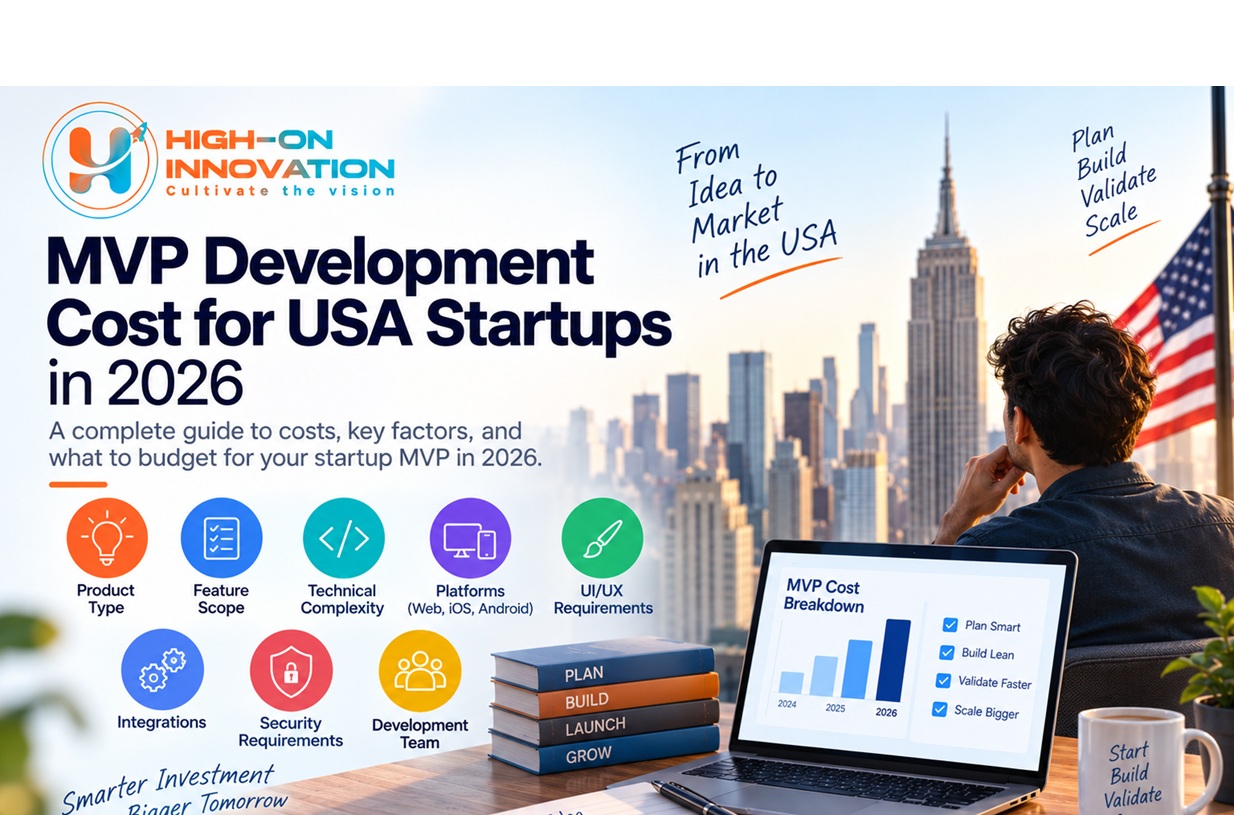
MVP Development Cost for USA Startups in 2026
An MVP, or Minimum Viable Product, gives founders a way to turn an idea into a usable product, launch it with real users, collect feedback, and understand whether the market actually wants the solution.