Real Examples of Digital Transformation Across Industries
Key Takeaways
Digital transformation impacts every major industry.
AI, cloud computing, automation, and analytics are major transformation drivers.
Businesses use digital technologies to improve efficiency and customer experiences.
Industries like healthcare, finance, retail, manufacturing, and logistics are rapidly modernizing.
Data-driven decision-making improves operational performance and scalability.
Digital transformation helps businesses remain competitive and future-ready.
Introduction
Digital transformation is no longer limited to large technology companies. Businesses across every major industry are adopting digital technologies to improve efficiency, customer experiences, scalability, innovation, and operational performance.
From artificial intelligence and cloud computing to automation and data analytics, organizations are transforming how they operate and deliver value in today’s digital-first economy.
Companies that successfully embrace digital transformation are becoming more agile, customer-focused, and future-ready.
This article explores real-world examples of digital transformation across industries and explains how businesses are using modern technologies to solve operational challenges, improve decision-making, and create competitive advantages.
What Is Digital Transformation?
Digital transformation is the process of integrating digital technologies into business operations, customer experiences, workflows, and organizational strategies.
It involves:
Automating manual processes
Modernizing legacy systems
Using AI and analytics
Improving customer interactions
Building scalable digital infrastructure
Digital transformation helps organizations become more efficient, innovative, and adaptable in rapidly changing markets.
Why Businesses Across Industries Are Embracing Digital Transformation
Modern businesses face growing pressure to:
Improve customer experiences
Reduce operational costs
Increase scalability
Respond faster to market changes
Improve productivity
Support remote operations
Use data more effectively
Digital transformation allows organizations to meet these demands while improving long-term business performance.
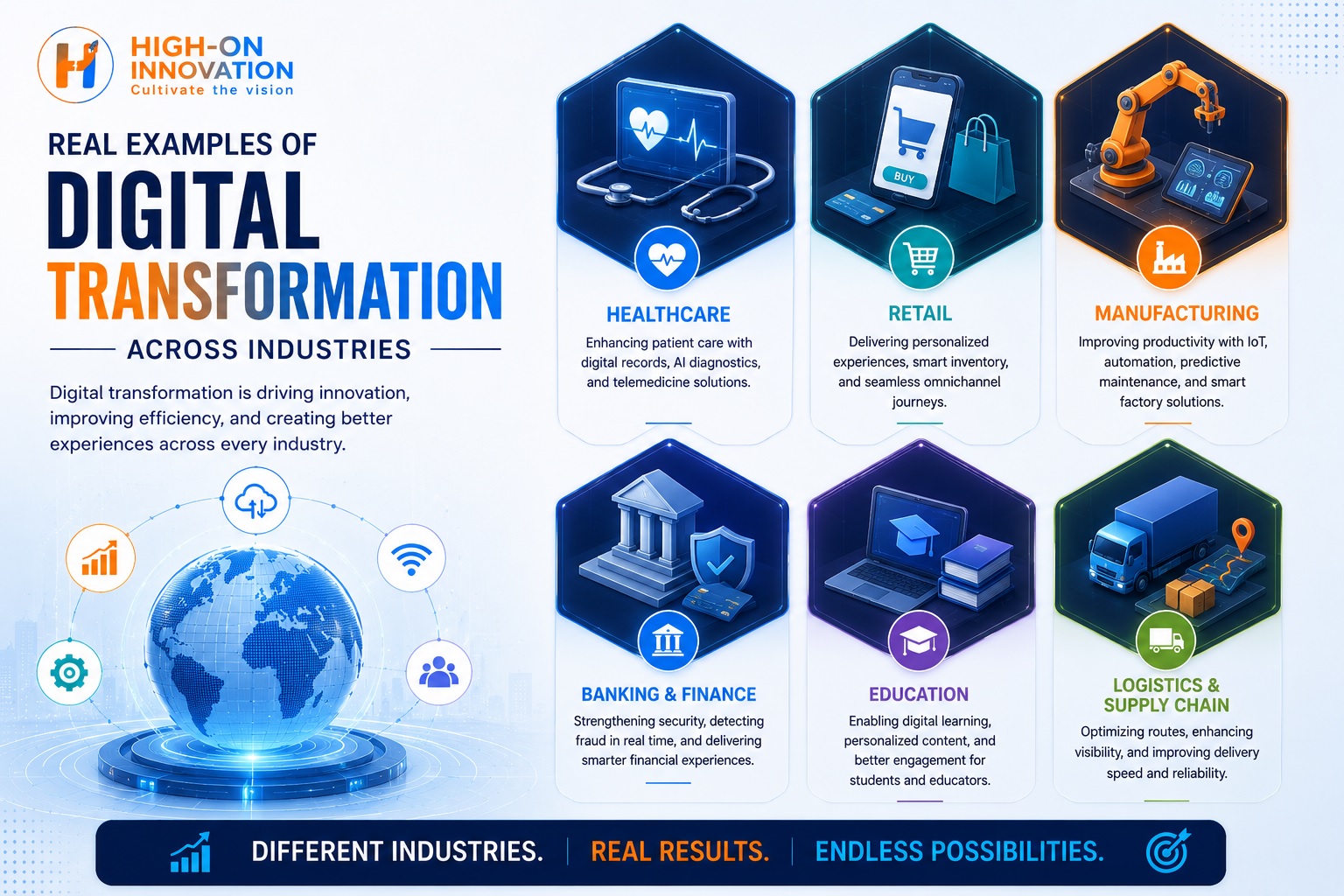
Real Examples of Digital Transformation Across Industries
1. Healthcare Industry
How Healthcare Is Transforming Digitally
Healthcare organizations are using digital technologies to improve patient care, operational efficiency, diagnostics, and medical accessibility.
Traditional healthcare systems often faced challenges such as:
Manual record management
Limited patient accessibility
Slow diagnostics
Communication delays
Digital transformation has significantly improved healthcare delivery.
Real Digital Transformation Examples in Healthcare
Telemedicine Platforms
Hospitals and healthcare providers now offer virtual consultations through telemedicine systems.
Benefits
Faster patient access
Reduced hospital visits
Improved healthcare accessibility
Better remote patient support
Electronic Health Records (EHR)
Healthcare institutions use digital patient record systems to centralize medical information securely.
Benefits
Faster information access
Improved coordination between doctors
Reduced paperwork
Better treatment accuracy
AI-Powered Diagnostics
AI systems analyze medical data and imaging scans to assist doctors in identifying diseases faster and more accurately.
Benefits
Faster diagnostics
Improved treatment planning
Reduced human errors
2. Banking and Financial Services
Digital Transformation in Banking
Financial institutions are modernizing services to improve customer experiences, security, and operational efficiency.
Traditional banking systems often involved:
Long processing times
Physical branch dependency
Manual approvals
Limited digital accessibility
Modern financial services are now heavily technology-driven.
Real Banking Transformation Examples
Mobile Banking Applications
Banks now allow customers to:
Transfer funds
Pay bills
Access statements
Apply for loans
Manage investments
through mobile apps.
Benefits
24/7 accessibility
Faster transactions
Improved customer convenience
AI Fraud Detection Systems
Banks use AI to monitor suspicious financial activities in real time.
Benefits
Reduced fraud risks
Faster threat detection
Improved financial security
Digital Payment Ecosystems
Online payments, digital wallets, and contactless transactions have transformed financial accessibility globally.
Benefits
Faster transactions
Better customer experience
Reduced cash dependency
3. Retail and Ecommerce Industry
How Retail Businesses Are Transforming
Retail companies are using digital technologies to create personalized shopping experiences and optimize operations.
Customer expectations in retail now include:
Fast delivery
Personalized recommendations
Omnichannel experiences
Seamless online shopping
Digital transformation helps retailers meet these expectations effectively.
Real Retail Transformation Examples
AI Product Recommendations
Ecommerce platforms analyze customer behavior to recommend products based on browsing and purchase history.
Benefits
Increased sales
Improved customer engagement
Personalized shopping experiences
Smart Inventory Management
Retailers use automation and analytics to track inventory in real time.
Benefits
Reduced stock shortages
Better demand forecasting
Improved operational efficiency
Omnichannel Commerce
Businesses integrate websites, mobile apps, social media, and physical stores into unified shopping experiences.
Benefits
Better customer convenience
Consistent brand experiences
Improved customer retention
4. Manufacturing Industry
Digital Transformation in Manufacturing
Manufacturers are adopting automation, IoT devices, AI, and predictive analytics to improve production efficiency and reduce downtime.
Traditional manufacturing processes often suffered from:
Equipment failures
Manual monitoring
Production delays
Limited operational visibility
Smart manufacturing technologies are solving these challenges.
Real Manufacturing Transformation Examples
IoT-Based Equipment Monitoring
Manufacturing companies use IoT sensors to monitor machine performance in real time.
Benefits
Predictive maintenance
Reduced downtime
Better operational visibility
Robotics and Automation
Factories automate repetitive production tasks using robotic systems.
Benefits
Faster production
Improved accuracy
Reduced operational costs
Predictive Analytics
Manufacturers analyze operational data to predict equipment failures before they occur.
Benefits
Lower maintenance costs
Improved production planning
Reduced disruptions
5. Education Industry
Digital Transformation in Education
Educational institutions are modernizing learning experiences through digital platforms and cloud technologies.
Traditional education systems faced challenges such as:
Limited remote accessibility
Physical classroom dependency
Manual administrative processes
Digital transformation has improved accessibility and learning flexibility.
Real Education Transformation Examples
Virtual Learning Platforms
Schools and universities use online learning systems for remote education and hybrid classrooms.
Benefits
Remote accessibility
Flexible learning environments
Improved educational reach
AI-Powered Learning Systems
AI tools personalize learning experiences based on student performance and engagement.
Benefits
Customized learning
Better student support
Improved educational outcomes
Cloud Collaboration Tools
Educational institutions use cloud platforms for:
Assignments
Communication
File sharing
Virtual collaboration
Benefits
Better teamwork
Simplified communication
Improved administrative efficiency
6. Logistics and Supply Chain Industry
How Logistics Is Transforming Digitally
Logistics companies use digital technologies to improve shipment visibility, warehouse operations, and supply chain management.
Traditional supply chain systems often faced:
Limited tracking
Delayed communication
Inventory inefficiencies
Digital transformation improves operational transparency and efficiency.
Real Logistics Transformation Examples
Real-Time Shipment Tracking
Businesses use GPS and cloud systems to monitor shipments in real time.
Benefits
Improved delivery accuracy
Better customer visibility
Reduced operational delays
Warehouse Automation
Logistics companies automate inventory management and warehouse workflows.
Benefits
Faster order processing
Improved inventory accuracy
Reduced labor costs
AI Demand Forecasting
AI analyzes historical and market data to optimize inventory and logistics planning.
Benefits
Better supply chain planning
Reduced stock shortages
Improved operational efficiency
7. Hospitality and Travel Industry
Digital Transformation in Hospitality
Hotels and travel companies are improving customer experiences using digital platforms and automation.
Real Hospitality Transformation Examples
Mobile Booking Platforms
Travel companies offer digital booking systems with real-time availability and payment processing.
Benefits
Faster bookings
Better customer convenience
Increased accessibility
AI Customer Support
Hotels and airlines use AI chatbots for:
Booking assistance
Customer inquiries
Reservation management
Benefits
24/7 customer support
Faster response times
Improved customer satisfaction
Personalized Travel Experiences
AI systems analyze customer preferences to recommend destinations, hotels, and travel packages.
Benefits
Better personalization
Increased customer engagement
Improved retention
Common Technologies Driving Industry Transformation
Artificial Intelligence (AI)
Used for automation, analytics, personalization, and intelligent decision-making.
Cloud Computing
Provides scalable digital infrastructure and remote accessibility.
Internet of Things (IoT)
Enables real-time monitoring and connected systems.
Automation
Improves operational efficiency and reduces manual workloads.
Data Analytics
Supports smarter business decisions through real-time insights.
Cybersecurity Solutions
Protect digital infrastructure and sensitive customer data.
Benefits Businesses Achieve Through Digital Transformation
Improved Operational Efficiency
Automation reduces delays and manual work.
Better Customer Experiences
Businesses deliver faster and more personalized services.
Increased Scalability
Digital systems support long-term business growth.
Faster Decision-Making
Analytics and AI improve strategic planning.
Reduced Costs
Automation and cloud systems lower operational expenses.
Greater Innovation
Businesses can launch and optimize solutions more quickly.
Challenges Businesses Face During Transformation
Despite its advantages, digital transformation also comes with challenges such as:
Legacy system limitations
Employee resistance
Integration complexity
Cybersecurity concerns
Skill gaps
Budget constraints
Businesses require clear strategies and leadership support to overcome these challenges successfully.
The Future of Industry-Wide Digital Transformation
Digital transformation will continue evolving through:
Generative AI
Hyperautomation
Intelligent analytics
Cloud-native ecosystems
Smart IoT infrastructure
Personalized digital experiences
Organizations that continue investing in digital innovation will be better prepared for future market demands and technological advancements.
Conclusion
Digital transformation is reshaping industries by improving efficiency, scalability, customer experiences, and business innovation.
From healthcare and banking to manufacturing and logistics, organizations are using AI, cloud computing, automation, analytics, and intelligent systems to modernize operations and remain competitive in a rapidly evolving digital economy.
Real-world digital transformation examples show that businesses embracing innovation today are building stronger, smarter, and more future-ready organizations for tomorrow.
Frequently Asked Questions
What are real examples of digital transformation?
Examples include telemedicine, mobile banking, AI chatbots, ecommerce automation, predictive maintenance, and cloud-based collaboration systems.
Which industries benefit most from digital transformation?
Industries like healthcare, finance, retail, manufacturing, education, logistics, and hospitality benefit significantly from digital transformation.
Why is digital transformation important for businesses?
Digital transformation improves operational efficiency, scalability, customer experiences, and business innovation.
What technologies drive digital transformation?
AI, cloud computing, automation, IoT, analytics, and cybersecurity technologies are major drivers of digital transformation.
Author Bio
Sandesh Gupta – CEO, High-On Innovation
Sandesh Gupta is the CEO of High-On Innovation, where he leads the company's strategic direction, operational excellence, and business innovation initiatives. With extensive experience in digital transformation, enterprise technology adoption, and business growth, he works closely with organizations to help them modernize operations, improve efficiency, and leverage emerging technologies for long-term success. His expertise spans digital transformation strategy, AI-driven business solutions, process optimization, and scalable technology ecosystems.
Comments
Loading comments…
Latest Market Trends

Sep 9, 2026
MVP Development Cost for Australian Businesses in 2026
A simple customer portal, booking application, SaaS dashboard, marketplace, AI-powered platform, fintech product, healthcare application, or enterprise workflow system can all be described as an "MVP", but their development requirements can be dramatically different.

Sep 3, 2026
How to Choose an MVP Development Company for Your Startup
Choosing the right MVP development company can have a major impact on your startup's first product launch. The right development partner does more than write code. They help translate your business idea into a focused product, identify technical risks, prioritize features, and create an MVP that can be tested with real users.

Sep 8, 2026
MVP Development Cost for Canadian Businesses in 2026: Complete Guide to Pricing, Features and Process
Discover MVP development cost Canada in 2026, including startup MVP cost, development factors, timelines, features, technology, compliance, and how to choose the right MVP development company.
Popular Post
MVP Development Cost for Australian Businesses in 2026
A simple customer portal, booking application, SaaS dashboard, marketplace, AI-powered platform, fintech product, healthcare application, or enterprise workflow system can all be described as an "MVP", but their development requirements can be dramatically different.
How to Choose an MVP Development Company for Your Startup
Choosing the right MVP development company can have a major impact on your startup's first product launch. The right development partner does more than write code. They help translate your business idea into a focused product, identify technical risks, prioritize features, and create an MVP that can be tested with real users.
MVP Development Cost for Canadian Businesses in 2026: Complete Guide to Pricing, Features and Process
Discover MVP development cost Canada in 2026, including startup MVP cost, development factors, timelines, features, technology, compliance, and how to choose the right MVP development company.
MVP Development Cost for USA Startups in 2026
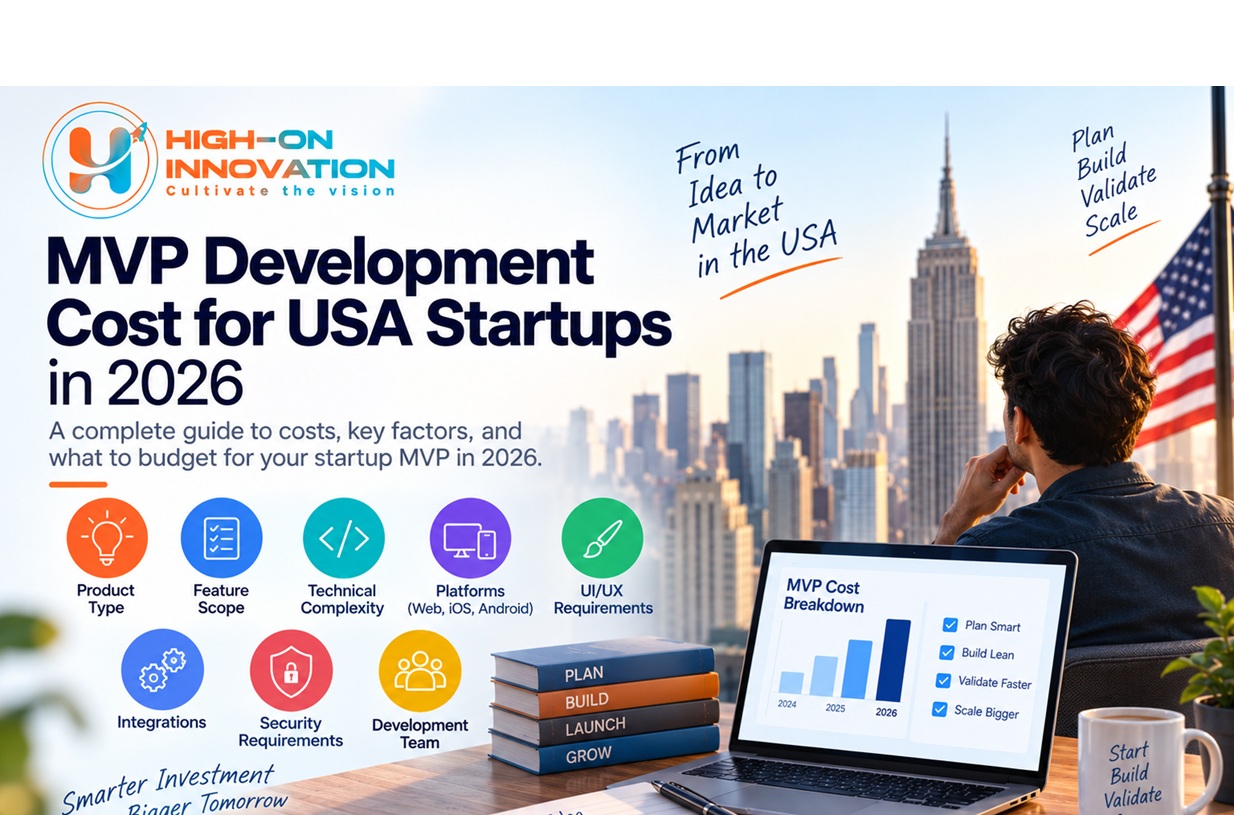
An MVP, or Minimum Viable Product, gives founders a way to turn an idea into a usable product, launch it with real users, collect feedback, and understand whether the market actually wants the solution.