How AI Is Accelerating Digital Transformation in 2026
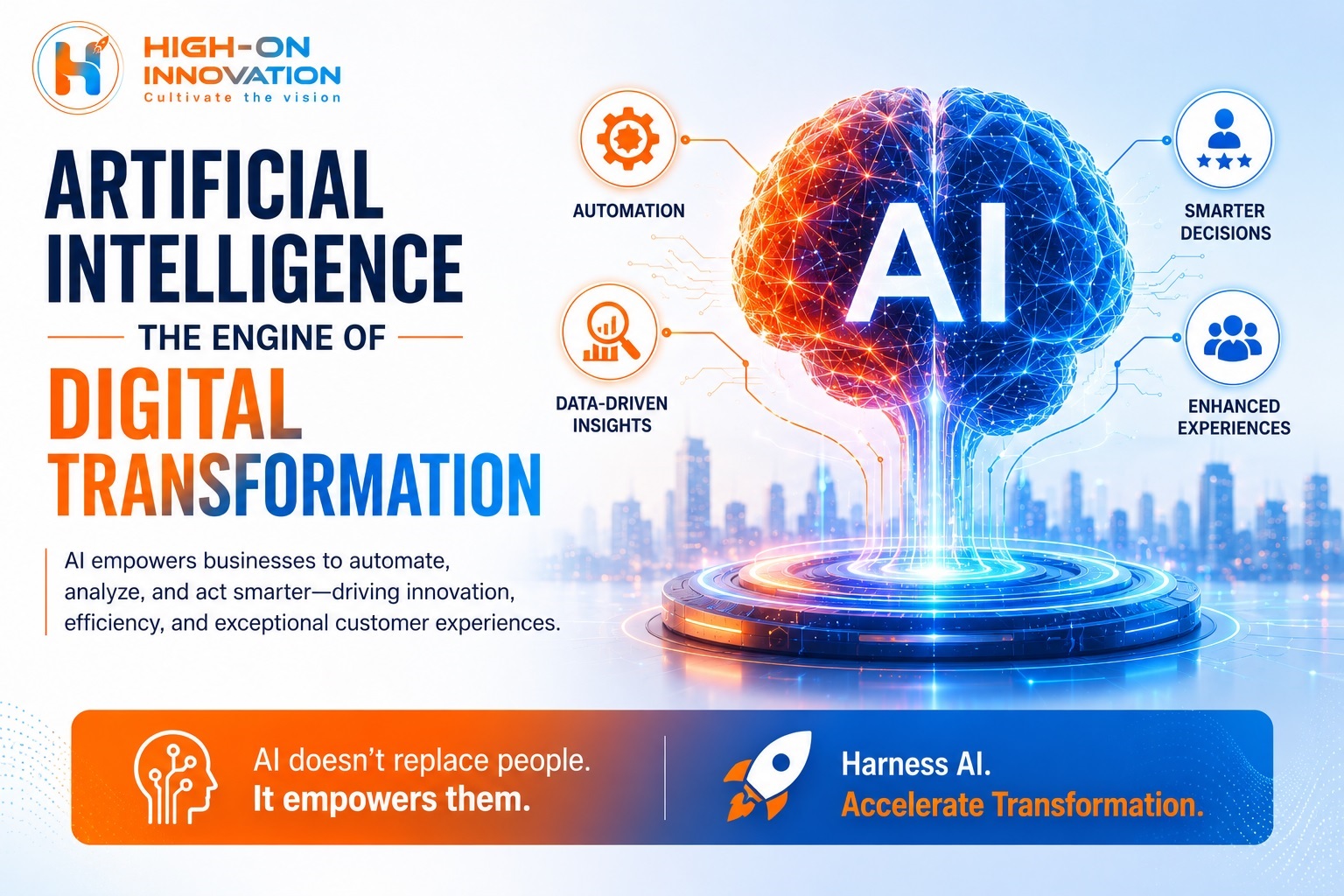
Key Takeaways
AI is a major driver of digital transformation in 2026.
Businesses use AI for automation, analytics, customer experience, and decision-making.
Generative AI is accelerating innovation across industries.
AI improves operational efficiency and reduces manual workloads.
Predictive analytics helps organizations make smarter business decisions.
AI-powered businesses are becoming more scalable and competitive.
Introduction
Artificial Intelligence (AI) has become one of the most powerful drivers of digital transformation in modern businesses. In 2026, organizations across industries are rapidly adopting AI technologies to automate operations, improve customer experiences, analyze data, and accelerate innovation.
Businesses are no longer using AI only for experimentation. Today, AI is deeply integrated into customer support systems, marketing automation, analytics, business intelligence, operations, cybersecurity, and decision-making processes.
As digital transformation continues evolving, AI is helping organizations become faster, smarter, more scalable, and more competitive in an increasingly digital economy.
What Is AI in Digital Transformation?
AI in digital transformation refers to the use of artificial intelligence technologies to improve business operations, automate workflows, analyze data, and enhance digital experiences.
AI enables businesses to:
Automate repetitive tasks
Process large volumes of data
Predict customer behavior
Improve operational efficiency
Deliver personalized experiences
Support intelligent decision-making
Modern AI systems combine machine learning, natural language processing, predictive analytics, and automation to create smarter business ecosystems.
Why AI Is Important for Digital Transformation
Digital transformation focuses on improving business efficiency, scalability, and customer experiences using technology.
AI strengthens digital transformation by enabling businesses to:
Operate more efficiently
Reduce manual processes
Improve business intelligence
Increase automation
Respond faster to market changes
Deliver real-time personalization
Organizations using AI can adapt more quickly to evolving customer expectations and industry demands.
How AI Is Accelerating Digital Transformation
1. Intelligent Business Automation
One of the biggest impacts of AI is intelligent automation.
AI-powered systems can automate repetitive and time-consuming tasks across multiple business departments.
Common AI Automation Use Cases
Customer support chatbots
Automated email responses
HR screening systems
Invoice processing
Workflow management
Inventory monitoring
Marketing automation
Unlike traditional automation, AI systems can learn, adapt, and improve over time.
Business Benefits
Faster operations
Reduced human errors
Lower operational costs
Improved productivity
Increased efficiency
2. AI-Powered Customer Experience
Customer expectations continue increasing in 2026. People expect personalized, fast, and seamless digital interactions.
AI helps businesses improve customer experiences through:
Personalized recommendations
AI chatbots
Voice assistants
Smart search systems
Predictive customer support
Real-time engagement
Example
Ecommerce businesses use AI recommendation engines to suggest products based on customer behavior and purchasing patterns.
This improves:
Customer satisfaction
Engagement
Retention
Sales conversions
3. Data Analytics and Predictive Intelligence
Modern businesses generate massive amounts of data daily.
AI-powered analytics tools help organizations:
Analyze customer behavior
Predict future trends
Identify operational inefficiencies
Forecast sales
Detect risks
Improve strategic planning
Predictive analytics enables businesses to make proactive decisions instead of reactive ones.
Real-World Example
Financial institutions use AI analytics to detect fraudulent activities in real time and reduce financial risks.
4. Generative AI for Business Innovation
Generative AI has become one of the fastest-growing technologies driving digital transformation in 2026.
Businesses use generative AI for:
Content creation
Marketing copy generation
Code development assistance
AI-powered design
Automated reporting
Customer communication
Generative AI improves speed, creativity, and operational efficiency while reducing manual workload.
Industries Benefiting Most
Marketing
Software development
Ecommerce
Media
Education
Customer service
5. AI in Decision-Making
AI helps organizations make smarter business decisions using real-time insights and predictive intelligence.
AI systems can analyze:
Customer trends
Market conditions
Operational performance
Financial data
User behavior
This allows business leaders to make faster and more accurate strategic decisions.
Benefits
Better forecasting
Faster responses
Improved business agility
Reduced uncertainty
6. AI-Driven Cybersecurity
As businesses become more digital, cybersecurity threats continue increasing.
AI helps improve cybersecurity through:
Threat detection
Real-time monitoring
Fraud prevention
Behavioral analysis
Automated security responses
AI systems can identify unusual activity patterns much faster than manual security systems.
This strengthens digital infrastructure and protects sensitive business data.
7. AI for Workforce Productivity
AI tools help employees work more efficiently by reducing repetitive workloads and improving workflow management.
Businesses use AI-powered systems for:
Smart scheduling
Automated reporting
Task prioritization
Meeting summaries
Knowledge management
Virtual assistants
Employees can focus more on strategic and creative tasks instead of manual processes.
Industries Using AI for Digital Transformation
Healthcare
Healthcare providers use AI for:
Diagnostics
Telemedicine
Patient monitoring
Medical data analysis
Banking and Finance
Financial institutions implement AI for:
Fraud detection
Risk analysis
Automated customer support
Financial forecasting
Retail and Ecommerce
Retail companies use AI for:
Personalized recommendations
Inventory management
Customer analytics
Demand forecasting
Manufacturing
Manufacturers use AI for:
Predictive maintenance
Operational monitoring
Quality control
Process automation
Education
Educational platforms use AI for:
Personalized learning
Virtual tutoring
Student performance analysis
Automated administration
Benefits of AI in Digital Transformation
Increased Efficiency
AI automates repetitive tasks and streamlines operations.
Improved Customer Experience
Businesses deliver faster and more personalized interactions.
Better Decision-Making
AI provides real-time insights and predictive analytics.
Reduced Operational Costs
Automation lowers manual labor and operational expenses.
Enhanced Scalability
AI systems support business growth without significantly increasing complexity.
Faster Innovation
Businesses can experiment, optimize, and launch new solutions more quickly.
Challenges of AI Adoption
Despite its advantages, AI implementation also comes with challenges.
Data Privacy Concerns
Businesses must ensure secure data collection and usage.
High Initial Investment
Advanced AI systems may require significant implementation costs.
Skill Gaps
Organizations may need AI expertise and employee training.
Integration Complexity
AI systems must integrate with existing business infrastructure.
Ethical Considerations
Businesses should use AI responsibly and transparently.
A strategic AI roadmap helps organizations implement AI effectively and sustainably.
How Businesses Can Successfully Implement AI
Start With Clear Goals
Identify specific business problems AI can solve.
Focus on High-Impact Areas
Prioritize automation, analytics, and customer experience improvements.
Use Scalable AI Solutions
Choose technologies that support future growth.
Train Teams
Help employees understand and adapt to AI systems.
Monitor Performance
Track KPIs and continuously optimize AI workflows.
The Future of AI and Digital Transformation
AI will continue transforming businesses through:
Hyper automation
Advanced predictive analytics
Autonomous business systems
Intelligent customer experiences
AI-powered business ecosystems
As generative AI and machine learning continue evolving, organizations will increasingly rely on AI to improve efficiency, innovation, and competitive advantage.
Businesses adopting AI today are building the foundation for long-term digital success.
Conclusion
AI has become one of the most important technologies accelerating digital transformation in 2026. From automation and analytics to customer experience and business intelligence, AI helps organizations improve efficiency, reduce costs, and drive innovation.
Businesses that successfully integrate AI into their digital transformation strategies can operate more intelligently, scale faster, and adapt quickly to changing market demands.
AI is no longer a future technology. It is now a core part of modern business transformation.
Frequently Asked Questions
How is AI used in digital transformation?
AI is used for automation, analytics, customer support, predictive intelligence, cybersecurity, and operational optimization.
Why is AI important for businesses in 2026?
AI helps businesses improve efficiency, reduce costs, automate workflows, and deliver personalized customer experiences.
What industries benefit most from AI?
Industries like healthcare, finance, retail, manufacturing, logistics, and education benefit significantly from AI technologies.
What is generative AI in business?
Generative AI creates content, reports, designs, code, and automated responses using advanced machine learning models.
Author Bio
Sandesh Gupta – CEO, High-On Innovation
Sandesh Gupta is the CEO of High-On Innovation, specializing in AI-driven digital transformation, automation, business innovation, and scalable technology solutions. He works with startups and enterprises to build intelligent digital ecosystems that improve operational efficiency, customer experiences, and long-term business growth.
Comments
Loading comments…
Latest Market Trends

Sep 9, 2026
MVP Development Cost for Australian Businesses in 2026
A simple customer portal, booking application, SaaS dashboard, marketplace, AI-powered platform, fintech product, healthcare application, or enterprise workflow system can all be described as an "MVP", but their development requirements can be dramatically different.

Sep 3, 2026
How to Choose an MVP Development Company for Your Startup
Choosing the right MVP development company can have a major impact on your startup's first product launch. The right development partner does more than write code. They help translate your business idea into a focused product, identify technical risks, prioritize features, and create an MVP that can be tested with real users.

Sep 8, 2026
MVP Development Cost for Canadian Businesses in 2026: Complete Guide to Pricing, Features and Process
Discover MVP development cost Canada in 2026, including startup MVP cost, development factors, timelines, features, technology, compliance, and how to choose the right MVP development company.
Popular Post
MVP Development Cost for Australian Businesses in 2026
A simple customer portal, booking application, SaaS dashboard, marketplace, AI-powered platform, fintech product, healthcare application, or enterprise workflow system can all be described as an "MVP", but their development requirements can be dramatically different.
How to Choose an MVP Development Company for Your Startup
Choosing the right MVP development company can have a major impact on your startup's first product launch. The right development partner does more than write code. They help translate your business idea into a focused product, identify technical risks, prioritize features, and create an MVP that can be tested with real users.
MVP Development Cost for Canadian Businesses in 2026: Complete Guide to Pricing, Features and Process
Discover MVP development cost Canada in 2026, including startup MVP cost, development factors, timelines, features, technology, compliance, and how to choose the right MVP development company.

MVP Development Cost for USA Startups in 2026
An MVP, or Minimum Viable Product, gives founders a way to turn an idea into a usable product, launch it with real users, collect feedback, and understand whether the market actually wants the solution.