AI for Clinics: A Complete Guide to Smarter, Faster & More Efficient Healthcare
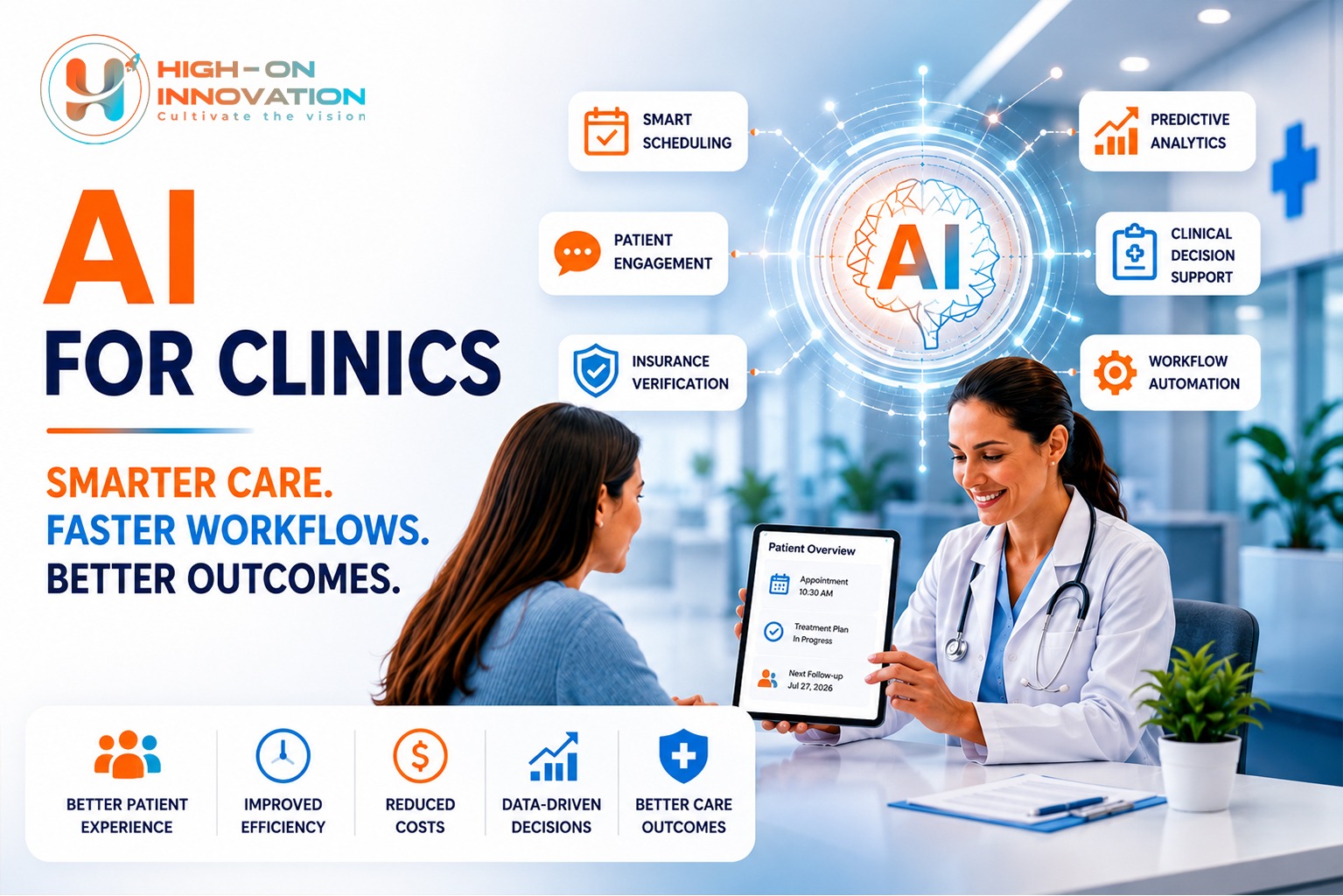
Running a successful clinic today requires much more than delivering excellent medical care. Clinic owners and healthcare professionals must also manage appointments, patient communication, billing, insurance verification, staff coordination, documentation, compliance, and business growth—all while maintaining a high standard of patient experience.
As patient expectations continue to rise, many clinics struggle with manual administrative processes that consume valuable time and reduce operational efficiency. Reception teams become overwhelmed with phone calls, missed appointments affect revenue, patient follow-ups are delayed, and repetitive paperwork limits the time available for patient care.
Hiring more administrative staff isn't always the most practical or cost-effective solution.
This is where Artificial Intelligence (AI) is transforming modern clinics.
AI is helping clinics automate routine administrative tasks, streamline workflows, improve patient engagement, reduce no-shows, optimize scheduling, and provide valuable operational insights. Rather than replacing healthcare professionals, AI enables doctors and clinic staff to focus on what matters most—delivering exceptional patient care.
Whether you operate a single-doctor practice, a multi-specialty clinic, a dental practice, a physiotherapy center, or a specialty medical clinic, AI can help improve efficiency, increase patient satisfaction, and support sustainable business growth.
In this guide, you'll discover:
What AI for clinics means
Common operational challenges AI solves
Fifteen real-world AI applications for clinics
Benefits of adopting AI
Practical insights for modern clinic management
What is AI for Clinics?
AI for clinics refers to the use of Artificial Intelligence, intelligent automation, machine learning, and workflow technologies to simplify clinic operations, improve patient communication, and automate repetitive administrative tasks.
Traditional clinic management software helps store patient records and schedule appointments, but many routine activities still require manual effort.
AI extends these systems by adding intelligence and automation.
For example, AI can automatically:
Schedule appointments
Send reminders
Verify insurance
Answer patient questions
Manage follow-ups
Update CRM records
Generate operational reports
Predict appointment no-shows
This allows clinics to operate more efficiently without increasing administrative workloads.
Technologies Behind AI for Clinics
AI-powered clinic management combines several technologies to improve operational performance.
Artificial Intelligence
Artificial Intelligence enables software to analyze information, recognize patterns, and automate decisions that would normally require human intervention.
Common clinic applications include:
Appointment scheduling
Patient communication
Administrative automation
Billing support
Patient engagement
CRM automation
Machine Learning
Machine Learning allows AI systems to improve over time by learning from clinic data.
It can help predict:
Appointment cancellations
Peak consultation hours
Patient demand
Follow-up requirements
Resource utilization
As more data becomes available, predictions become increasingly accurate.
Workflow Automation
Workflow automation connects different clinic activities into seamless digital processes.
Examples include:
Patient registration
Appointment confirmation
Insurance verification
Consultation workflow
Billing
Post-treatment follow-up
Automation reduces delays and ensures every patient follows a consistent care journey.
CRM Automation
Patient relationships don't end after a consultation.
AI-powered CRM systems help clinics manage:
Patient inquiries
Follow-up appointments
Referral tracking
Personalized communication
Recall campaigns
Feedback collection
This improves long-term patient retention and engagement.
Common Challenges Clinics Face
Small and medium-sized clinics often operate with lean teams. As patient numbers grow, administrative responsibilities increase, making it difficult to maintain operational efficiency.
AI helps solve many of these everyday challenges.
1. Missed Appointments
No-shows directly impact clinic revenue and reduce physician productivity.
Without consistent reminders, patients may forget appointments or fail to reschedule in advance.
How AI Helps
AI automatically sends personalized reminders through SMS, email, WhatsApp, or voice calls while allowing patients to confirm or reschedule appointments.
2. Reception Overload
Reception teams handle:
Appointment booking
Phone inquiries
Patient registration
Insurance questions
Billing support
General information requests
During busy hours, response times increase and patient satisfaction declines.
How AI Helps
AI chatbots, voice assistants, and automated scheduling systems manage routine inquiries, reducing front-desk workload.
3. Manual Patient Follow-Ups
Following up with patients manually is time-consuming and often inconsistent.
Missed follow-ups may reduce treatment adherence and patient retention.
How AI Helps
AI automatically schedules follow-up messages, medication reminders, wellness campaigns, and feedback requests.
4. Missed Business Opportunities
Potential patients frequently contact clinics outside business hours.
Without immediate responses, inquiries may be lost to competing providers.
How AI Helps
AI-powered chatbots respond instantly, capture patient details, answer common questions, and schedule appointments around the clock.
5. Billing Delays
Manual billing processes often create payment delays and increase administrative effort.
How AI Helps
AI automates invoice generation, payment reminders, billing validation, and financial reporting.
6. Documentation Burden
Doctors frequently spend valuable consultation time updating patient records and documenting treatment details.
How AI Helps
AI assists with documentation, organizes patient information, and reduces repetitive administrative work.
7. Patient Retention Challenges
Retaining existing patients is often more cost-effective than acquiring new ones.
However, many clinics lack structured patient engagement strategies.
How AI Helps
CRM automation keeps patients engaged through personalized communication, preventive care reminders, recall campaigns, and loyalty-building initiatives.
15 AI Applications Transforming Clinics
AI can automate nearly every administrative process within a modern clinic.
Below are the first seven applications delivering measurable business improvements.
1. Intelligent Appointment Scheduling
Appointment scheduling is one of the highest-impact automation opportunities for clinics.
AI-powered scheduling systems:
Enable online booking
Match patients with appropriate doctors
Manage physician calendars
Handle cancellations
Automate waiting lists
Send confirmations
Benefits
More appointments
Better calendar utilization
Reduced no-shows
Improved patient convenience
2. Patient Communication Automation
Patients expect timely communication before and after consultations.
AI automates:
Appointment reminders
Treatment instructions
Medication reminders
Follow-up messages
Health education
Feedback requests
Benefits
Higher patient satisfaction
Better treatment compliance
Reduced manual communication
Stronger patient relationships
3. Clinic CRM Automation
AI-powered CRM systems help clinics build long-term relationships with patients.
CRM automation manages:
Patient inquiries
Referral sources
Follow-up schedules
Marketing campaigns
Patient segmentation
Recall reminders
Benefits
Better patient retention
Increased referrals
Improved communication
Higher lifetime patient value
4. WhatsApp Patient Automation
Many patients prefer communicating through WhatsApp because it is familiar and convenient.
AI integrates with WhatsApp to automate:
Appointment confirmations
Reminders
Follow-up care
Lab report notifications
Health campaigns
Feedback collection
Benefits
Faster patient responses
Improved engagement
Reduced phone calls
Higher appointment attendance
5. AI Voice Receptionist
Small clinics often receive more phone calls than reception staff can efficiently manage.
An AI voice assistant can:
Answer incoming calls
Schedule appointments
Confirm bookings
Provide clinic information
Route calls to the correct department
Handle common questions
Benefits
24/7 availability
Reduced reception workload
Faster response times
Improved patient experience
6. Insurance Verification Automation
Manual insurance verification can delay consultations and increase administrative effort.
AI automates:
Eligibility verification
Coverage validation
Missing documentation alerts
Approval tracking
Patient notifications
Benefits
Faster registrations
Reduced claim issues
Lower administrative workload
Improved patient satisfaction
7. Billing Automation
AI simplifies clinic billing by automating repetitive financial tasks.
Capabilities include:
Invoice generation
Payment reminders
Billing validation
Outstanding balance tracking
Financial reporting
Benefits
Improved cash flow
Reduced billing errors
Faster payments
Better financial visibility
8. Clinical Documentation Automation
Doctors often spend valuable consultation time updating patient records, writing treatment notes, and documenting diagnoses.
AI-powered documentation tools reduce this administrative burden by:
Converting voice conversations into structured notes
Organizing patient histories
Updating Electronic Medical Records (EMR)
Creating consultation summaries
Retrieving relevant patient information
Benefits
More time with patients
Reduced documentation workload
Improved record accuracy
Faster access to patient history
Instead of spending hours completing paperwork after consultations, clinicians can focus on delivering better care.
9. Clinic Workflow Automation
A patient's journey through a clinic involves several interconnected steps, including registration, consultation, diagnostics, billing, and follow-up.
AI-powered workflow automation ensures each stage progresses automatically without unnecessary delays.
Common Workflow Automations
Patient registration
Consultation queue management
Referral coordination
Laboratory requests
Prescription approvals
Billing notifications
Follow-up scheduling
Benefits
Faster patient flow
Reduced administrative delays
Better coordination between staff
Consistent patient experiences
Workflow automation eliminates repetitive manual tasks while improving operational consistency.
10. Online Patient Registration
Paper forms and manual registration slow down the patient experience and create additional work for reception staff.
AI-powered online registration allows patients to complete forms before arriving at the clinic.
AI Can Automate
Digital registration forms
Identity verification
Consent collection
Insurance information
Patient profile creation
Benefits
Shorter waiting times
Faster check-in
Reduced paperwork
Improved data accuracy
Patients enjoy a smoother experience, while clinic staff spend less time entering information manually.
11. AI Chatbots for Clinics
Patients often have questions outside clinic hours regarding services, doctors, pricing, or appointment availability.
AI chatbots provide instant responses at any time of day.
Chatbot Capabilities
Book appointments
Answer frequently asked questions
Share clinic timings
Explain available services
Collect patient information
Route complex queries to staff
Benefits
24/7 patient support
Reduced phone calls
Faster response times
Increased appointment bookings
AI chatbots ensure clinics never miss potential patient inquiries.
12. Automated Patient Review Collection
Online reviews influence patient decisions when choosing a healthcare provider.
However, many satisfied patients never leave feedback unless prompted.
AI helps automate the review collection process by:
Sending review requests after appointments
Following up with patients
Directing patients to review platforms
Monitoring patient feedback
Benefits
More positive reviews
Stronger online reputation
Increased patient trust
Higher conversion from online searches
A strong digital reputation helps clinics attract new patients organically.
13. Patient Retention Automation
Retaining existing patients is essential for long-term clinic growth.
AI-powered CRM systems keep patients engaged through automated communication and personalized outreach.
AI Supports
Annual health check reminders
Preventive care campaigns
Vaccination reminders
Recall appointments
Personalized wellness communication
Birthday and anniversary greetings
Benefits
Improved patient loyalty
Higher repeat visits
Better long-term engagement
Increased patient lifetime value
Building ongoing relationships is often more cost-effective than continuously acquiring new patients.
14. Predictive Scheduling
Clinic demand varies throughout the week, month, and year.
AI analyzes historical appointment data to predict future scheduling trends.
AI Can Predict
Busy consultation hours
Seasonal patient demand
Appointment cancellation patterns
No-show probabilities
Physician workload
Benefits
Optimized appointment calendars
Better doctor utilization
Reduced waiting times
Improved operational planning
Predictive scheduling allows clinics to maximize appointment capacity while improving patient convenience.
15. AI Business Intelligence Dashboard
Running a successful clinic requires data-driven decision-making.
AI-powered dashboards provide real-time insights into operational and financial performance.
Dashboards Monitor
Appointment volumes
Revenue trends
Patient retention
No-show rates
Staff productivity
Referral sources
Patient satisfaction
Billing performance
Benefits
Better business decisions
Improved operational visibility
Faster reporting
Identification of growth opportunities
Instead of relying on spreadsheets, clinic owners gain instant visibility into their practice's performance.
Benefits of AI for Clinics
Implementing AI is about more than adopting new technology—it's about creating a more efficient, patient-centered, and profitable practice.
More Appointments
AI-powered scheduling, online booking, and automated reminders help clinics reduce empty time slots and increase appointment utilization.
Lower Appointment No-Shows
Automated reminders through SMS, WhatsApp, email, and voice calls significantly reduce missed appointments, helping clinics protect revenue.
Better Patient Experience
Patients appreciate faster communication, shorter waiting times, convenient online services, and personalized follow-ups.
A positive experience increases patient satisfaction and encourages long-term loyalty.
Reduced Administrative Work
AI handles repetitive tasks such as scheduling, billing, follow-ups, documentation, and patient communication.
This allows clinic staff to focus on patient care rather than paperwork.
Improved Revenue
Automation supports stronger financial performance through:
Better appointment utilization
Faster billing
Reduced claim delays
Higher patient retention
Increased referrals
Higher Patient Retention
CRM automation keeps patients engaged with preventive care reminders, follow-ups, wellness campaigns, and personalized communication.
Returning patients contribute significantly to long-term practice growth.
Lower Operating Costs
Instead of expanding administrative teams to manage increasing workloads, clinics can scale operations through intelligent automation.
Why Clinics Choose HOI
At High on Innovation (HOI), we understand that every clinic operates differently. A dermatology clinic has different workflows than a physiotherapy center or a multi-specialty practice.
That's why we design AI automation solutions around your clinic—not the other way around.
AI Automation
We automate repetitive administrative processes so your team can focus on patient care and practice growth.
Workflow Automation
We streamline patient journeys by automating registration, scheduling, referrals, billing, follow-ups, and internal coordination.
Clinic CRM Automation
Our CRM solutions help clinics:
Capture patient inquiries
Track referrals
Automate follow-ups
Improve patient retention
Personalize communication
WhatsApp & Communication Automation
We integrate AI with your preferred communication channels, including WhatsApp, SMS, email, and voice assistants, ensuring timely and personalized patient interactions.
System Integration
HOI integrates AI automation with your existing systems, including:
Clinic Management Software
Electronic Medical Records (EMR)
Billing Systems
CRM Platforms
Communication Tools
Accounting Software
This creates a connected ecosystem where information flows automatically across your clinic.
Custom Automation Strategy
No two clinics are identical.
We begin every project by understanding your workflows, identifying operational bottlenecks, and designing an automation strategy that aligns with your goals and budget.
Frequently Asked Questions
1. Can small clinics use AI?
Yes. AI solutions are scalable and can be implemented by clinics of all sizes. Even a single-doctor practice can benefit from appointment automation, patient communication, CRM, and billing automation.
2. Is AI expensive for clinics?
Not necessarily. Many clinics start with automating one or two high-impact processes such as appointment scheduling or patient communication. As operational savings increase, automation can be expanded gradually.
3. Will AI replace clinic staff?
No. AI is designed to support clinic staff by automating repetitive administrative tasks, allowing healthcare professionals to focus on patient care and relationship building.
4. Which clinic processes should be automated first?
Most clinics begin with:
Appointment scheduling
Patient reminders
WhatsApp communication
CRM automation
Billing
Insurance verification
These areas usually provide the fastest return on investment.
5. Can AI improve patient retention?
Yes. AI-powered CRM systems automate follow-ups, preventive care reminders, recall campaigns, feedback collection, and personalized communication—all of which contribute to stronger patient relationships and higher retention.
Conclusion
Artificial Intelligence is helping clinics operate more efficiently while delivering better experiences for both patients and healthcare professionals.
From appointment scheduling and patient communication to CRM, billing, workflow automation, predictive scheduling, and business intelligence, AI simplifies daily operations and creates opportunities for sustainable growth.
The most successful clinics are not replacing people with technology—they are using technology to help people work smarter.
By automating repetitive tasks and connecting key business processes, clinics can improve productivity, strengthen patient relationships, reduce operating costs, and create a more scalable healthcare practice.
Ready to Build a Smarter Clinic?
Every clinic has unique challenges, workflows, and growth goals. The right AI strategy starts with understanding your current operations and identifying where automation can create the greatest impact.
At High on Innovation (HOI), we help clinics modernize operations through intelligent AI, workflow automation, CRM integration, and patient communication solutions tailored to healthcare practices.
Schedule Your Free Clinic Automation Consultation
Discover how AI can help your clinic:
Increase appointment bookings
Reduce no-shows
Improve patient communication
Streamline billing and administration
Enhance patient retention
Scale your practice with confidence
The future of clinic management is intelligent, connected, and automated. Let HOI help you take the next step.
Harsit Gupta is the Founder of High-On Innovation and is responsible for shaping the company's vision, business model, growth strategy, and market expansion initiatives. He specializes in identifying emerging opportunities, driving innovation, and helping businesses navigate digital transformation in a rapidly evolving technology landscape. His expertise includes business strategy, digital innovation, startup growth, market positioning, and future-focused technology adoption.
Comments
Loading comments…
Latest Market Trends

Sep 9, 2026
MVP Development Cost for Australian Businesses in 2026
A simple customer portal, booking application, SaaS dashboard, marketplace, AI-powered platform, fintech product, healthcare application, or enterprise workflow system can all be described as an "MVP", but their development requirements can be dramatically different.

Sep 3, 2026
How to Choose an MVP Development Company for Your Startup
Choosing the right MVP development company can have a major impact on your startup's first product launch. The right development partner does more than write code. They help translate your business idea into a focused product, identify technical risks, prioritize features, and create an MVP that can be tested with real users.

Sep 8, 2026
MVP Development Cost for Canadian Businesses in 2026: Complete Guide to Pricing, Features and Process
Discover MVP development cost Canada in 2026, including startup MVP cost, development factors, timelines, features, technology, compliance, and how to choose the right MVP development company.
Popular Post
MVP Development Cost for Australian Businesses in 2026
A simple customer portal, booking application, SaaS dashboard, marketplace, AI-powered platform, fintech product, healthcare application, or enterprise workflow system can all be described as an "MVP", but their development requirements can be dramatically different.
How to Choose an MVP Development Company for Your Startup
Choosing the right MVP development company can have a major impact on your startup's first product launch. The right development partner does more than write code. They help translate your business idea into a focused product, identify technical risks, prioritize features, and create an MVP that can be tested with real users.
MVP Development Cost for Canadian Businesses in 2026: Complete Guide to Pricing, Features and Process
Discover MVP development cost Canada in 2026, including startup MVP cost, development factors, timelines, features, technology, compliance, and how to choose the right MVP development company.
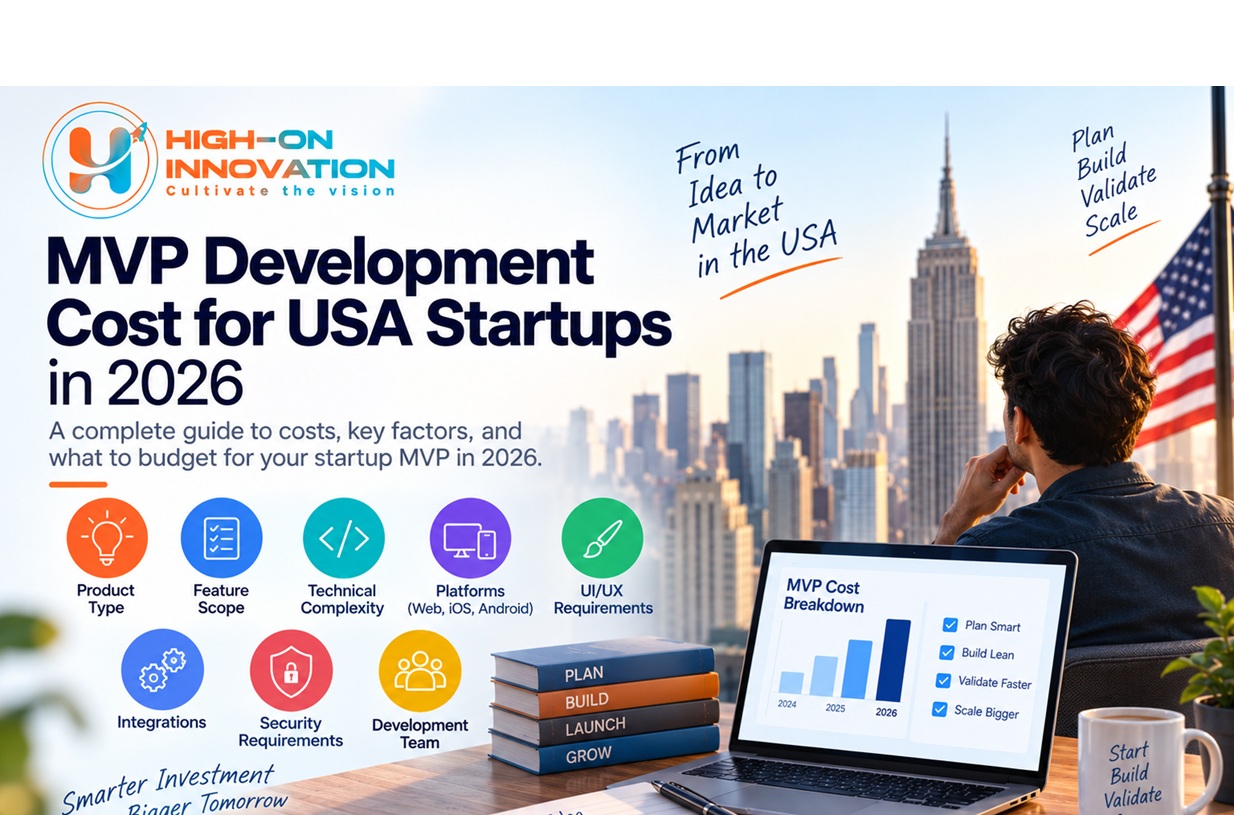
MVP Development Cost for USA Startups in 2026
An MVP, or Minimum Viable Product, gives founders a way to turn an idea into a usable product, launch it with real users, collect feedback, and understand whether the market actually wants the solution.