Digital Transformation Services: What Businesses Should Look For
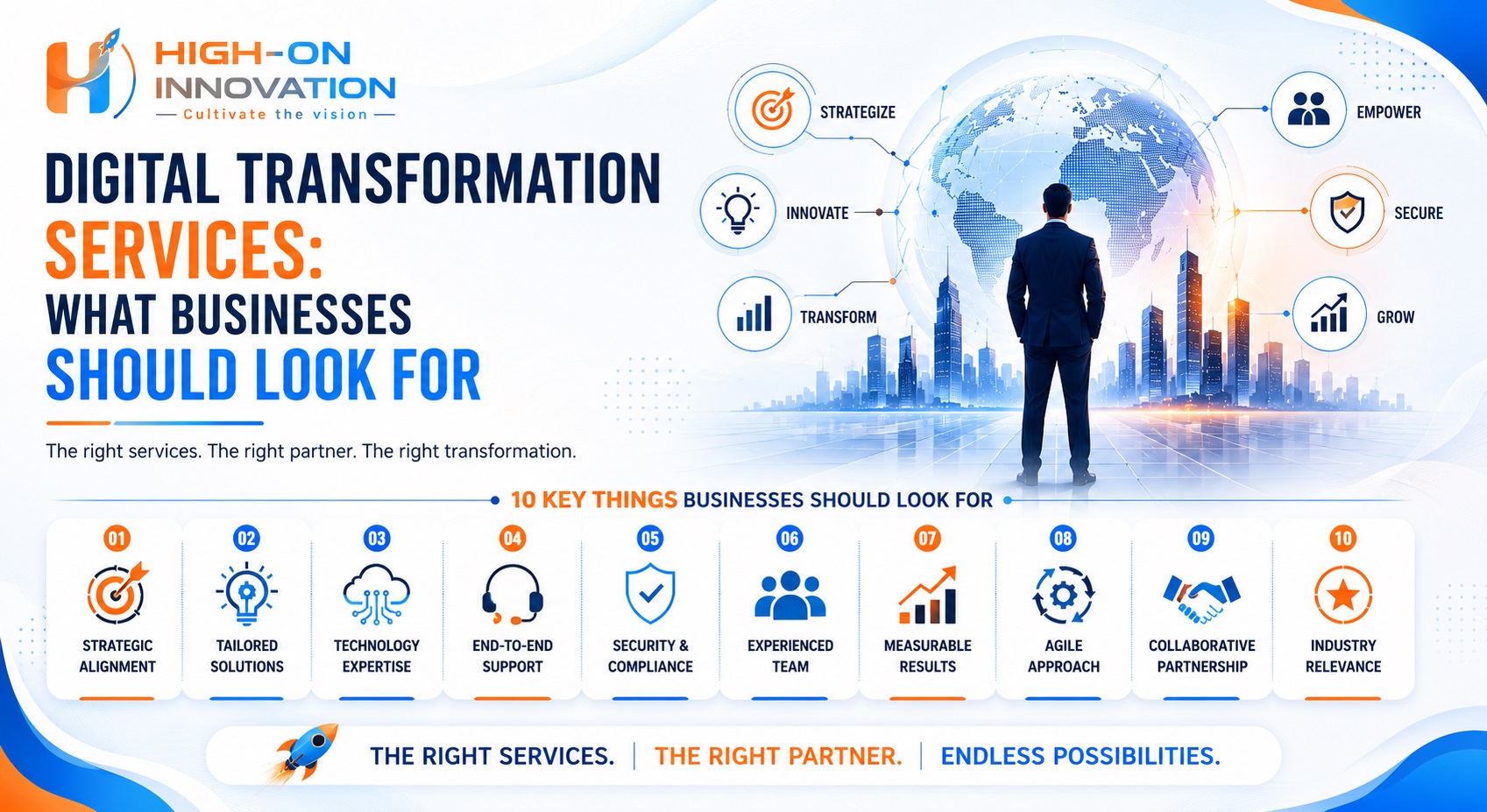
Key Takeaways
Digital transformation services help businesses modernize operations and improve scalability.
Businesses should prioritize strategy, cloud infrastructure, AI, analytics, and cybersecurity.
Customer experience and employee adoption are critical transformation success factors.
Strong transformation partners focus on business outcomes and long-term scalability.
Cloud computing, AI, automation, and analytics are major transformation technologies.
Successful digital transformation requires continuous optimization and innovation.
Introduction
Digital transformation has become one of the most important business priorities for organizations aiming to improve operational efficiency, customer experiences, scalability, and long-term growth.
Businesses today are rapidly adopting technologies such as artificial intelligence, cloud computing, automation, analytics, IoT, and intelligent digital platforms to modernize operations and remain competitive in an increasingly digital economy.
However, successful digital transformation is not simply about implementing technology. It requires strategic planning, technical expertise, operational alignment, scalable infrastructure, and continuous optimization.
This is why businesses increasingly rely on digital transformation services providers to guide and support their transformation journey.
Choosing the right digital transformation partner can significantly impact project success, operational performance, scalability, and return on investment.
This guide explains what digital transformation services include, why they matter, and what businesses should look for when selecting the right transformation partner.
What Are Digital Transformation Services?
Digital transformation services help businesses modernize operations, improve digital capabilities, automate workflows, optimize customer experiences, and implement scalable technology solutions.
These services combine:
Business strategy
Technology consulting
Cloud modernization
AI implementation
Automation systems
Analytics platforms
Cybersecurity solutions
Digital infrastructure development
The goal is to help organizations become more agile, efficient, customer-focused, and future-ready.
Digital transformation services are often customized based on:
Industry requirements
Business size
Operational complexity
Growth objectives
Existing infrastructure
Why Businesses Need Digital Transformation Services
Modern businesses face increasing pressure to:
Improve efficiency
Reduce operational costs
Deliver better customer experiences
Scale faster
Adapt to market changes
Use data more effectively
Support remote operations
Accelerate innovation
Without proper strategy and technical expertise, digital transformation initiatives can become:
Expensive
Complex
Disconnected
Difficult to scale
Digital transformation service providers help businesses:
Build transformation roadmaps
Choose the right technologies
Reduce implementation risks
Improve integration
Accelerate deployment
Optimize long-term performance
Professional guidance significantly improves transformation success rates.
Core Digital Transformation Services Businesses Should Expect
1. Digital Transformation Strategy Consulting
Why Strategy Matters
Many digital transformation projects fail because businesses adopt technologies without clear objectives or planning.
A strong transformation strategy helps organizations:
Align technology with business goals
Prioritize high-impact initiatives
Define measurable KPIs
Reduce implementation risks
What Businesses Should Look For
Business-Focused Planning
The provider should understand:
Operational challenges
Customer experience goals
Industry-specific requirements
Scalability objectives
Clear Roadmaps
Transformation plans should include:
Timelines
Milestones
Technology recommendations
Implementation phases
ROI-Oriented Approach
Technology investments should focus on measurable business outcomes.
Businesses should avoid vendors that prioritize tools over business value.
2. Cloud Transformation Services
Why Cloud Transformation Is Essential
Cloud computing has become the foundation of modern digital transformation.
Cloud services improve:
Scalability
Flexibility
Remote accessibility
Operational efficiency
Infrastructure management
What Businesses Should Look For
Cloud Migration Expertise
Providers should support:
Infrastructure migration
Application modernization
Secure data migration
Minimal operational disruption
Multi-Cloud and Hybrid Cloud Capabilities
Businesses increasingly require flexible cloud environments.
Cloud Security and Compliance
Cloud systems should include:
Data protection
Access controls
Regulatory compliance
Backup and disaster recovery
Scalability Planning
Cloud solutions should support long-term business growth.
3. Artificial Intelligence and Automation Services
Why AI and Automation Matter
AI and automation improve:
Operational efficiency
Customer experiences
Productivity
Decision-making
Workflow optimization
Businesses across industries are implementing AI-powered systems rapidly.
What Businesses Should Look For
Intelligent Automation Solutions
Providers should offer:
Workflow automation
AI chatbots
Robotic process automation (RPA)
Predictive analytics
Custom AI Integration
AI systems should align with business operations and goals.
Data-Driven AI Models
Effective AI systems depend on quality data infrastructure and analytics.
Scalable AI Ecosystems
Businesses should choose partners capable of supporting future AI expansion.
4. Data Analytics and Business Intelligence Services
Why Analytics Is Important
Data-driven businesses make smarter decisions and adapt faster to changing market conditions.
Analytics helps organizations:
Understand customer behavior
Improve operational visibility
Track performance
Forecast trends
Optimize business strategies
What Businesses Should Look For
Real-Time Analytics Platforms
Businesses need live operational visibility and reporting.
Data Integration Capabilities
Analytics systems should centralize data from multiple business platforms.
Predictive Analytics Expertise
Advanced analytics improves forecasting and strategic planning.
Actionable Reporting
Reports should provide meaningful business insights instead of raw data only.
5. Customer Experience Transformation Services
Why Customer Experience Matters
Modern customers expect:
Personalized interactions
Fast support
Omnichannel experiences
Mobile accessibility
Seamless digital journeys
Customer experience has become a major competitive differentiator.
What Businesses Should Look For
Customer Journey Optimization
Providers should analyze and improve customer interactions across platforms.
Omnichannel Integration
Businesses need consistent experiences across:
Websites
Mobile apps
Social media
Customer support systems
Personalization Capabilities
AI and analytics should support personalized customer experiences.
UX and UI Expertise
Strong user experience design improves engagement and customer satisfaction.
6. Cybersecurity and Compliance Services
Why Security Is Critical
As businesses become more digital, cybersecurity risks increase significantly.
Digital transformation involves:
Sensitive customer data
Cloud infrastructure
Connected systems
AI platforms
Remote access environments
Strong cybersecurity is essential for business continuity and customer trust.
What Businesses Should Look For
Security-First Infrastructure
Transformation strategies should include security from the beginning.
Threat Monitoring and Prevention
Providers should offer proactive security monitoring systems.
Compliance Expertise
Businesses may require compliance support for:
GDPR
HIPAA
Financial regulations
Industry-specific standards
Disaster Recovery Planning
Reliable backup and recovery systems are essential for operational resilience.
7. Legacy System Modernization
Why Legacy Modernization Matters
Older systems often limit:
Scalability
Integration
Innovation
Automation
Operational efficiency
Businesses need modernization strategies that improve performance without disrupting operations.
What Businesses Should Look For
System Integration Expertise
Providers should connect existing infrastructure with modern technologies.
Gradual Migration Planning
Phased modernization reduces operational risk.
API and Platform Compatibility
Modern systems should support future integrations and scalability.
Performance Optimization
New infrastructure should improve speed, flexibility, and operational visibility.
8. Change Management and Employee Enablement
Why Human Adoption Matters
Technology alone does not guarantee transformation success.
Employees must:
Understand new systems
Adapt to digital workflows
Support operational changes
Without proper change management, adoption rates often remain low.
What Businesses Should Look For
Employee Training Programs
Transformation partners should provide:
Workshops
Technical onboarding
Digital skill development
Organizational Change Support
Businesses need help managing operational transitions effectively.
Collaboration and Communication
Strong communication improves employee confidence and adoption.
Digital transformation succeeds when people and technology evolve together.
Qualities of a Strong Digital Transformation Partner
Industry Experience
Providers should understand industry-specific:
Challenges
Regulations
Customer expectations
Operational workflows
Industry expertise improves implementation efficiency and strategic relevance.
Scalability and Long-Term Support
Transformation is an ongoing process, not a one-time project.
Businesses should choose partners that offer:
Continuous optimization
Long-term support
Future scalability planning
Technical Expertise
The provider should demonstrate expertise in:
Cloud computing
AI and automation
Analytics
Cybersecurity
System integration
Strong technical capabilities reduce implementation risks.
Business-Oriented Thinking
The best transformation partners focus on:
Business outcomes
ROI
Operational efficiency
Customer experience
Strategic growth
Technology should support business goals, not complicate them.
Transparency and Collaboration
Successful transformation requires clear communication and collaboration.
Businesses should look for providers that offer:
Transparent planning
Regular reporting
Performance tracking
Strategic guidance
Strong collaboration improves project alignment and execution.
Common Mistakes Businesses Should Avoid
Choosing Technology Without Strategy
Technology adoption should align with business objectives.
Ignoring Employee Adoption
Transformation success depends heavily on employee engagement and training.
Focusing Only on Short-Term Results
Digital transformation requires long-term planning and scalability.
Underestimating Cybersecurity
Security should remain a priority throughout transformation initiatives.
Selecting Vendors Based Only on Cost
Low-cost solutions may create scalability and performance limitations later.
Businesses should prioritize long-term value over short-term savings.
Industries Using Digital Transformation Services
Healthcare
Healthcare organizations use digital transformation for:
Telemedicine
Patient analytics
Digital records
AI diagnostics
Banking and Finance
Financial institutions modernize:
Digital banking
Fraud detection
Customer experiences
Data security
Retail and Ecommerce
Retail businesses improve:
Personalization
Inventory management
Omnichannel commerce
Customer analytics
Manufacturing
Manufacturers implement:
IoT monitoring
Predictive maintenance
Automation systems
Smart production environments
The Future of Digital Transformation Services
Future digital transformation services will increasingly focus on:
Generative AI integration
Hyperautomation
Intelligent analytics
AI-driven decision systems
Cloud-native ecosystems
Personalized customer experiences
Businesses will require transformation partners that can support continuous innovation and scalable digital growth.
The demand for strategic and technology-driven transformation services will continue growing rapidly across industries.
Conclusion
Digital transformation services help businesses modernize operations, improve customer experiences, optimize workflows, and build scalable digital ecosystems.
From cloud migration and AI implementation to analytics and cybersecurity, successful transformation requires a combination of strategic planning, technical expertise, employee enablement, and continuous optimization.
Businesses that choose the right digital transformation partner can reduce implementation risks, accelerate innovation, improve operational efficiency, and create long-term competitive advantages.
Digital transformation is no longer optional for modern organizations. It is now a strategic requirement for sustainable business growth and future readiness.
Frequently Asked Questions
What are digital transformation services?
Digital transformation services help businesses modernize operations, implement digital technologies, automate workflows, and improve customer experiences.
Why are digital transformation services important?
These services help businesses improve efficiency, scalability, innovation, and competitiveness while reducing operational complexity.
What technologies are used in digital transformation services?
Common technologies include AI, cloud computing, automation, analytics, cybersecurity, and IoT systems.
How do businesses choose the right transformation partner?
Businesses should evaluate industry expertise, technical capabilities, scalability support, cybersecurity knowledge, and strategic planning experience.
Author Bio
Sandesh Gupta – CEO, High-On Innovation
Sandesh Gupta is the CEO of High-On Innovation, specializing in digital transformation strategy, AI-driven business ecosystems, cloud modernization, intelligent automation, analytics systems, and scalable technology solutions. He works with startups and enterprises to build future-ready digital infrastructures that improve operational efficiency, customer experiences, and long-term business growth.
Harsit Gupta is the Founder of High-On Innovation and is responsible for shaping the company's vision, business model, growth strategy, and market expansion initiatives. He specializes in identifying emerging opportunities, driving innovation, and helping businesses navigate digital transformation in a rapidly evolving technology landscape. His expertise includes business strategy, digital innovation, startup growth, market positioning, and future-focused technology adoption.
Comments
Loading comments…
Latest Market Trends
Aug 5, 2026
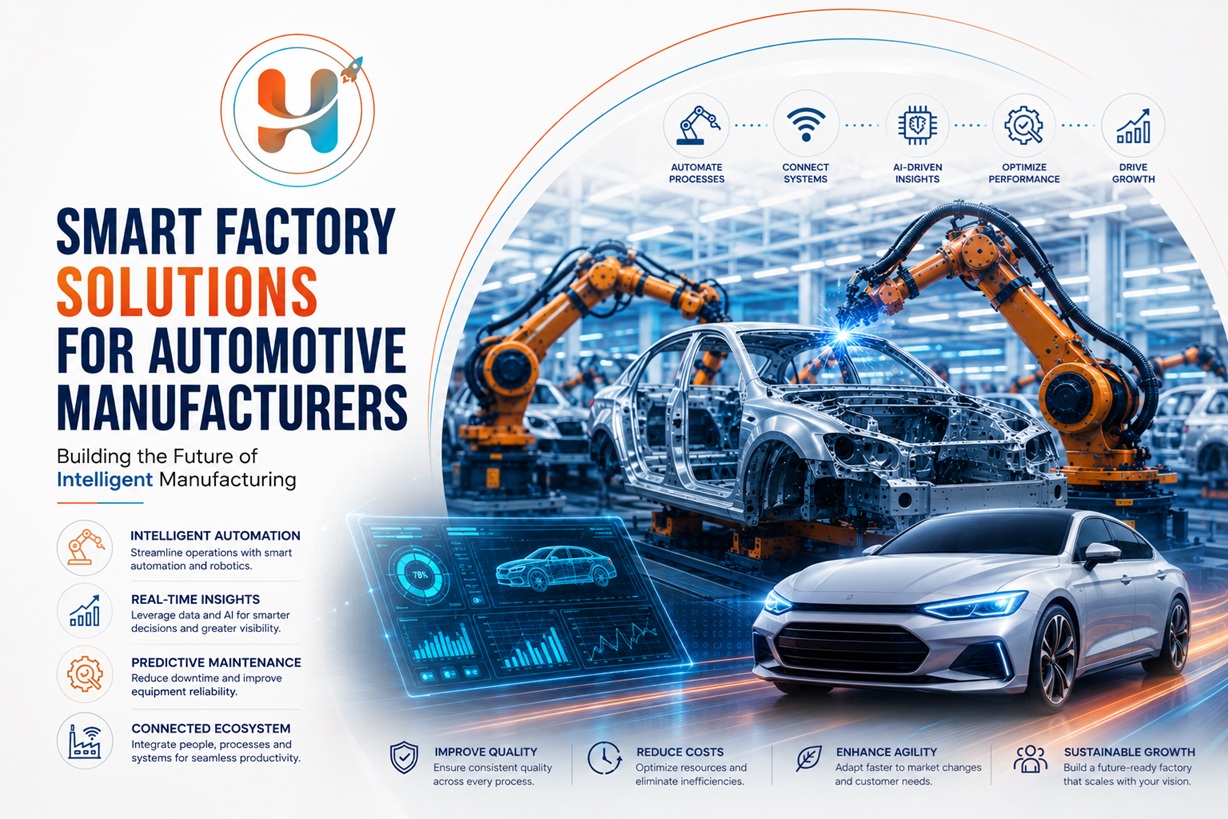
Smart Factory Solutions for Automotive Manufacturers: Building the Future of Intelligent Manufacturing
The automotive industry is under increasing pressure to produce high-quality vehicles faster, reduce operational costs, improve sustainability, and adapt to rapidly changing customer demands. Traditional manufacturing methods, while effective for mass production, often struggle to provide the flexibility and real-time visibility required in today's competitive landscape.

Aug 5, 2026
Software-Defined Vehicles (SDVs): The Future of Automotive Innovation
The automotive industry is shifting from hardware-centric engineering to software-driven innovation. Vehicles are no longer defined solely by their engines, mechanical systems, or physical features—they are increasingly differentiated by software capabilities that enhance performance, safety, connectivity, and user experience. This evolution has given rise to the Software-Defined Vehicle (SDV).
Aug 4, 2026
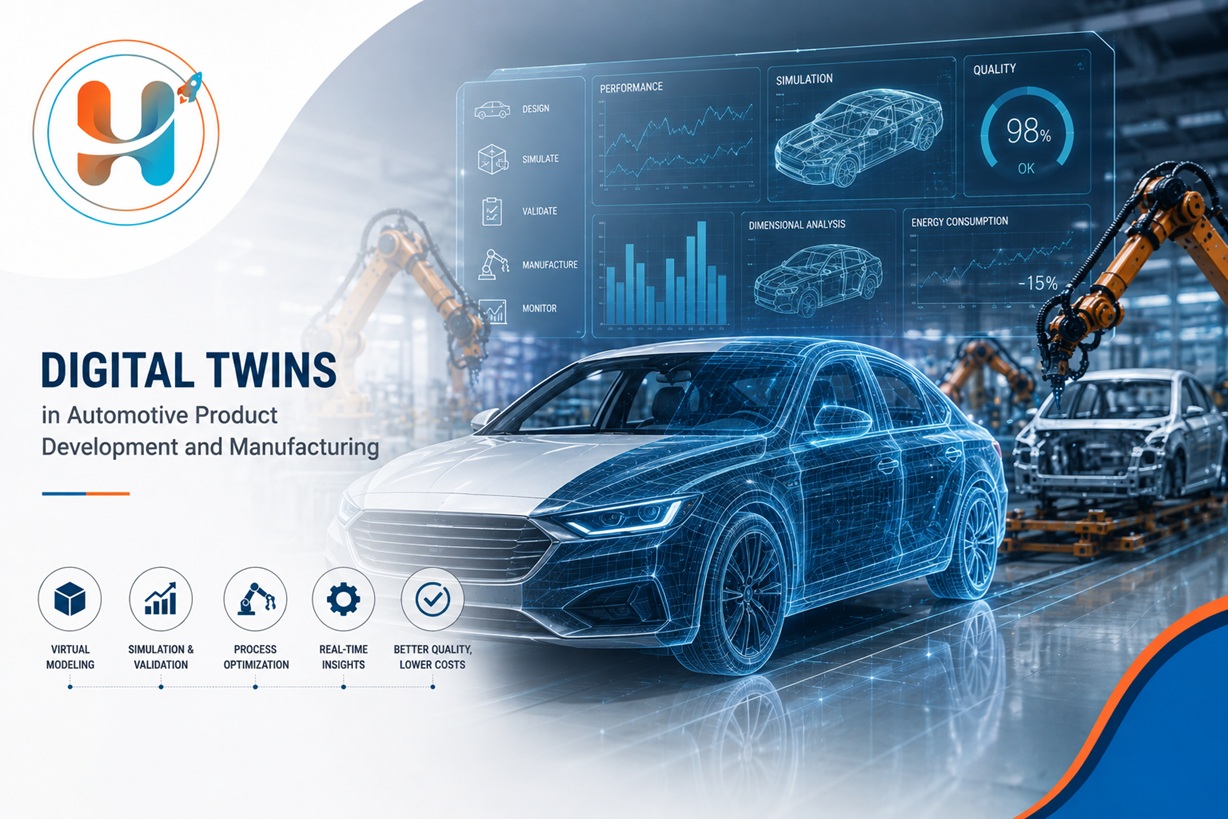
Digital Twins in Automotive Product Development and Manufacturing: Driving Smarter Engineering and Production
The automotive industry is rapidly embracing digital technologies to accelerate innovation, improve manufacturing efficiency, and reduce product development costs. One technology at the heart of this transformation is the Digital Twin. By creating a virtual replica of a physical product, machine, or manufacturing process, digital twins enable automotive companies to simulate, monitor, and optimize operations before making changes in the real world.
Popular Post
Smart Factory Solutions for Automotive Manufacturers: Building the Future of Intelligent Manufacturing
The automotive industry is under increasing pressure to produce high-quality vehicles faster, reduce operational costs, improve sustainability, and adapt to rapidly changing customer demands. Traditional manufacturing methods, while effective for mass production, often struggle to provide the flexibility and real-time visibility required in today's competitive landscape.
Software-Defined Vehicles (SDVs): The Future of Automotive Innovation
The automotive industry is shifting from hardware-centric engineering to software-driven innovation. Vehicles are no longer defined solely by their engines, mechanical systems, or physical features—they are increasingly differentiated by software capabilities that enhance performance, safety, connectivity, and user experience. This evolution has given rise to the Software-Defined Vehicle (SDV).
Digital Twins in Automotive Product Development and Manufacturing: Driving Smarter Engineering and Production
The automotive industry is rapidly embracing digital technologies to accelerate innovation, improve manufacturing efficiency, and reduce product development costs. One technology at the heart of this transformation is the Digital Twin. By creating a virtual replica of a physical product, machine, or manufacturing process, digital twins enable automotive companies to simulate, monitor, and optimize operations before making changes in the real world.
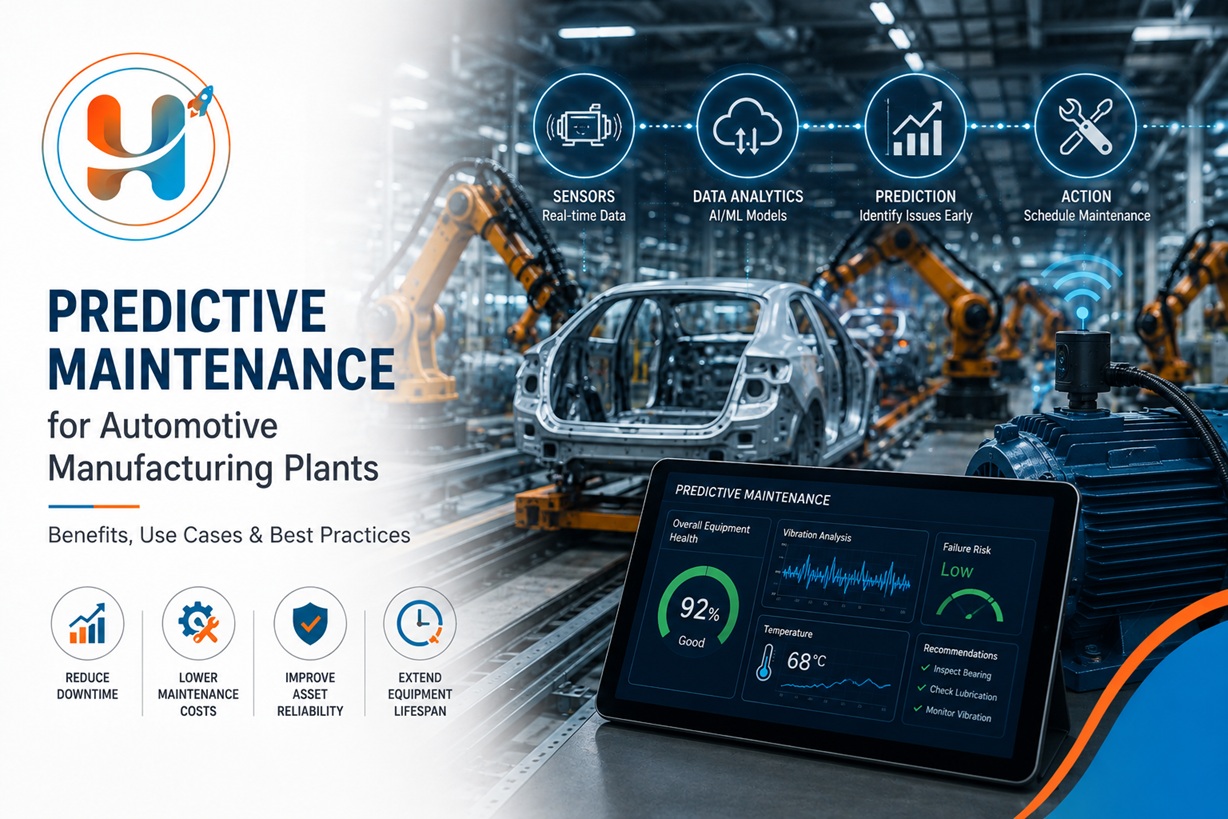
Predictive Maintenance for Automotive Manufacturing Plants: Benefits, Use Cases & Best Practices
Equipment reliability is the backbone of automotive manufacturing. A single unplanned machine failure can stop an entire production line, delay vehicle deliveries, increase maintenance costs, and impact customer commitments. As manufacturers strive to improve productivity while reducing operational risks, traditional maintenance strategies are proving insufficient.