Healthcare Workflow Automation: The Complete Guide to Smarter Healthcare Operations
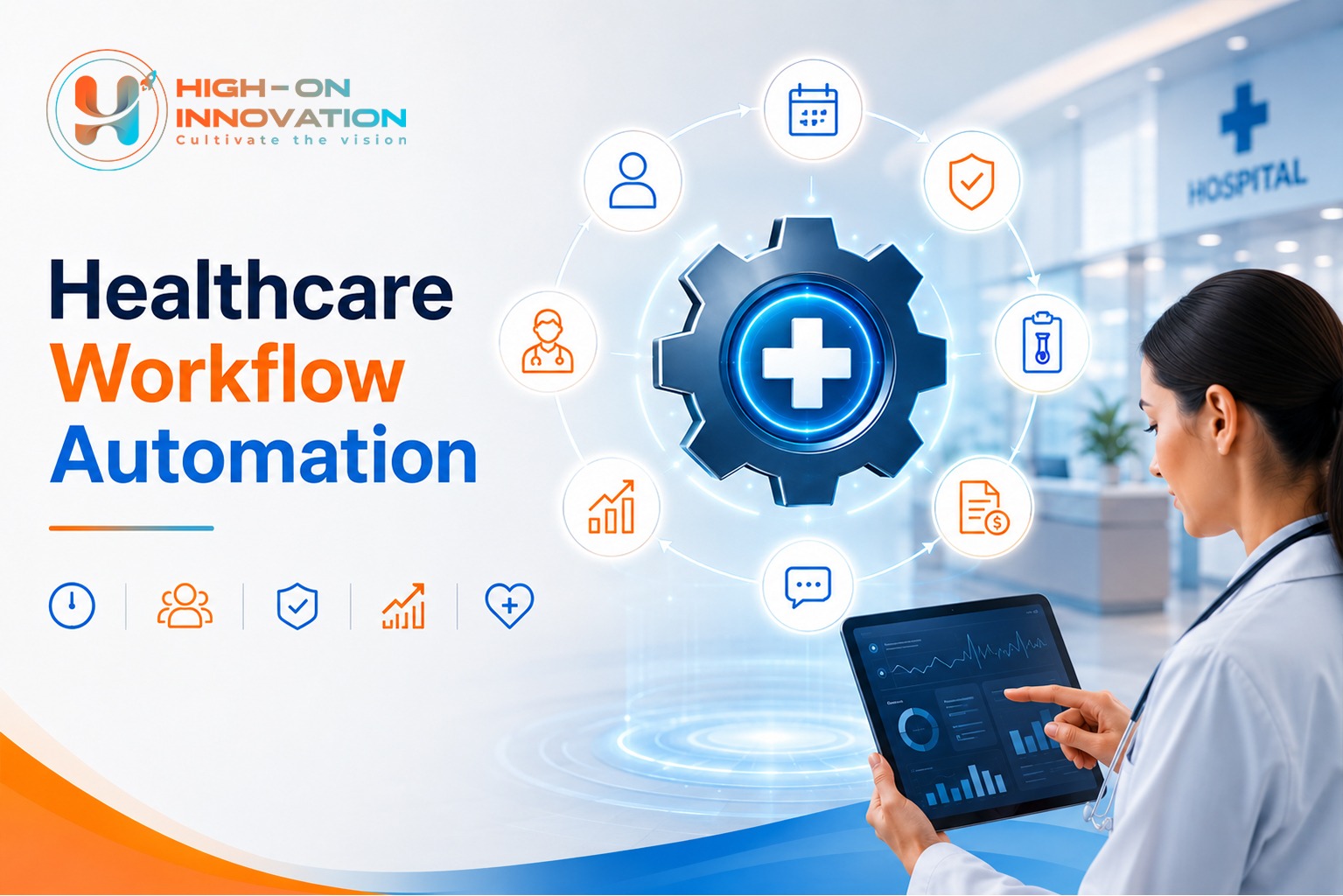
Every patient interaction in a healthcare organization follows a series of workflows.
A patient schedules an appointment, completes registration, verifies insurance, consults with a physician, undergoes diagnostic tests, receives treatment, completes billing, and returns for follow-up care. Behind every one of these steps are numerous administrative processes involving doctors, nurses, reception teams, laboratories, billing departments, insurance providers, and patients.
Many of these workflows are still managed manually.
Staff rely on spreadsheets, paper forms, phone calls, emails, and disconnected software systems to coordinate routine activities. As patient volumes increase, these manual processes become difficult to manage, leading to delays, communication gaps, duplicate work, administrative overload, and inconsistent patient experiences.
Healthcare organizations need more than digital records—they need intelligent workflows.
This is where Healthcare Workflow Automation is transforming modern healthcare.
By combining Artificial Intelligence (AI), workflow automation, business process automation, and system integration, healthcare providers can automate repetitive tasks, connect departments, improve collaboration, and create seamless patient journeys.
Whether you're managing a hospital, clinic, diagnostic center, dental practice, IVF center, or home healthcare organization, workflow automation helps eliminate inefficiencies while improving both operational performance and patient satisfaction.
In this guide, you'll learn:
What healthcare workflow automation is
Why manual workflows limit operational efficiency
Fifteen high-impact workflow automation opportunities
The benefits of intelligent workflow automation
How to implement workflow automation successfully
What is Healthcare Workflow Automation?
Healthcare workflow automation is the use of digital technologies, AI, and business process automation to automatically manage repetitive healthcare tasks and coordinate activities across departments without manual intervention.
Rather than relying on staff to move information from one department to another, workflow automation ensures that every task follows a predefined process based on business rules and real-time data.
For example, when a patient books an appointment online, an automated workflow can instantly:
Create the patient record
Notify the physician
Verify insurance eligibility
Send appointment confirmation
Schedule reminder messages
Update the CRM
Prepare billing information
Instead of multiple employees manually coordinating these activities, the workflow runs automatically.
The result is a faster, more accurate, and more consistent healthcare experience.
Workflow Automation vs Process Automation
Although these terms are often used interchangeably, they have different meanings.
Workflow Automation
Workflow automation focuses on moving tasks, approvals, documents, and information through a predefined sequence.
Example:
Appointment Booked
↓
Insurance Verification
↓
Doctor Notification
↓
Consultation
↓
Billing
↓
Follow-up Communication
Process Automation
Process automation focuses on automating individual repetitive tasks within those workflows.
Examples include:
Sending appointment reminders
Updating patient records
Validating insurance information
Generating invoices
Delivering laboratory reports
Workflow automation connects these automated tasks into one seamless operational process.
AI Makes Workflows Intelligent
Traditional workflows follow fixed rules.
AI-powered workflows can adapt dynamically based on real-time information.
For example:
If insurance verification fails,
↓
The workflow automatically requests missing documentation.
↓
If the patient doesn't respond,
↓
A reminder is sent after 24 hours.
↓
If documentation remains incomplete,
↓
The case is escalated to an administrator.
No manual intervention is required.
This intelligent decision-making significantly improves operational efficiency.
Components of Healthcare Workflow Automation
Successful workflow automation combines several technologies.
Artificial Intelligence
AI analyzes information, identifies patterns, and supports intelligent decision-making.
Workflow Engine
The workflow engine controls how tasks move through the organization.
Business Rules
Business rules define how workflows behave under different conditions.
CRM Integration
CRM systems ensure patient communication and relationship management remain connected throughout the workflow.
Notifications
Automated alerts keep patients, physicians, nurses, and administrators informed at every stage.
Analytics
Dashboards monitor workflow performance and identify opportunities for continuous improvement.
Problems Manual Healthcare Workflows Create
Manual workflows may seem manageable in small organizations, but as patient volumes increase, inefficiencies quickly multiply.
AI-powered workflow automation addresses many of these operational challenges.
1. Administrative Delays
Healthcare staff spend valuable time coordinating routine administrative activities such as scheduling, approvals, referrals, and documentation.
These delays affect patient satisfaction and reduce overall productivity.
How Workflow Automation Helps
Tasks move automatically between departments, eliminating unnecessary waiting time.
2. Duplicate Work
Patient information is often entered multiple times into different systems.
Duplicate data entry increases administrative effort while creating opportunities for errors.
How Workflow Automation Helps
Integrated systems synchronize information automatically across departments.
3. Paper-Based Processes
Many healthcare organizations still rely on printed forms, handwritten approvals, and physical documentation.
Paper slows workflows and makes information difficult to retrieve.
How Workflow Automation Helps
Digital forms, electronic approvals, and automated document routing eliminate unnecessary paperwork.
4. Communication Gaps
Manual communication often results in:
Missed updates
Delayed notifications
Lost referrals
Inconsistent patient communication
How Workflow Automation Helps
Automated notifications ensure the right people receive the right information at the right time.
5. Approval Bottlenecks
Insurance approvals, referrals, purchase requests, and administrative authorizations frequently stall because they depend on manual follow-up.
How Workflow Automation Helps
AI automatically routes approvals, sends reminders, and escalates delayed requests.
6. Billing Delays
When clinical documentation, insurance verification, and billing processes are disconnected, reimbursement cycles become longer.
How Workflow Automation Helps
Billing workflows begin automatically once consultations are completed, reducing delays and improving revenue cycles.
7. Staff Burnout
Administrative staff spend countless hours performing repetitive tasks that add little strategic value.
As workloads increase, burnout becomes more common.
How Workflow Automation Helps
Automation reduces repetitive administrative work, allowing healthcare professionals to focus on patient care.
15 Healthcare Workflow Automations Every Organization Should Implement
Workflow automation can improve nearly every operational area within a healthcare organization.
Below are the first seven workflows that deliver immediate operational value.
1. Patient Registration Workflow
Patient registration is often the first administrative interaction within the healthcare journey.
AI automates:
Online registration
Identity verification
Digital consent forms
Insurance information collection
Patient profile creation
Benefits
Faster registration
Reduced paperwork
Better data accuracy
Improved patient experience
2. Appointment Scheduling Workflow
Appointment scheduling involves multiple tasks beyond simply booking a consultation.
Workflow automation coordinates:
Calendar availability
Physician assignment
Appointment confirmation
Reminder scheduling
Waitlist management
Rescheduling requests
Benefits
Better appointment utilization
Lower no-show rates
Reduced scheduling conflicts
Improved patient convenience
3. Patient Admission Workflow
Hospital admissions require coordination between reception, physicians, nursing staff, finance, and insurance providers.
Workflow automation manages:
Admission requests
Bed allocation notifications
Insurance verification
Department alerts
Patient documentation
Benefits
Faster admissions
Reduced waiting times
Better departmental coordination
Improved operational efficiency
4. Referral Management Workflow
Referrals often involve multiple providers and departments.
AI streamlines referral management by automating:
Referral creation
Specialist assignment
Appointment coordination
Patient notifications
Referral tracking
Benefits
Faster specialist access
Better patient experiences
Reduced administrative work
Improved referral visibility
5. Laboratory Workflow Automation
Diagnostic laboratories process large volumes of patient samples every day.
Workflow automation supports:
Sample registration
Test assignment
Technician notifications
Report approvals
Result distribution
Benefits
Faster turnaround times
Better laboratory coordination
Improved reporting accuracy
Reduced manual processing
6. Radiology Workflow Automation
Radiology departments coordinate appointments, imaging requests, reporting, and physician communication.
AI automates:
Imaging requests
Scheduling
Report routing
Patient notifications
Physician alerts
Benefits
Better resource utilization
Faster report delivery
Improved communication
Reduced administrative delays
7. Insurance Verification Workflow
Insurance verification often delays treatment and increases administrative workloads.
Workflow automation manages:
Eligibility checks
Documentation validation
Approval tracking
Missing information alerts
Patient notifications
Benefits
Faster insurance approvals
Reduced claim rejections
Better patient satisfaction
Lower administrative costs
8. Medical Claims Processing Workflow
Claims processing involves multiple departments, extensive documentation, coding verification, insurance validation, and continuous tracking.
Manual claims workflows often result in delayed reimbursements, rejected claims, and revenue leakage.
AI-powered workflow automation streamlines the entire claims lifecycle by automatically:
Collecting claim information
Validating medical coding
Verifying documentation
Submitting claims electronically
Tracking claim status
Escalating rejected claims
Updating finance teams
Benefits
Faster claim submissions
Reduced claim denials
Improved cash flow
Lower administrative workload
Better revenue cycle performance
9. Healthcare Billing Workflow
Billing should begin immediately after treatment—not after hours of manual processing.
AI automates the billing workflow by:
Generating invoices
Validating billing codes
Coordinating insurance information
Sending payment notifications
Tracking outstanding balances
Updating financial reports
Benefits
Faster billing cycles
Improved payment collection
Reduced billing errors
Better financial transparency
An automated billing workflow improves both operational efficiency and patient satisfaction.
10. Prescription Management Workflow
Prescription management involves multiple touchpoints between physicians, pharmacies, and patients.
Workflow automation simplifies the process by automatically:
Recording prescriptions
Sending digital prescriptions
Notifying pharmacies
Scheduling refill reminders
Updating patient records
Tracking prescription history
Benefits
Improved medication adherence
Reduced prescription errors
Faster pharmacy coordination
Better patient convenience
11. Patient Discharge Workflow
Discharge is one of the most critical stages of the patient journey.
Without structured workflows, discharge delays can reduce bed availability and negatively affect patient experience.
AI automates:
Discharge approvals
Final documentation
Billing completion
Medication instructions
Follow-up appointment scheduling
Patient education
Satisfaction surveys
Benefits
Faster patient discharge
Better patient transitions
Improved bed availability
Stronger continuity of care
12. Patient Communication Workflow
Every patient interaction should trigger relevant communication automatically.
Workflow automation ensures patients receive timely updates throughout their healthcare journey.
Automated communication includes:
Appointment confirmations
Reminder messages
Procedure instructions
Laboratory notifications
Billing updates
Follow-up care
Feedback requests
Benefits
Better patient engagement
Lower no-show rates
Reduced administrative workload
Improved patient experience
13. Healthcare CRM Workflow
Healthcare CRM becomes significantly more valuable when integrated into automated workflows.
AI automatically updates CRM records based on patient activity.
Examples include:
New patient registration
Appointment completion
Referral tracking
Follow-up campaigns
Patient segmentation
Recall reminders
Benefits
Better patient relationship management
Improved communication
Higher patient retention
Personalized healthcare experiences
14. Reporting & Compliance Workflow
Healthcare leaders require timely access to operational and compliance data.
Workflow automation automatically collects information from multiple systems and generates reports without manual effort.
Automated reporting includes:
Patient activity reports
Operational KPIs
Revenue reports
Claims performance
Compliance documentation
Staff productivity
Audit logs
Benefits
Real-time reporting
Better compliance
Reduced administrative work
Faster decision-making
15. Executive Dashboard Workflow
Modern healthcare leaders require complete visibility across the organization.
AI-powered dashboards automatically consolidate data from:
Hospital Information Systems (HIS)
Electronic Medical Records (EMR/EHR)
CRM platforms
Billing systems
Laboratory systems
Appointment software
Communication platforms
Executives can monitor:
Patient volumes
Revenue
Workflow performance
Department efficiency
Staff productivity
Patient satisfaction
Operational bottlenecks
Benefits
Real-time business intelligence
Better strategic planning
Improved operational control
Faster executive decision-making
Benefits of Healthcare Workflow Automation
Healthcare workflow automation delivers measurable improvements across clinical, operational, and financial performance.
Lower Operational Costs
Manual administrative work consumes significant time and resources.
Workflow automation reduces repetitive tasks, enabling healthcare organizations to operate more efficiently without proportionally increasing staffing costs.
Faster Healthcare Operations
Automation eliminates delays caused by manual approvals, paperwork, and disconnected systems.
Patients move through the healthcare journey more quickly, improving both operational efficiency and satisfaction.
Higher Staff Productivity
Doctors, nurses, and administrative teams spend less time on repetitive tasks and more time delivering quality patient care.
This improves productivity without increasing workload.
Improved Patient Experience
Patients benefit from:
Faster registration
Better communication
Shorter waiting times
Streamlined admissions
Faster report delivery
Seamless follow-ups
Every interaction becomes more consistent and efficient.
Reduced Human Errors
AI validates information, automates repetitive processes, and standardizes workflows.
This significantly reduces errors in:
Patient records
Insurance documentation
Billing
Claims
Scheduling
Referrals
Better Compliance
Healthcare organizations operate in highly regulated environments.
Workflow automation creates standardized processes, audit trails, automated documentation, and reporting that support compliance requirements.
Improved Collaboration
Automation connects departments through shared workflows and real-time notifications.
Instead of relying on emails or phone calls, information flows automatically between teams.
Greater Scalability
As healthcare organizations grow, manual workflows become increasingly difficult to manage.
Workflow automation enables organizations to scale operations without significantly increasing administrative overhead.
How HOI Implements Healthcare Workflow Automation
At High on Innovation (HOI), we believe successful automation begins with understanding your business—not simply implementing software.
Our workflow automation approach is designed to optimize processes before automating them, ensuring long-term operational improvements.
Step 1: Workflow Assessment
We begin by analyzing your existing workflows to identify inefficiencies, bottlenecks, repetitive tasks, and opportunities for automation.
Step 2: Process Mapping
Our experts document every stage of your operational workflows.
This allows us to eliminate unnecessary steps before introducing automation.
Step 3: AI Opportunity Identification
Not every workflow requires AI.
We identify where Artificial Intelligence adds the greatest value, including:
Intelligent routing
Predictive decision-making
Communication automation
Workflow optimization
Step 4: System Integration
HOI integrates workflow automation with your existing technology ecosystem, including:
Hospital Information Systems (HIS)
Electronic Medical Records (EMR/EHR)
Clinic Management Software
CRM Platforms
Billing Systems
Laboratory Information Systems
Communication Platforms
This creates one connected digital environment.
Step 5: Automation Deployment
After testing, workflows are deployed gradually to minimize disruption while ensuring smooth adoption across departments.
Step 6: Staff Training
Technology succeeds when people understand how to use it.
We provide comprehensive training to ensure physicians, administrators, and support staff confidently adopt the new workflows.
Step 7: Continuous Optimization
Healthcare operations evolve over time.
HOI continuously monitors workflow performance, identifies improvement opportunities, and refines automation to maximize long-term ROI.
Why Healthcare Organizations Choose HOI
Healthcare providers trust HOI because we combine healthcare expertise with deep automation capabilities.
Our solutions are designed around your unique workflows—not generic software templates.
Our healthcare automation expertise includes:
AI Automation
Workflow Automation
CRM Automation
Patient Communication Automation
Insurance Verification Automation
Claims Processing Automation
Business Process Automation
Healthcare System Integration
Custom AI Solutions
Whether you operate a hospital, clinic, diagnostic center, dental practice, IVF center, home healthcare business, or medical equipment company, we build scalable automation strategies that grow with your organization.
Frequently Asked Questions
1. What is healthcare workflow automation?
Healthcare workflow automation uses AI and digital technologies to automate repetitive administrative and operational processes such as patient registration, scheduling, billing, claims, referrals, and communication.
2. Which healthcare workflows should be automated first?
Most organizations begin with high-volume administrative workflows such as:
Appointment scheduling
Patient registration
Insurance verification
Billing
Patient communication
Claims processing
These areas typically provide the fastest return on investment.
3. Can workflow automation integrate with existing healthcare software?
Yes. Modern workflow automation platforms integrate with Hospital Information Systems (HIS), Electronic Medical Records (EMR/EHR), Clinic Management Software, CRM systems, laboratory platforms, and billing applications.
4. Is workflow automation suitable for small clinics?
Absolutely. Clinics often experience significant operational improvements by automating appointment scheduling, patient communication, billing, and follow-up workflows without hiring additional administrative staff.
5. Will workflow automation replace healthcare professionals?
No. Workflow automation supports healthcare professionals by eliminating repetitive administrative tasks, allowing them to focus on delivering high-quality patient care.
Conclusion
Healthcare organizations are becoming increasingly complex, but many operational challenges stem from one common issue—manual workflows.
Disconnected processes create delays, increase administrative costs, reduce productivity, and negatively affect the patient experience.
Healthcare workflow automation addresses these challenges by connecting people, systems, and processes into one intelligent operational ecosystem.
From patient registration and scheduling to billing, claims, CRM, communication, and executive reporting, automated workflows improve efficiency while creating better experiences for both patients and healthcare professionals.
Organizations that invest in workflow automation today are building the operational foundation for future digital transformation.
Bhuwan Vohra is the Co-Founder of High-On Innovation and oversees technology operations, administrative management, infrastructure planning, and resource optimization. He plays a key role in building scalable technology frameworks and ensuring efficient delivery of digital solutions across projects. His expertise includes cloud infrastructure, technology management, system architecture, operational efficiency, resource planning, and enterprise technology implementation.
Comments
Loading comments…
Latest Market Trends

Sep 9, 2026
MVP Development Cost for Australian Businesses in 2026
A simple customer portal, booking application, SaaS dashboard, marketplace, AI-powered platform, fintech product, healthcare application, or enterprise workflow system can all be described as an "MVP", but their development requirements can be dramatically different.

Sep 3, 2026
How to Choose an MVP Development Company for Your Startup
Choosing the right MVP development company can have a major impact on your startup's first product launch. The right development partner does more than write code. They help translate your business idea into a focused product, identify technical risks, prioritize features, and create an MVP that can be tested with real users.

Sep 8, 2026
MVP Development Cost for Canadian Businesses in 2026: Complete Guide to Pricing, Features and Process
Discover MVP development cost Canada in 2026, including startup MVP cost, development factors, timelines, features, technology, compliance, and how to choose the right MVP development company.
Popular Post
MVP Development Cost for Australian Businesses in 2026
A simple customer portal, booking application, SaaS dashboard, marketplace, AI-powered platform, fintech product, healthcare application, or enterprise workflow system can all be described as an "MVP", but their development requirements can be dramatically different.
How to Choose an MVP Development Company for Your Startup
Choosing the right MVP development company can have a major impact on your startup's first product launch. The right development partner does more than write code. They help translate your business idea into a focused product, identify technical risks, prioritize features, and create an MVP that can be tested with real users.
MVP Development Cost for Canadian Businesses in 2026: Complete Guide to Pricing, Features and Process
Discover MVP development cost Canada in 2026, including startup MVP cost, development factors, timelines, features, technology, compliance, and how to choose the right MVP development company.

MVP Development Cost for USA Startups in 2026
An MVP, or Minimum Viable Product, gives founders a way to turn an idea into a usable product, launch it with real users, collect feedback, and understand whether the market actually wants the solution.