Healthcare CRM Automation: The Complete Guide for Hospitals & Clinics
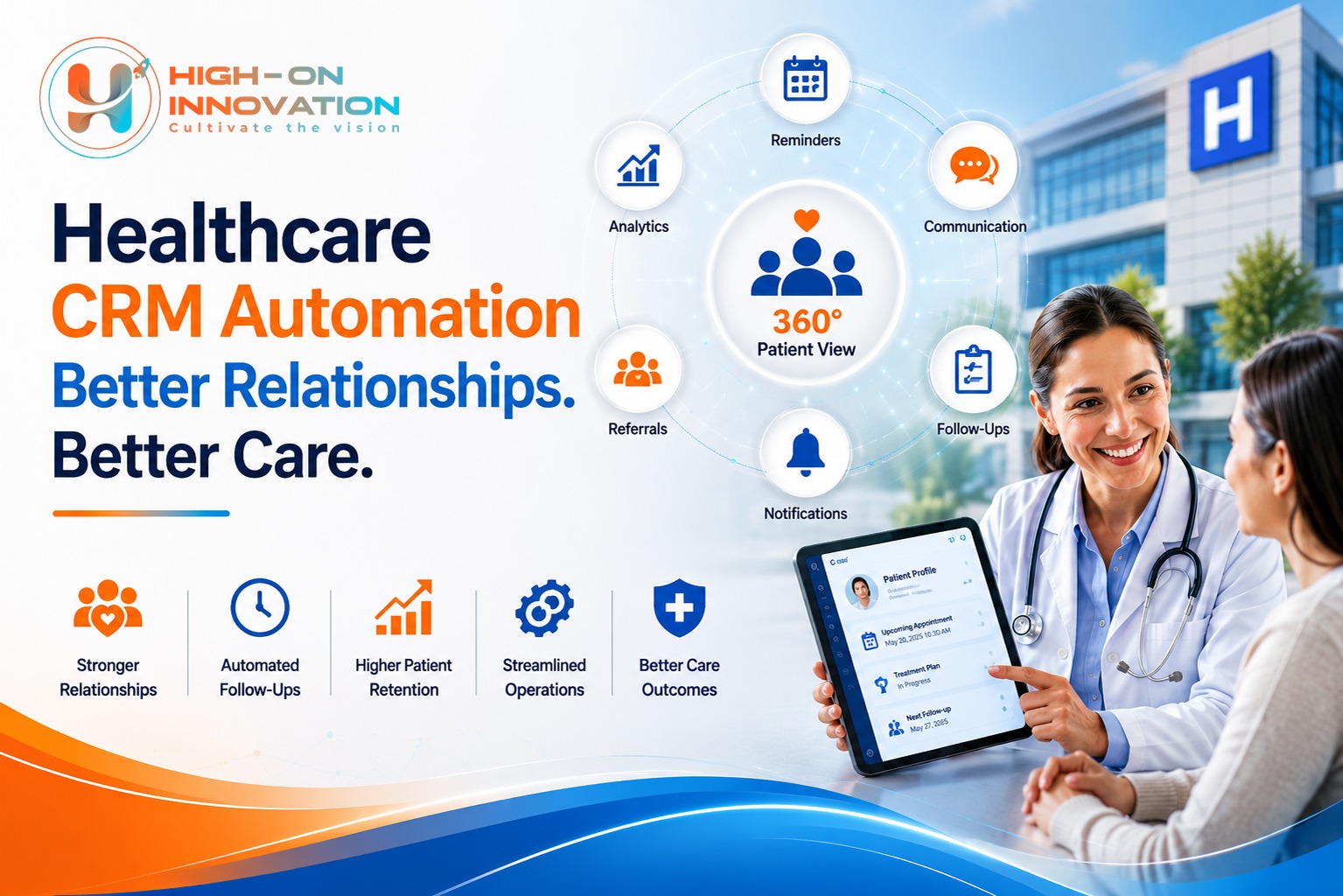
Healthcare is no longer just about providing excellent clinical care—it's also about building lasting patient relationships.
Patients today expect healthcare providers to offer the same level of convenience, personalization, and communication they receive from banks, airlines, and online retailers. They want appointment reminders, quick responses, personalized follow-ups, digital communication, and a seamless healthcare experience across every interaction.
However, many hospitals and clinics still rely on spreadsheets, disconnected software, manual phone calls, and paper records to manage patient relationships.
As a result, healthcare organizations often face challenges such as:
Missed follow-up appointments
Lost patient inquiries
Poor referral tracking
Inconsistent patient communication
Low patient retention
Limited visibility into the patient journey
These issues not only affect patient satisfaction but also impact operational efficiency and long-term business growth.
This is where Healthcare CRM Automation creates a competitive advantage.
By combining Customer Relationship Management (CRM), Artificial Intelligence (AI), workflow automation, and patient communication tools, healthcare providers can manage the complete patient lifecycle—from the first inquiry to long-term engagement—through one connected system.
Whether you're operating a hospital, specialty clinic, dental practice, IVF center, diagnostic laboratory, or home healthcare business, CRM automation helps improve patient experiences while reducing administrative effort.
In this guide, you'll learn:
What Healthcare CRM Automation is
Why healthcare organizations need CRM
The biggest challenges CRM automation solves
Fifteen powerful CRM automations
How AI enhances patient relationship management
Best practices for successful CRM implementation
What is Healthcare CRM Automation?
Healthcare CRM Automation is the use of Customer Relationship Management software, Artificial Intelligence, and workflow automation to manage patient relationships, automate communication, streamline operational processes, and improve patient engagement throughout the entire healthcare journey.
Unlike traditional patient databases that simply store information, a CRM actively helps healthcare organizations build stronger relationships by automatically tracking patient interactions and triggering personalized actions.
For example, when a patient submits an inquiry through your website, the CRM can automatically:
Create a patient profile
Assign the inquiry to your team
Send a welcome message
Schedule a consultation
Send appointment reminders
Record communication history
Trigger follow-up workflows
Update reports automatically
Instead of relying on manual coordination, the CRM manages these activities intelligently.
Why Healthcare Organizations Need CRM Automation
Every patient interaction creates valuable information.
Without a centralized CRM system, this information often becomes scattered across:
Reception software
Email inboxes
WhatsApp conversations
Excel spreadsheets
Billing software
EMR systems
Individual staff members
This fragmentation makes it difficult to provide consistent patient experiences.
CRM automation centralizes patient information and ensures every department works from the same data.
The result is:
Better communication
Faster response times
Higher patient satisfaction
Improved operational efficiency
Stronger long-term relationships
Key Components of Healthcare CRM Automation
Modern healthcare CRM solutions combine several technologies to create intelligent patient relationship management.
Artificial Intelligence (AI)
AI helps healthcare organizations automate decisions and personalize patient interactions.
Examples include:
Predicting follow-up needs
Patient segmentation
Communication recommendations
Lead scoring
Patient engagement analysis
AI makes CRM proactive instead of reactive.
Workflow Automation
Workflow automation connects CRM with operational processes.
Examples include:
Appointment scheduling
Patient onboarding
Referral workflows
Insurance verification
Billing
Follow-up communication
This eliminates repetitive administrative work.
Patient Journey Tracking
CRM records every interaction throughout the patient lifecycle.
Examples include:
Initial inquiry
Consultation
Diagnosis
Treatment
Billing
Follow-up care
Preventive healthcare
Long-term engagement
Healthcare providers gain complete visibility into every patient relationship.
Omnichannel Communication
Healthcare CRM integrates communication across multiple channels.
Patients receive messages through:
WhatsApp
SMS
Email
Voice calls
Patient portals
AI chatbots
Every interaction is recorded automatically inside the CRM.
Analytics & Reporting
CRM dashboards provide real-time insights into:
Patient acquisition
Appointment conversion
Referral performance
Follow-up completion
Patient retention
Revenue trends
Campaign performance
These insights help healthcare leaders make informed business decisions.
Problems Healthcare CRM Automation Solves
Healthcare organizations interact with patients long before treatment begins and long after it ends.
Without CRM automation, managing these relationships becomes increasingly difficult.
1. Missed Patient Follow-Ups
Patients often require ongoing communication after consultations, treatments, or procedures.
Manual follow-up processes are difficult to maintain consistently.
How CRM Automation Helps
The CRM automatically schedules follow-up communication based on treatment plans, appointment history, or physician recommendations.
2. Lost Patient Inquiries
Many potential patients contact healthcare providers through:
Website forms
WhatsApp
Phone calls
Social media
Email
Without CRM, inquiries may be forgotten or delayed.
How CRM Automation Helps
Every inquiry is automatically captured, assigned, and tracked until it is converted into an appointment.
3. Poor Patient Retention
Many healthcare organizations focus heavily on acquiring new patients while neglecting existing ones.
Without structured engagement, patients often seek care elsewhere.
How CRM Automation Helps
AI-powered CRM keeps patients engaged through personalized communication, recall campaigns, preventive care reminders, and wellness programs.
4. Referral Tracking Challenges
Referrals are an important source of patient growth.
However, many organizations struggle to monitor referral sources or measure referral performance.
How CRM Automation Helps
The CRM automatically records referral sources, tracks conversions, and generates referral reports.
5. Disconnected Communication
Patients often communicate through multiple channels.
Without CRM integration, conversations become fragmented.
How CRM Automation Helps
Every patient interaction is stored within a centralized timeline, providing complete communication history for staff.
6. Manual Appointment Reminders
Reception teams spend valuable time calling patients before appointments.
This repetitive work increases administrative costs.
How CRM Automation Helps
CRM automatically sends reminders through WhatsApp, SMS, email, or voice assistants while allowing patients to confirm or reschedule appointments.
7. Limited Business Visibility
Without centralized reporting, healthcare leaders struggle to answer questions such as:
Where do our patients come from?
Which campaigns generate appointments?
How many patients return?
Which specialties perform best?
How CRM Automation Helps
AI-powered dashboards provide real-time operational insights across patient acquisition, retention, communication, and revenue.
15 Healthcare CRM Automations Every Organization Should Implement
Healthcare CRM automation supports the entire patient lifecycle—from the first inquiry to long-term engagement.
The following CRM automations deliver measurable operational and business improvements.
1. Lead Capture Automation
Every patient inquiry is a potential appointment.
CRM automatically captures leads from:
Website forms
Landing pages
WhatsApp
Facebook Ads
Google Ads
Phone inquiries
Social media
Benefits
No lost inquiries
Faster response times
Better lead tracking
Higher appointment conversion
2. Patient Registration Automation
Manual patient registration creates unnecessary administrative work.
CRM automatically:
Creates patient profiles
Stores contact information
Records medical preferences
Assigns patient IDs
Updates records across systems
Benefits
Faster onboarding
Better data accuracy
Reduced paperwork
Improved patient experience
3. Patient Segmentation
Every patient has different healthcare needs.
AI automatically segments patients based on:
Age
Specialty
Treatment history
Medical conditions
Visit frequency
Communication preferences
Benefits
Personalized communication
Better campaign targeting
Higher engagement
Improved patient satisfaction
4. Appointment Workflow Automation
CRM connects scheduling with patient communication.
Automation includes:
Appointment booking
Confirmation
Calendar updates
Reminder scheduling
Rescheduling
Follow-up creation
Benefits
Better appointment utilization
Lower no-show rates
Reduced administrative workload
5. Automated Follow-Up Workflows
Consistent follow-up improves patient outcomes and strengthens relationships.
CRM automatically sends:
Post-treatment messages
Recovery guidance
Wellness check-ins
Follow-up appointment reminders
Patient satisfaction surveys
Benefits
Better patient engagement
Improved continuity of care
Higher retention
6. Referral Management Automation
Managing referrals manually often leads to missed opportunities.
CRM automates:
Referral tracking
Specialist assignment
Referral status updates
Communication
Reporting
Benefits
Better referral visibility
Faster patient coordination
Increased referral conversions
7. WhatsApp CRM Automation
WhatsApp has become one of the preferred communication channels for patients.
CRM integrates WhatsApp to automate:
Appointment reminders
Consultation confirmations
Report notifications
Follow-up communication
Payment reminders
Patient support
Benefits
Higher engagement
Faster responses
Reduced phone calls
Improved patient satisfaction
8. Email CRM Automation
Email remains one of the most effective channels for sharing detailed healthcare information.
AI-powered CRM automatically sends personalized emails based on each patient's stage in their healthcare journey.
Automated Email Campaigns Include
Welcome emails
Appointment confirmations
Health education newsletters
Preventive care campaigns
Annual health check reminders
Post-treatment care instructions
Billing updates
Benefits
Personalized communication
Better patient education
Increased engagement
Improved patient retention
9. SMS CRM Automation
SMS continues to be one of the fastest and most reliable communication channels for healthcare providers.
Healthcare CRM can automatically send SMS messages for:
Appointment reminders
Prescription refill alerts
Vaccination reminders
Payment notifications
Follow-up reminders
Emergency announcements
Benefits
High message delivery rates
Better appointment attendance
Faster patient responses
Reduced manual communication
10. Patient Recall Campaign Automation
Many patients delay routine checkups, screenings, or follow-up visits simply because they forget.
CRM automation identifies patients who are due for a consultation and automatically sends personalized recall reminders.
Examples include:
Annual health checkups
Dental cleaning appointments
Eye examinations
Diabetes monitoring
Cardiology follow-ups
Women's health screenings
Pediatric vaccinations
Benefits
Higher patient retention
More repeat appointments
Better preventive healthcare
Increased clinic revenue
11. Healthcare Marketing Automation
Marketing should be personalized rather than generic.
AI-powered CRM enables healthcare organizations to create targeted campaigns based on patient demographics, specialties, treatment history, and interests.
Campaigns may include:
Health awareness programs
Seasonal vaccination campaigns
Wellness initiatives
Specialty-specific promotions
Community healthcare events
New service announcements
Benefits
Better marketing ROI
Increased patient engagement
More qualified appointments
Improved campaign performance
12. Online Review Request Automation
Patient reviews significantly influence healthcare decisions.
Instead of relying on staff to manually request feedback, CRM automatically invites patients to share reviews after their appointments.
Automated Workflow
Appointment Completed
↓
Patient Satisfaction Survey
↓
Positive Response Detected
↓
Google Review Request
↓
Thank You Message
Benefits
More positive reviews
Improved online reputation
Increased patient trust
Better local search visibility
13. Patient Journey Tracking
Every patient follows a unique healthcare journey.
CRM automation tracks every interaction from the first inquiry to long-term care.
Typical journey stages include:
Initial inquiry
Appointment booking
Registration
Consultation
Diagnostics
Treatment
Billing
Follow-up care
Preventive healthcare
Repeat visits
Benefits
Complete patient visibility
Better personalized care
Improved communication
Stronger patient relationships
Healthcare providers can identify where patients disengage and improve those experiences.
14. Executive CRM Dashboard
Healthcare leaders need real-time visibility into patient engagement and business performance.
CRM dashboards automatically display:
New patient inquiries
Appointment conversions
Referral performance
Follow-up completion rates
Patient retention
Campaign performance
Revenue trends
Patient satisfaction
Benefits
Better strategic decisions
Faster reporting
Improved operational transparency
Data-driven growth planning
15. AI CRM Analytics
Traditional CRM systems report what happened.
AI-powered CRM explains why it happened—and predicts what will happen next.
AI analyzes:
Patient behavior
Appointment trends
Communication effectiveness
Referral performance
Marketing ROI
Patient lifetime value
Churn risk
Engagement levels
Benefits
Smarter decision-making
Better patient retention strategies
Improved operational planning
Increased business growth
AI transforms CRM from a record-keeping system into a strategic decision-support platform.
Benefits of Healthcare CRM Automation
A well-implemented healthcare CRM benefits every department—not just marketing or reception.
Better Patient Retention
Patients who receive timely follow-ups, preventive care reminders, and personalized communication are more likely to return for future care.
CRM automation helps healthcare providers build long-term relationships rather than one-time transactions.
Higher Appointment Conversion
Capturing inquiries is only the first step.
CRM automation nurtures prospective patients with automated follow-ups, reminders, and personalized communication until they schedule an appointment.
Improved Patient Communication
Patients receive the right information at the right time through their preferred communication channel.
Whether it's WhatsApp, SMS, email, or voice calls, CRM ensures every interaction is timely, relevant, and personalized.
Increased Operational Efficiency
Administrative teams spend less time managing spreadsheets, making reminder calls, and tracking patient interactions manually.
Automation streamlines repetitive processes, allowing staff to focus on higher-value activities.
Better Marketing ROI
AI-powered segmentation enables healthcare organizations to deliver highly targeted campaigns instead of generic marketing messages.
This improves campaign performance while reducing marketing costs.
Higher Patient Lifetime Value
Engaged patients are more likely to:
Return for follow-up care
Schedule preventive services
Refer family members
Participate in wellness programs
CRM automation strengthens these long-term relationships.
Better Business Visibility
Real-time dashboards provide leadership teams with complete visibility into patient acquisition, engagement, retention, referrals, and financial performance.
Data-driven decisions become significantly easier.
How HOI Implements Healthcare CRM Automation
At High on Innovation (HOI), we don't believe a CRM should function as a digital address book.
We build intelligent CRM ecosystems that automate patient engagement, connect healthcare workflows, and provide actionable business insights.
Step 1: Patient Journey Assessment
We begin by understanding how patients currently interact with your organization—from their first inquiry to long-term engagement.
This helps identify communication gaps, manual processes, and opportunities for automation.
Step 2: CRM Strategy Development
Based on your operational goals, we design a CRM strategy that supports:
Patient acquisition
Engagement
Retention
Referral management
Communication
Revenue growth
Step 3: Workflow Automation
We automate repetitive CRM processes including:
Lead capture
Appointment workflows
Follow-up campaigns
Recall reminders
Referral tracking
Review requests
Marketing campaigns
Step 4: AI Integration
AI enhances CRM by enabling:
Intelligent patient segmentation
Predictive engagement
Personalized communication
Lead prioritization
Automated recommendations
Analytics and forecasting
Step 5: System Integration
HOI integrates CRM with your existing technology stack, including:
Hospital Information Systems (HIS)
Electronic Medical Records (EMR/EHR)
Practice Management Software
Billing Systems
Patient Communication Platforms
Marketing Tools
Workflow Automation Systems
This creates a unified patient management ecosystem.
Step 6: Training & Optimization
Technology delivers value only when people use it effectively.
We provide onboarding, staff training, and ongoing optimization to ensure your CRM continues delivering measurable results.
Why Healthcare Organizations Choose HOI
Healthcare organizations partner with HOI because we combine AI expertise with a deep understanding of healthcare operations.
Our CRM automation solutions are designed to improve patient relationships while supporting operational efficiency.
Our expertise includes:
Healthcare CRM Automation
AI Automation
Patient Communication Automation
Workflow Automation
Insurance Verification Automation
Claims Processing Automation
Healthcare System Integration
Custom AI Solutions
Business Process Automation
Whether you're managing a hospital, clinic, dental practice, IVF center, diagnostic laboratory, home healthcare organization, or medical equipment company, HOI builds CRM solutions that align with your business goals and scale as your organization grows.
Frequently Asked Questions
1. What is Healthcare CRM Automation?
Healthcare CRM Automation uses Customer Relationship Management software, Artificial Intelligence, and workflow automation to manage patient relationships, automate communication, improve engagement, and streamline administrative processes.
2. Is CRM only useful for large hospitals?
No. CRM automation benefits healthcare organizations of all sizes, including private clinics, specialty practices, dental clinics, diagnostic centers, and healthcare startups.
3. Can CRM integrate with EMR and Hospital Information Systems?
Yes. Modern healthcare CRM platforms integrate with EMR/EHR systems, Hospital Information Systems (HIS), billing software, communication platforms, and workflow automation tools.
4. How does AI improve CRM?
AI helps personalize communication, automate follow-ups, predict patient behavior, segment patient groups, prioritize leads, and generate actionable business insights.
5. Which CRM workflows should healthcare organizations automate first?
Most organizations begin with:
Patient inquiry management
Appointment reminders
Follow-up campaigns
Recall reminders
Referral tracking
WhatsApp communication
Review requests
These workflows typically deliver quick improvements in patient engagement and operational efficiency.
Conclusion
Healthcare CRM is no longer simply a database of patient contacts—it has become the central hub for patient engagement, communication, and relationship management.
By combining AI, workflow automation, and intelligent communication, CRM enables healthcare organizations to deliver personalized experiences while reducing administrative workloads and improving business performance.
From capturing new inquiries and automating follow-ups to tracking referrals, managing campaigns, and analyzing patient behavior, CRM automation creates a connected healthcare ecosystem that supports long-term growth.
Organizations that invest in CRM automation today are building stronger patient relationships, improving operational efficiency, and positioning themselves for the future of digital healthcare.
Ready to Build Stronger Patient Relationships?
Every patient interaction is an opportunity to build trust, improve care, and strengthen long-term engagement.
At High on Innovation (HOI), we help healthcare organizations implement AI-powered CRM solutions that automate patient communication, streamline workflows, and deliver measurable business outcomes.
Schedule Your Free Healthcare CRM Consultation
Discover how HOI can help you:
Increase patient retention
Improve appointment conversion
Automate follow-ups
Strengthen referral management
Personalize patient communication
Improve marketing performance
Build a connected healthcare CRM ecosystem
Transform patient relationships into long-term growth with AI-powered Healthcare CRM Automation.
Sachikanta Mohanty is the Digital Marketing Manager and Lead Strategist at High-On Innovation, responsible for driving digital growth initiatives for both internal and client projects. He specializes in SEO, content strategy, digital transformation marketing, lead generation, performance marketing, and online brand growth. With extensive experience in developing data-driven marketing strategies, he helps businesses improve visibility, customer acquisition, and long-term digital success.
Comments
Loading comments…
Latest Market Trends
Sep 4, 2026
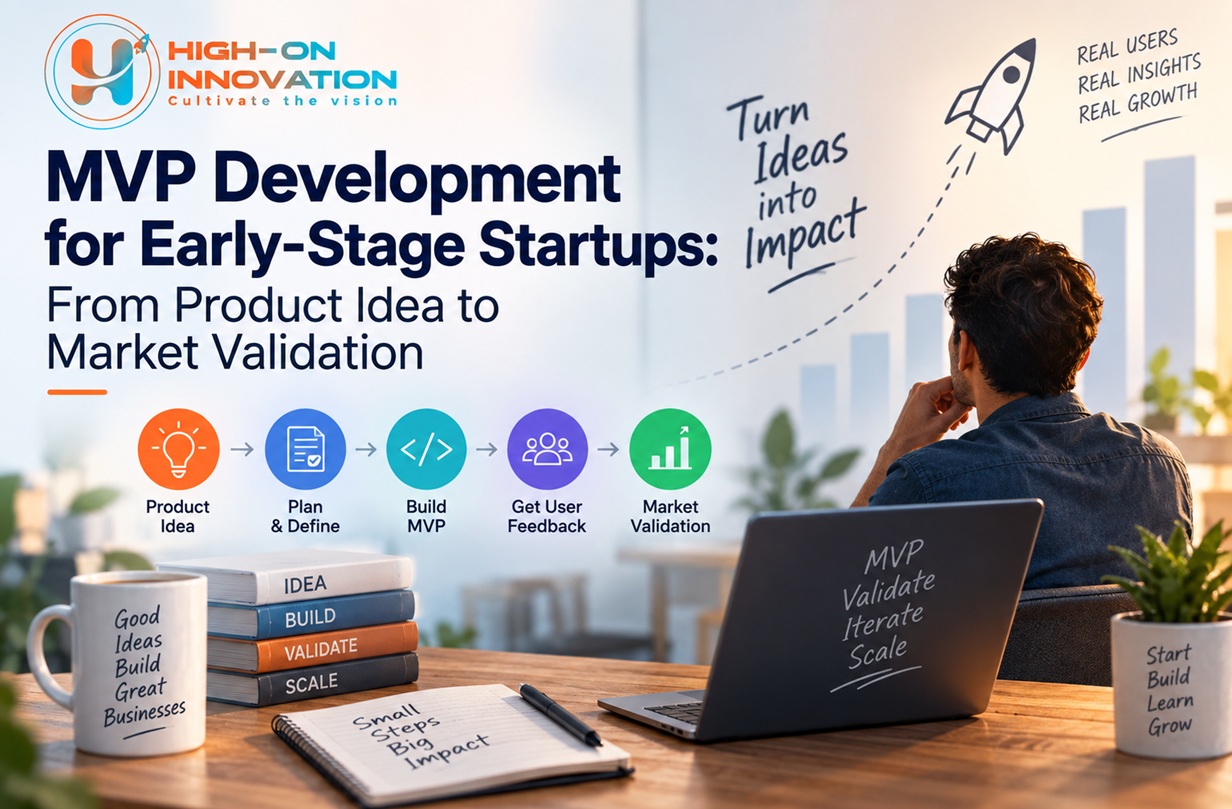
MVP Development for Early-Stage Startups: From Product Idea to Market Validation
Learn how MVP development for early-stage startups works, what to include in an MVP, development costs, technology, testing, launch, and how to validate your startup idea.
Sep 3, 2026
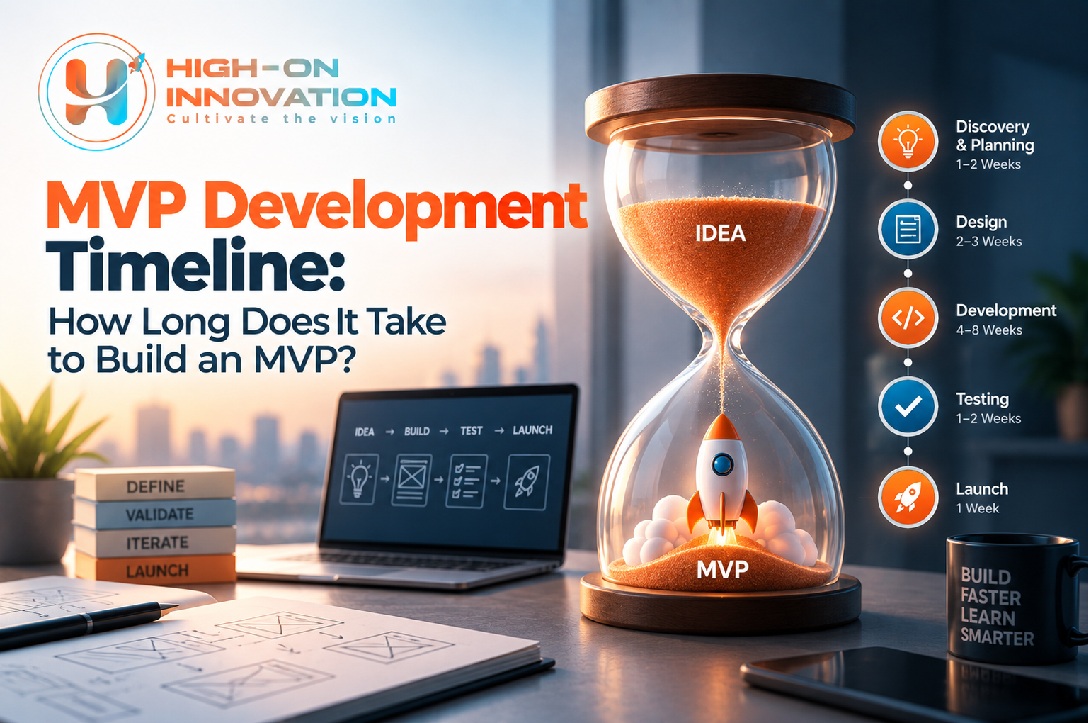
MVP Development Timeline: How Long Does It Take to Build an MVP?
For a startup, knowing how long MVP development takes is critical for planning investment, coordinating teams, preparing a launch strategy, and setting realistic expectations with stakeholders.
There is no universal MVP development timeline. A simple MVP with a limited number of features can be launched in a matter of weeks, while a complex SaaS platform, marketplace, fintech product, or AI-powered application may take several months.
Sep 3, 2026
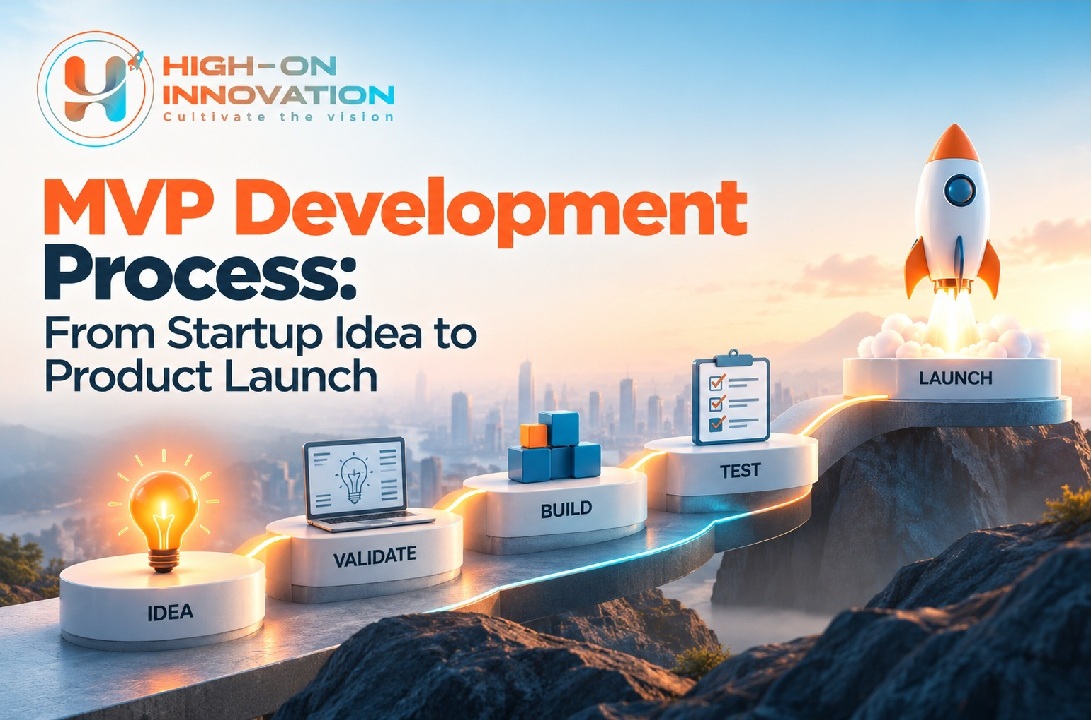
MVP Development Process: From Startup Idea to Product Launch
A great startup idea is only the beginning. Turning that idea into a functional product requires a structured MVP development process that validates assumptions, prioritizes essential features, controls development costs, and gets the product in front of real users quickly.
A Minimum Viable Product (MVP) is not simply a smaller version of a finished product. It is a focused product built around the core problem your startup wants to solve. The goal is to launch with enough functionality to attract early users, collect feedback, and determine whether the product has genuine market potential.
Popular Post
MVP Development for Early-Stage Startups: From Product Idea to Market Validation
Learn how MVP development for early-stage startups works, what to include in an MVP, development costs, technology, testing, launch, and how to validate your startup idea.
MVP Development Timeline: How Long Does It Take to Build an MVP?
For a startup, knowing how long MVP development takes is critical for planning investment, coordinating teams, preparing a launch strategy, and setting realistic expectations with stakeholders.
There is no universal MVP development timeline. A simple MVP with a limited number of features can be launched in a matter of weeks, while a complex SaaS platform, marketplace, fintech product, or AI-powered application may take several months.
MVP Development Process: From Startup Idea to Product Launch
A great startup idea is only the beginning. Turning that idea into a functional product requires a structured MVP development process that validates assumptions, prioritizes essential features, controls development costs, and gets the product in front of real users quickly.
A Minimum Viable Product (MVP) is not simply a smaller version of a finished product. It is a focused product built around the core problem your startup wants to solve. The goal is to launch with enough functionality to attract early users, collect feedback, and determine whether the product has genuine market potential.
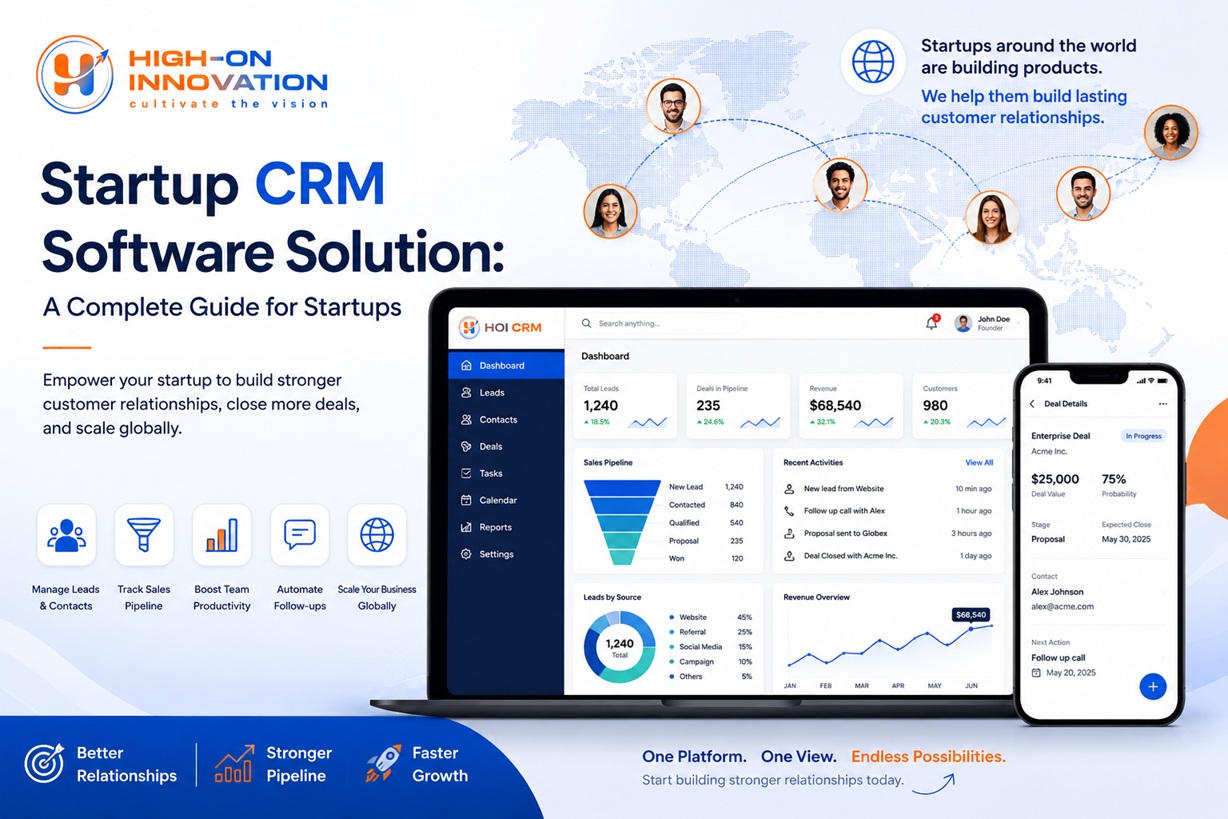
Startup CRM Software Solution: A Complete Guide for Startups around the world are building products
Startups around the world are building products, entering new markets, and scaling teams faster than ever. As a company grows, managing leads, customers, sales conversations, follow-ups, and business relationships through spreadsheets, email, and messaging apps becomes increasingly difficult. This is where a startup CRM software solution can become an important part of a company's growth infrastructure.