MVP Development Process: From Startup Idea to Product Launch
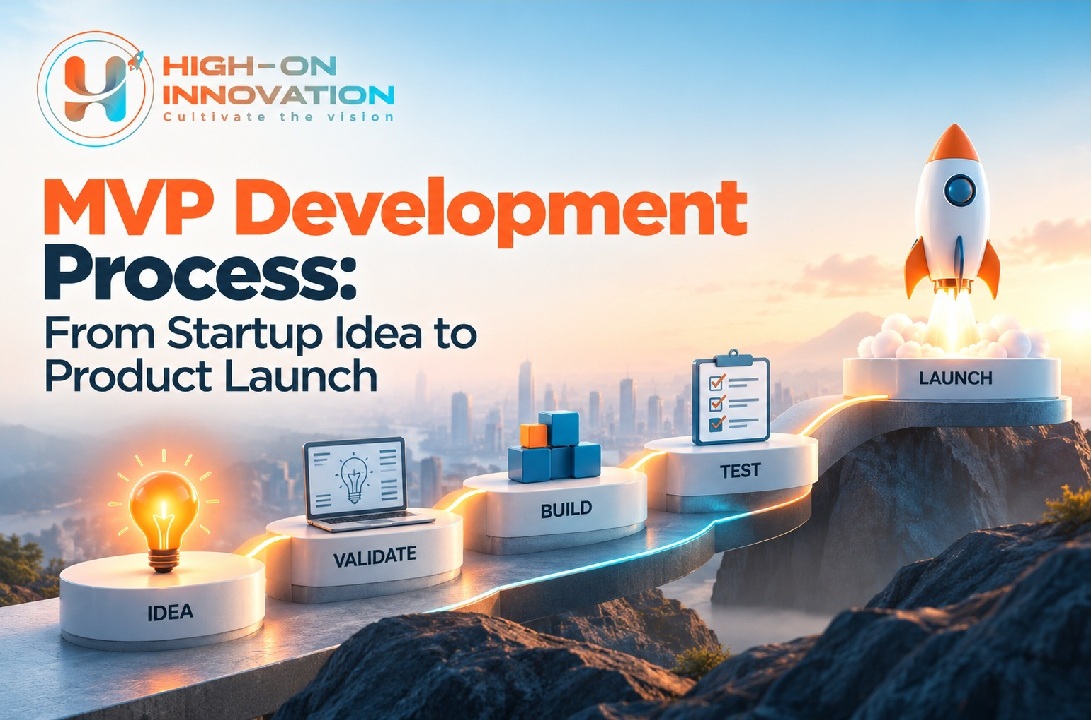
A great startup idea is only the beginning. Turning that idea into a functional product requires a structured MVP development process that validates assumptions, prioritizes essential features, controls development costs, and gets the product in front of real users quickly.
A Minimum Viable Product (MVP) is not simply a smaller version of a finished product. It is a focused product built around the core problem your startup wants to solve. The goal is to launch with enough functionality to attract early users, collect feedback, and determine whether the product has genuine market potential.
For startups planning their first product, understanding the development process can make it easier to manage scope, budget, technology decisions, and launch expectations.
What Is the MVP Development Process?
The MVP development process is a structured approach to transforming a validated startup idea into a functional product that can be launched and tested with real users.
A typical process includes:
Problem and market validation
MVP scope definition
Feature prioritization
UX/UI design
Technology selection
Product development
Quality assurance
MVP launch
User feedback and iteration
The process should remain flexible because an MVP is designed to generate learning. If user feedback reveals that an assumption is wrong, the product roadmap may need to change.
If you're still evaluating whether an MVP is the right approach for your business, our guide to MVP development for startups provides a broader overview of the strategy, services, and development considerations.
8 Steps in the MVP Development Process
1. Define the Problem and Business Objective
Every successful MVP starts with a clearly defined problem.
Before discussing features or technology, identify:
What problem are you solving?
Who experiences this problem?
How are they solving it today?
Why would they switch to your solution?
What business outcome should the MVP achieve?
The objective might be validating demand, acquiring the first users, testing a business model, attracting investors, or proving product-market fit.
A clear objective provides a framework for every decision that follows.
2. Validate the Market and User Need
Building an MVP without validating the underlying problem can result in wasted development time and budget.
Market validation can involve competitor research, customer interviews, surveys, landing-page experiments, and analysis of existing solutions.
At this stage, focus on understanding your target users rather than trying to prove that every original assumption is correct.
What should startup founders validate?
At minimum, validate:
The target customer
The problem's importance
Existing alternatives
Customer expectations
Potential demand
Your product's differentiating value
The objective is not to eliminate all uncertainty. It is to reduce the most important risks before development begins.
3. Define the MVP Scope
Once the problem is understood, define what the first product version actually needs to accomplish.
This is where many startups make a critical mistake: adding too many features.
An MVP should contain the minimum functionality required to deliver its core value proposition.
For example, a marketplace MVP might initially need user registration, seller listings, search, payments, and order management. Advanced recommendations, loyalty programs, and complex analytics can potentially come later.
A tightly controlled scope makes the product easier to build, test, and improve.
4. Prioritize Features
Feature prioritization converts a broad product vision into an actionable MVP roadmap.
One useful approach is to classify features into:
Must-have: Essential to the core user journey
Should-have: Valuable but not critical for launch
Could-have: Useful enhancements for future versions
Won't-have: Features intentionally excluded from the MVP
Prioritization should consider user value, business impact, technical complexity, dependencies, and development effort.
This prevents the MVP from gradually turning into a full-scale product before it reaches the market.
5. Design the User Experience and Interface
After defining the scope, the product team translates requirements into user flows, wireframes, prototypes, and visual designs.
UX design focuses on how users complete tasks, while UI design establishes the product's visual interface.
The design phase should answer questions such as:
How does a user navigate the product?
What is the primary action on each screen?
Where could users encounter friction?
What information do users need at each step?
Interactive prototypes can also be used to test important workflows before development begins.
Good MVP design does not mean creating a feature-heavy interface. It means making the core experience intuitive and usable.
6. Select the Technology Stack
Technology decisions should support the MVP's current requirements while leaving enough flexibility for future growth.
The appropriate stack depends on factors such as:
Product type
Required functionality
Scalability requirements
Integrations
Security requirements
Development resources
Expected future roadmap
For example, a SaaS MVP may require a different architecture from a consumer mobile application or an AI-powered product.
The goal is not to choose the most sophisticated technology available. It is to choose technology that can reliably support the product's current objectives without creating unnecessary complexity.
7. Develop and Test the MVP
With the scope, design, and technology stack established, development begins.
A typical development cycle involves:
Frontend development
The user-facing interface is developed based on approved UX/UI designs.
Backend development
APIs, databases, authentication, business logic, integrations, and other server-side functionality are implemented.
Quality assurance
The product is tested for functionality, usability, compatibility, security issues, and performance.
Agile development allows teams to build the product in manageable iterations, identify problems earlier, and incorporate feedback during development rather than waiting until the end.
8. Launch, Measure, and Iterate
Launching the MVP is not the end of the process. It is the beginning of the product-learning cycle.
After launch, track meaningful metrics such as:
User acquisition
Activation
Engagement
Retention
Conversion
Customer feedback
Revenue, where applicable
Avoid measuring success only by the number of features delivered.
The most important question is whether users are receiving enough value from the product to continue using it.
Based on real-world data, you can decide which features to improve, remove, or introduce in subsequent releases.
How Long Does the MVP Development Process Take?
The MVP development timeline depends on product complexity, number of platforms, feature scope, integrations, design requirements, and technology choices.
A relatively simple MVP may take several weeks, while a more complex SaaS, marketplace, fintech, healthcare, or AI product can require several months.
The best way to establish a realistic timeline is to define the MVP scope first and then estimate each development phase.
How Much Does MVP Development Cost?
The cost of an MVP varies significantly depending on functionality and technical complexity.
Factors that influence the budget include:
Number and complexity of features
Web versus mobile development
UX/UI requirements
Backend architecture
Third-party integrations
Security requirements
Testing requirements
Development team location and expertise
For a detailed breakdown, see our guide to [MVP development cost] and the factors that influence startup MVP pricing.
Common MVP Development Mistakes to Avoid
Startups can reduce unnecessary costs and delays by avoiding several common mistakes:
Building too many features
More features do not automatically create more value. Excessive scope increases development time and makes it harder to determine which functionality users actually need.
Skipping validation
Development should not be used as a substitute for market research. Validate important assumptions before investing heavily in engineering.
Choosing technology before defining requirements
Technology should support the product strategy, not dictate it.
Ignoring post-launch feedback
An MVP is an experiment. Treating launch as the final milestone prevents the startup from learning from actual users.
Frequently Asked Questions
1. What are the stages of MVP development?
The main stages include idea and problem validation, MVP scope definition, feature prioritization, UX/UI design, technology selection, development, testing, launch, and post-launch iteration.
2. How long does it take to develop an MVP?
The timeline varies according to product complexity, feature scope, platform requirements, integrations, and team size. A simple MVP can take several weeks, while more complex products may take several months.
3. How much does it cost to develop an MVP?
MVP development costs depend on the product's features, complexity, technology stack, design requirements, integrations, and development team. A defined scope is necessary to produce a meaningful estimate.
4. What features should an MVP have?
An MVP should include only the features required to solve the primary user problem and deliver the product's core value proposition. Additional features can be prioritized based on user feedback after launch.
5. What happens after an MVP is launched?
After launch, teams collect user feedback and analyze product metrics to determine what should be improved, changed, removed, or added in future versions. The MVP becomes the foundation for iterative product development.
Conclusion: Turn Your Startup Idea Into a Validated Product
A disciplined MVP development process helps startups move from an idea to a functional product without committing excessive resources before the market has been tested. The key is to focus on the problem, validate assumptions, control scope, prioritize essential functionality, and use real user feedback to guide future development.
With the right product strategy and development partner, an MVP can become more than a basic first release—it can provide the foundation for a scalable product roadmap.
High On Innovation helps startups transform product ideas into functional, market-ready MVPs through structured discovery, UX/UI design, development, testing, and launch support.
Ready to validate your startup idea? Get in touch with High On Innovation to discuss your MVP development requirements and turn your product vision into a launch-ready MVP.
Shailendra Ram leads project execution and technology delivery at High-On Innovation, managing development teams, project workflows, client communications, and solution implementation. With hands-on experience across web, mobile, cloud, and enterprise applications, he ensures projects are delivered efficiently while meeting business objectives and technical standards. His expertise includes software development lifecycle management, project delivery, technology implementation, agile methodologies, and client success.
Comments
Loading comments…
Latest Market Trends
Aug 26, 2026
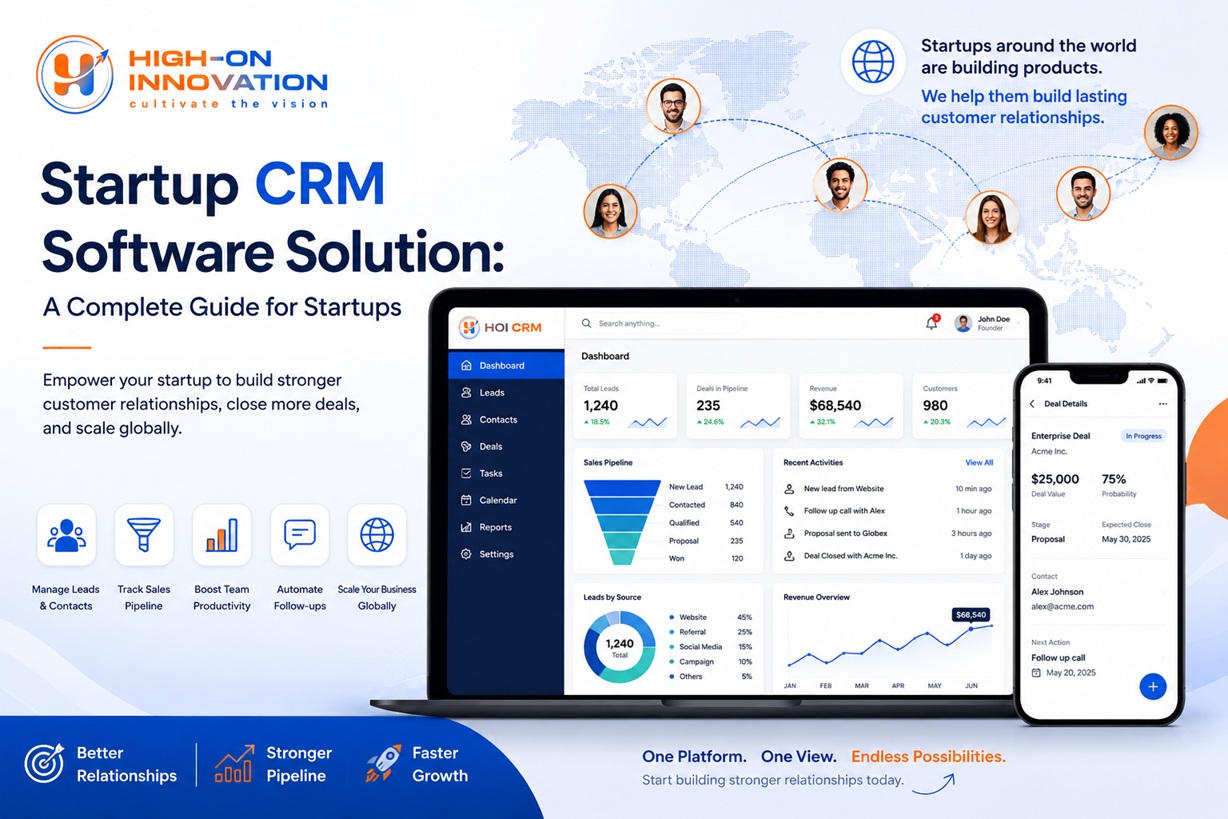
Startup CRM Software Solution: A Complete Guide for Startups around the world are building products
Startups around the world are building products, entering new markets, and scaling teams faster than ever. As a company grows, managing leads, customers, sales conversations, follow-ups, and business relationships through spreadsheets, email, and messaging apps becomes increasingly difficult. This is where a startup CRM software solution can become an important part of a company's growth infrastructure.
Aug 27, 2026
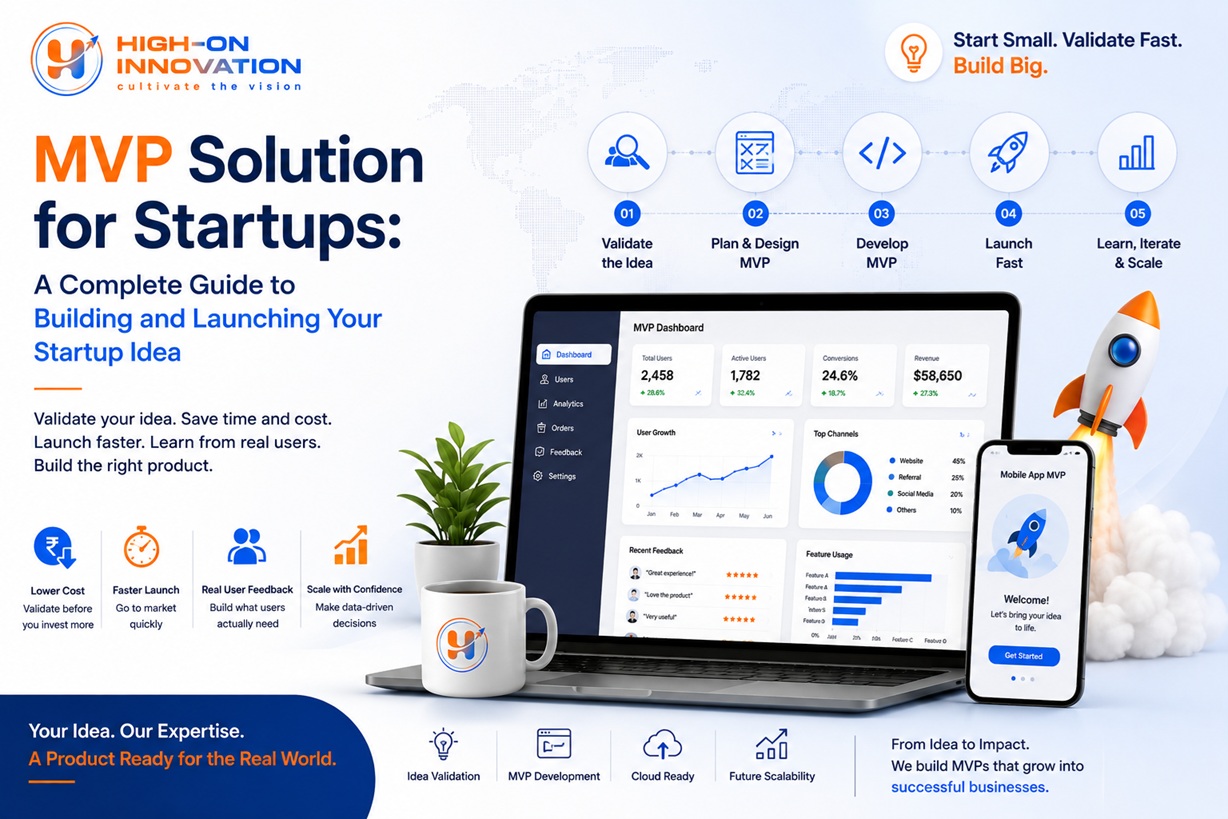
MVP Solution for Startups: A Complete Guide to Building and Launching Your Startup Idea — A Minimum Viable Product (MVP)
A Minimum Viable Product (MVP) allows startups to build a functional version of their product with the essential features required to solve a specific customer problem. Instead of investing heavily in a complete product from day one, founders can launch an MVP, collect real-world feedback, and improve the product based on actual user behavior.
Aug 5, 2026
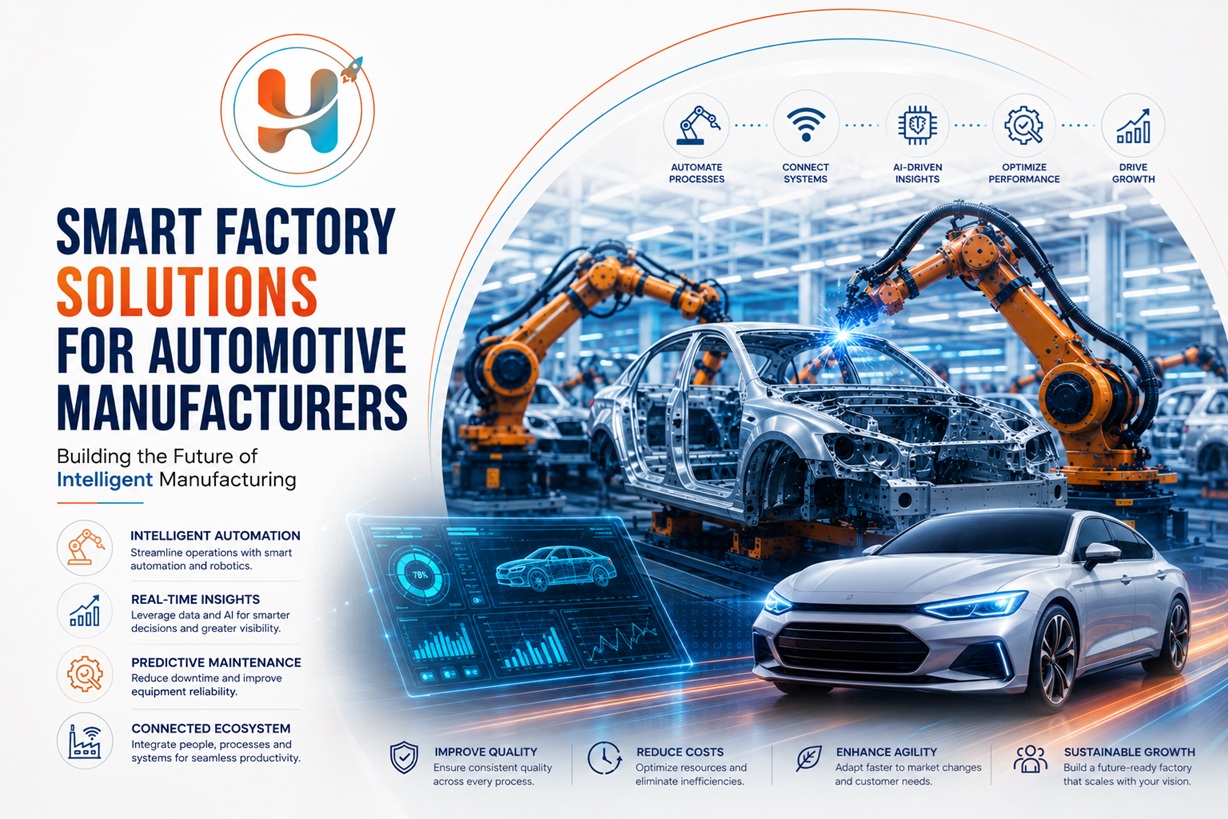
Smart Factory Solutions for Automotive Manufacturers: Building the Future of Intelligent Manufacturing
The automotive industry is under increasing pressure to produce high-quality vehicles faster, reduce operational costs, improve sustainability, and adapt to rapidly changing customer demands. Traditional manufacturing methods, while effective for mass production, often struggle to provide the flexibility and real-time visibility required in today's competitive landscape.
Popular Post
Startup CRM Software Solution: A Complete Guide for Startups around the world are building products
Startups around the world are building products, entering new markets, and scaling teams faster than ever. As a company grows, managing leads, customers, sales conversations, follow-ups, and business relationships through spreadsheets, email, and messaging apps becomes increasingly difficult. This is where a startup CRM software solution can become an important part of a company's growth infrastructure.
MVP Solution for Startups: A Complete Guide to Building and Launching Your Startup Idea — A Minimum Viable Product (MVP)
A Minimum Viable Product (MVP) allows startups to build a functional version of their product with the essential features required to solve a specific customer problem. Instead of investing heavily in a complete product from day one, founders can launch an MVP, collect real-world feedback, and improve the product based on actual user behavior.
Smart Factory Solutions for Automotive Manufacturers: Building the Future of Intelligent Manufacturing
The automotive industry is under increasing pressure to produce high-quality vehicles faster, reduce operational costs, improve sustainability, and adapt to rapidly changing customer demands. Traditional manufacturing methods, while effective for mass production, often struggle to provide the flexibility and real-time visibility required in today's competitive landscape.
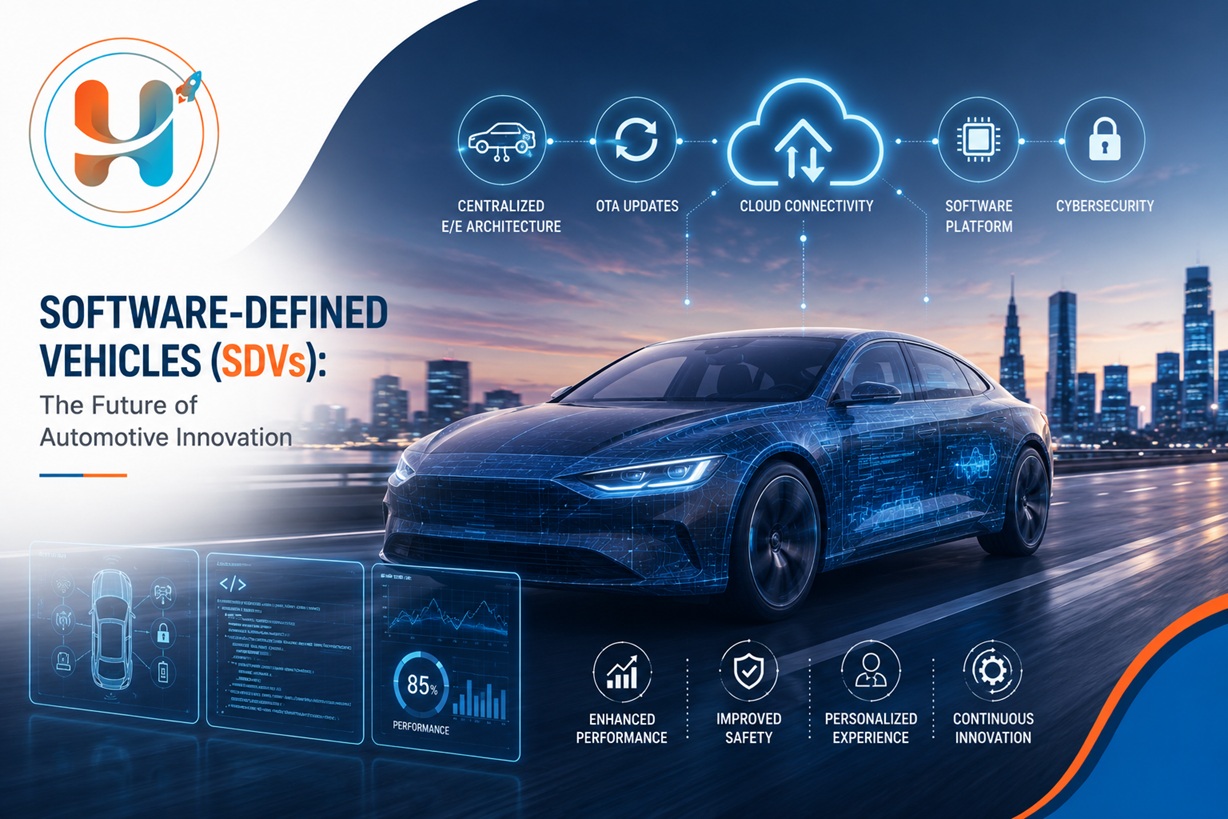
Software-Defined Vehicles (SDVs): The Future of Automotive Innovation
The automotive industry is shifting from hardware-centric engineering to software-driven innovation. Vehicles are no longer defined solely by their engines, mechanical systems, or physical features—they are increasingly differentiated by software capabilities that enhance performance, safety, connectivity, and user experience. This evolution has given rise to the Software-Defined Vehicle (SDV).