Revenue Cycle Automation: The Complete Guide for Hospitals & Healthcare Providers
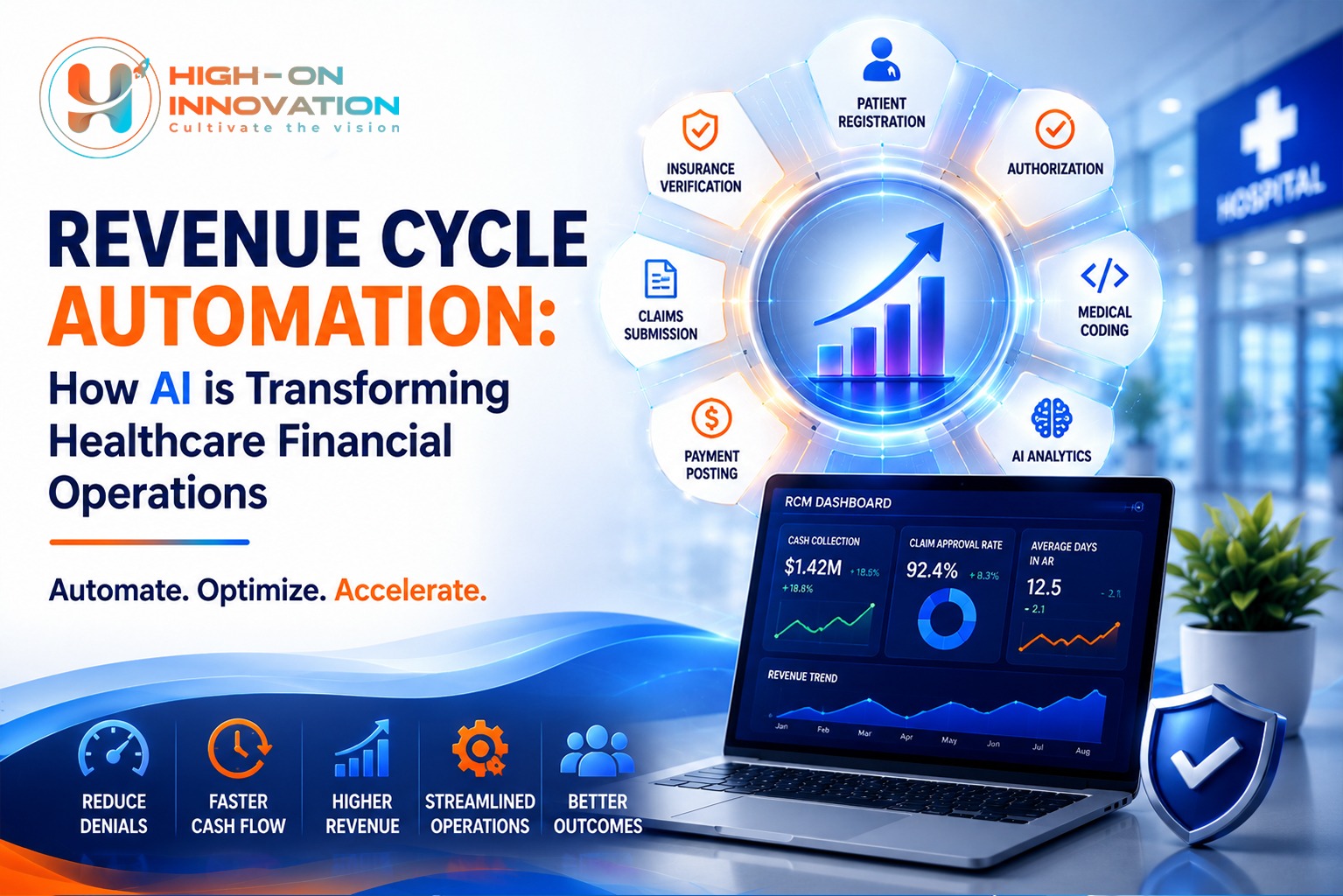
Providing exceptional patient care is the mission of every healthcare organization—but delivering care alone does not ensure financial success.
Behind every patient visit is a complex financial journey that begins when an appointment is scheduled and ends only after the healthcare provider receives payment for the services delivered.
This journey is known as the Revenue Cycle.
For many hospitals, clinics, diagnostic centers, and specialty healthcare providers, the revenue cycle involves dozens of interconnected administrative processes, including patient registration, insurance verification, prior authorization, medical coding, claims processing, billing, payment posting, collections, and financial reporting.
Unfortunately, many of these processes remain manual.
Administrative teams spend countless hours verifying insurance, correcting claims, following up with payers, reconciling payments, and managing denied claims. These inefficiencies slow reimbursements, increase operational costs, and negatively affect cash flow.
As healthcare organizations continue to grow, manual revenue cycle management becomes increasingly difficult to sustain.
This is where Revenue Cycle Automation transforms healthcare financial operations.
By combining Artificial Intelligence (AI), intelligent workflows, system integration, and business process automation, healthcare organizations can streamline every stage of the revenue cycle while reducing administrative effort and improving financial performance.
Whether you're managing a hospital, clinic, dental practice, IVF center, diagnostic laboratory, or healthcare network, revenue cycle automation helps create a faster, more accurate, and more profitable financial ecosystem.
In this guide, you'll learn:
What Revenue Cycle Automation is
How AI improves Revenue Cycle Management (RCM)
The biggest challenges manual revenue cycles create
Fifteen high-impact revenue cycle automations
Best practices for implementing intelligent RCM
What is Revenue Cycle Automation?
Revenue Cycle Automation is the use of Artificial Intelligence, workflow automation, and digital technologies to automate the financial processes involved in delivering and receiving payment for healthcare services.
Rather than treating billing, insurance verification, claims processing, and collections as separate functions, automation connects them into one intelligent workflow.
For example, after a patient schedules an appointment, an automated revenue cycle can:
Register the patient
Verify insurance eligibility
Check benefits
Request prior authorization
Validate medical coding
Generate claims
Submit claims electronically
Track reimbursement status
Post payments automatically
Generate financial reports
Instead of relying on multiple disconnected systems and manual coordination, automation manages the entire financial lifecycle.
Understanding the Healthcare Revenue Cycle
Revenue Cycle Management (RCM) begins before treatment starts and continues until every payment has been collected and recorded.
A typical revenue cycle includes:
Patient Inquiry
↓
Appointment Scheduling
↓
Patient Registration
↓
Insurance Verification
↓
Prior Authorization
↓
Clinical Documentation
↓
Medical Coding
↓
Claims Creation
↓
Claims Submission
↓
Claims Review
↓
Payment Processing
↓
Collections
↓
Financial Reporting
Every stage depends on the accuracy of the previous step.
An error during registration, insurance verification, coding, or documentation can delay reimbursement by weeks or even months.
Automation reduces these risks by connecting every stage into one coordinated workflow.
Core Technologies Behind Revenue Cycle Automation
Modern RCM automation combines several intelligent technologies.
Artificial Intelligence (AI)
AI analyzes financial and operational data to identify errors, predict claim denials, automate decision-making, and improve reimbursement accuracy.
Examples include:
Claim risk prediction
Coding validation
Revenue forecasting
Payment analysis
Denial detection
Workflow Automation
Workflow automation coordinates financial activities across departments.
Examples include:
Insurance verification
Claims routing
Billing approvals
Payment posting
Collections
Reporting
Tasks move automatically without unnecessary delays.
System Integration
Revenue cycle automation connects multiple healthcare platforms, including:
Hospital Information Systems (HIS)
Electronic Medical Records (EMR/EHR)
Practice Management Software
Billing Platforms
Claims Management Systems
Healthcare CRM
Accounting Software
Integrated systems eliminate duplicate data entry while improving financial accuracy.
Predictive Analytics
AI identifies trends before they become financial problems.
Healthcare leaders can forecast:
Revenue performance
Claim denial risks
Payment delays
Collection success
Operational bottlenecks
This supports proactive financial management.
Executive Dashboards
Real-time dashboards provide visibility into:
Cash flow
Claims performance
Revenue trends
Outstanding balances
Staff productivity
Financial KPIs
Executives can monitor financial performance continuously.
Problems Manual Revenue Cycle Management Creates
Manual revenue cycle processes create inefficiencies that affect both operational performance and financial stability.
1. Delayed Reimbursements
Every manual approval, document review, and data entry task extends the time between patient treatment and reimbursement.
Long reimbursement cycles reduce cash flow and increase financial uncertainty.
How Automation Helps
AI accelerates claims preparation, submission, tracking, and payment processing.
2. High Claim Denial Rates
Incorrect coding, incomplete documentation, and insurance verification errors frequently result in denied claims.
Denied claims require additional administrative work and delay payments.
How Automation Helps
AI validates information before claims are submitted, significantly reducing preventable denials.
3. Medical Coding Errors
Accurate coding is essential for reimbursement.
Manual coding reviews increase the risk of:
Incorrect diagnosis codes
Procedure mismatches
Missing modifiers
Documentation inconsistencies
How Automation Helps
AI reviews clinical documentation and validates coding before claims enter the reimbursement process.
4. Revenue Leakage
Small administrative mistakes can lead to significant financial losses over time.
Examples include:
Missed charges
Unsubmitted claims
Incorrect billing
Incomplete documentation
Delayed collections
How Automation Helps
Automation identifies revenue risks early and ensures every eligible service is billed accurately.
5. Limited Financial Visibility
Without integrated reporting, healthcare leaders struggle to answer questions such as:
Which claims are delayed?
Which insurance providers create the most denials?
Where is revenue being lost?
Which departments perform best?
How Automation Helps
AI dashboards provide real-time financial insights across the entire revenue cycle.
6. Administrative Overload
Revenue cycle teams spend significant time:
Reviewing claims
Updating spreadsheets
Calling insurance companies
Correcting billing errors
Tracking payments
As patient volumes grow, these manual processes become increasingly difficult to manage.
How Automation Helps
Automation handles repetitive financial tasks while allowing staff to focus on exceptions and strategic revenue management.
7. Compliance Risks
Healthcare financial processes must comply with payer requirements, coding guidelines, and regulatory standards.
Manual workflows increase the risk of documentation errors and compliance issues.
How Automation Helps
AI standardizes workflows while maintaining complete audit trails and documentation history.
15 Revenue Cycle Automations Every Healthcare Organization Should Implement
Revenue Cycle Automation spans every financial stage of the patient journey.
The following automations deliver immediate operational and financial improvements.
1. Patient Registration Automation
Revenue cycle success begins with accurate patient registration.
AI automates:
Patient onboarding
Identity verification
Insurance information collection
Consent management
Digital forms
Benefits
Better data accuracy
Faster registrations
Reduced administrative work
Improved patient experience
2. Insurance Verification Automation
Insurance verification confirms eligibility before treatment begins.
AI automatically validates:
Policy status
Coverage
Benefits
Patient eligibility
Provider participation
Benefits
Lower claim denials
Faster admissions
Better financial planning
Improved reimbursement accuracy
3. Prior Authorization Automation
Certain treatments require payer approval before services are delivered.
AI automates:
Authorization requests
Documentation collection
Approval tracking
Patient notifications
Benefits
Faster approvals
Reduced treatment delays
Better operational efficiency
4. Medical Coding Automation
Medical coding directly affects reimbursement accuracy.
AI validates:
Diagnosis codes
Procedure codes
Documentation alignment
Coding compliance
Benefits
Fewer coding errors
Higher claim acceptance
Better compliance
5. Claims Creation Automation
Creating claims manually requires gathering information from multiple systems.
AI automatically assembles complete claims using:
Patient records
Clinical documentation
Coding information
Insurance details
Benefits
Faster claim preparation
Reduced manual effort
Higher accuracy
6. Electronic Claims Submission
Once claims are validated, AI submits them electronically without manual intervention.
Automation supports:
Electronic payer submission
Submission confirmation
Error notifications
Workflow tracking
Benefits
Faster reimbursements
Reduced paperwork
Better payer communication
7. Claims Tracking Automation
Revenue cycle teams need continuous visibility into submitted claims.
AI automatically monitors:
Claim status
Pending reviews
Payer responses
Documentation requests
Approval timelines
Benefits
Better operational visibility
Faster issue resolution
Reduced administrative tracking
8. Denial Management Automation
Claim denials are one of the largest sources of revenue loss in healthcare.
Manually identifying, reviewing, correcting, and resubmitting denied claims consumes significant administrative time and delays reimbursement.
AI automates denial management by:
Identifying denial reasons
Categorizing denial types
Prioritizing high-value claims
Assigning corrective actions
Triggering resubmission workflows
Monitoring denial trends
Benefits
Lower denial rates
Faster claim recovery
Reduced write-offs
Improved reimbursement performance
Instead of reacting to denials, healthcare organizations can proactively reduce them.
9. Appeals Workflow Automation
Some denied claims require formal appeals supported by clinical documentation and payer-specific requirements.
AI automates:
Appeal preparation
Document collection
Deadline tracking
Communication with billing teams
Appeal status monitoring
Escalation workflows
Benefits
Improved appeal success rates
Faster reimbursement
Better compliance
Reduced manual coordination
10. Healthcare Billing Automation
Billing becomes more accurate when integrated directly with the revenue cycle.
AI automates:
Invoice generation
Co-payment calculations
Patient responsibility estimates
Billing validation
Payment reminders
Outstanding balance tracking
Benefits
Faster billing
Reduced billing errors
Better patient transparency
Improved collections
11. Automated Payment Posting
After insurance providers process claims, payments must be reconciled and posted accurately.
AI automatically:
Matches payments to claims
Updates patient accounts
Reconciles reimbursements
Identifies payment discrepancies
Generates financial reports
Benefits
Faster reconciliation
Improved financial accuracy
Reduced manual effort
Better cash flow visibility
12. Collections Automation
Outstanding patient balances can delay revenue if collection processes are inconsistent.
AI supports collections through:
Automated payment reminders
Personalized payment plans
Balance notifications
Follow-up communication
Escalation workflows
Collection reporting
Benefits
Improved payment collection
Better patient communication
Reduced administrative workload
Increased revenue recovery
13. Revenue Cycle Dashboard
Healthcare executives require real-time insights into financial performance.
AI-powered dashboards provide visibility into:
Total revenue
Outstanding claims
Denial rates
Payment turnaround time
Collection performance
Revenue leakage
Cash flow trends
Department performance
Benefits
Better financial decision-making
Improved operational control
Real-time performance monitoring
Faster issue resolution
14. Predictive Revenue Cycle Intelligence
AI goes beyond reporting by predicting future financial outcomes.
Using historical data, AI can forecast:
High-risk claims
Payment delays
Cash flow trends
Denial probabilities
Collection performance
Revenue opportunities
Benefits
Proactive financial planning
Better resource allocation
Reduced financial risk
Increased revenue optimization
Predictive intelligence enables healthcare leaders to make informed decisions before financial issues arise.
15. End-to-End Revenue Cycle Automation
The greatest value comes from connecting every revenue cycle activity into one intelligent workflow.
An AI-powered revenue cycle integrates:
Patient registration
Insurance verification
Prior authorization
Medical coding
Claims processing
Billing
Payment posting
Collections
Financial reporting
Every department works from the same data, eliminating silos and manual handoffs.
Benefits
Complete revenue visibility
Faster reimbursements
Better collaboration
Reduced administrative costs
Scalable financial operations
Benefits of Revenue Cycle Automation
Revenue Cycle Automation creates measurable improvements across financial operations, administrative efficiency, and patient experience.
Faster Reimbursements
Automating claims, billing, payment posting, and follow-up activities significantly shortens reimbursement cycles.
Healthcare organizations receive payments sooner, improving financial stability.
Stronger Cash Flow
Faster reimbursement and improved collections contribute directly to healthier cash flow.
This enables organizations to invest more confidently in patient care, technology, and growth initiatives.
Lower Claim Denials
AI identifies potential issues before claims are submitted, reducing preventable denials caused by coding errors, missing documentation, or eligibility problems.
Reduced Revenue Leakage
Automation ensures that services are accurately documented, billed, submitted, and followed through to payment.
This minimizes lost revenue from overlooked claims or administrative mistakes.
Improved Staff Productivity
Revenue cycle teams spend less time on repetitive administrative work such as:
Data entry
Manual claim tracking
Payment reconciliation
Spreadsheet updates
Follow-up calls
Staff can focus on strategic financial management rather than routine processing.
Better Compliance
Automation standardizes workflows while maintaining complete audit trails for billing, coding, claims, and financial reporting.
This supports compliance with payer requirements and regulatory standards.
Real-Time Financial Visibility
Leadership teams gain immediate access to dashboards showing operational performance, revenue trends, reimbursement timelines, and financial KPIs.
This enables faster and more informed business decisions.
How HOI Implements Revenue Cycle Automation
At High on Innovation (HOI), we help healthcare organizations modernize their financial operations through intelligent automation that connects every stage of the revenue cycle.
Our goal is not simply to automate tasks—but to optimize the entire reimbursement process.
Step 1: Revenue Cycle Assessment
We begin by evaluating your current revenue cycle to identify:
Process bottlenecks
Manual activities
Denial trends
Billing challenges
Revenue leakage
Workflow inefficiencies
Step 2: Process Mapping
Our consultants map every financial workflow—from patient registration through collections—to eliminate unnecessary steps before automation begins.
Step 3: AI Opportunity Identification
We identify where Artificial Intelligence delivers the greatest value, including:
Claim validation
Coding support
Denial prediction
Payment forecasting
Financial analytics
Workflow optimization
Step 4: System Integration
HOI integrates revenue cycle automation with your existing technology ecosystem, including:
Hospital Information Systems (HIS)
Electronic Medical Records (EMR/EHR)
Practice Management Software
Billing Systems
Claims Platforms
Insurance Verification Systems
CRM Solutions
Accounting Software
This creates a unified financial workflow with minimal disruption.
Step 5: Deployment & Training
Automation is introduced in phases to ensure operational continuity.
We train finance teams, billing specialists, and administrators to maximize adoption and efficiency.
Step 6: Continuous Optimization
Revenue cycle performance should improve continuously.
HOI monitors key performance indicators, identifies optimization opportunities, and refines workflows as payer requirements and business needs evolve.
Why Healthcare Organizations Choose HOI
Healthcare providers choose HOI because we understand the relationship between operational workflows and financial performance.
Our AI-powered automation solutions help organizations improve efficiency while strengthening revenue generation.
Our expertise includes:
Revenue Cycle Automation
Medical Claims Processing Automation
Insurance Verification Automation
Healthcare Workflow Automation
Healthcare CRM Automation
Patient Communication Automation
AI Business Process Automation
Healthcare System Integration
Custom AI Solutions
Whether you're a hospital, clinic, diagnostic center, medical billing company, or specialty healthcare provider, HOI develops automation strategies tailored to your organization.
Frequently Asked Questions
1. What is Revenue Cycle Automation?
Revenue Cycle Automation uses Artificial Intelligence, workflow automation, and system integration to automate financial processes such as patient registration, insurance verification, claims processing, billing, payment posting, and collections.
2. How does Revenue Cycle Automation improve cash flow?
Automation accelerates reimbursement by reducing administrative delays, improving claim accuracy, shortening payment cycles, and increasing collection efficiency.
3. Can Revenue Cycle Automation reduce claim denials?
Yes. AI validates coding, documentation, insurance eligibility, and claim completeness before submission, reducing preventable denials.
4. Which healthcare organizations benefit from Revenue Cycle Automation?
Hospitals, clinics, diagnostic laboratories, dental practices, IVF centers, specialty hospitals, home healthcare providers, and medical billing organizations all benefit from improved financial efficiency.
5. Can Revenue Cycle Automation integrate with existing healthcare systems?
Yes. Modern automation platforms integrate with HIS, EMR/EHR systems, billing software, practice management systems, CRM platforms, accounting software, and insurance verification tools.
Conclusion
Healthcare organizations face growing financial pressure while managing increasingly complex administrative processes.
Manual revenue cycle management slows reimbursement, increases operational costs, creates claim denials, and limits financial visibility.
Revenue Cycle Automation transforms healthcare financial operations by connecting every stage of the reimbursement process into one intelligent, AI-powered workflow.
From patient registration and insurance verification to claims processing, billing, payment posting, and collections, automation enables healthcare organizations to improve cash flow, reduce administrative effort, and build a more resilient financial foundation.
Organizations that modernize their revenue cycle today will be better positioned to scale, improve operational efficiency, and deliver exceptional patient experiences tomorrow.
Ready to Modernize Your Revenue Cycle?
An efficient revenue cycle is essential for sustainable healthcare growth.
At High on Innovation (HOI), we help healthcare organizations automate financial operations with AI-powered workflows that improve reimbursement speed, reduce denials, and optimize revenue performance.
Schedule Your Free Revenue Cycle Automation Consultation
Discover how HOI can help you:
Accelerate reimbursements
Reduce claim denials
Improve cash flow
Automate billing and collections
Increase staff productivity
Strengthen financial visibility
Build a future-ready revenue cycle
Transform your revenue cycle into a strategic advantage with AI-powered automation from HOI.
Sachikanta Mohanty is the Digital Marketing Manager and Lead Strategist at High-On Innovation, responsible for driving digital growth initiatives for both internal and client projects. He specializes in SEO, content strategy, digital transformation marketing, lead generation, performance marketing, and online brand growth. With extensive experience in developing data-driven marketing strategies, he helps businesses improve visibility, customer acquisition, and long-term digital success.
Comments
Loading comments…
Latest Market Trends

Sep 4, 2026
MVP Development for Early-Stage Startups: From Product Idea to Market Validation
Learn how MVP development for early-stage startups works, what to include in an MVP, development costs, technology, testing, launch, and how to validate your startup idea.

Sep 3, 2026
MVP Development Timeline: How Long Does It Take to Build an MVP?
For a startup, knowing how long MVP development takes is critical for planning investment, coordinating teams, preparing a launch strategy, and setting realistic expectations with stakeholders.
There is no universal MVP development timeline. A simple MVP with a limited number of features can be launched in a matter of weeks, while a complex SaaS platform, marketplace, fintech product, or AI-powered application may take several months.
Sep 3, 2026
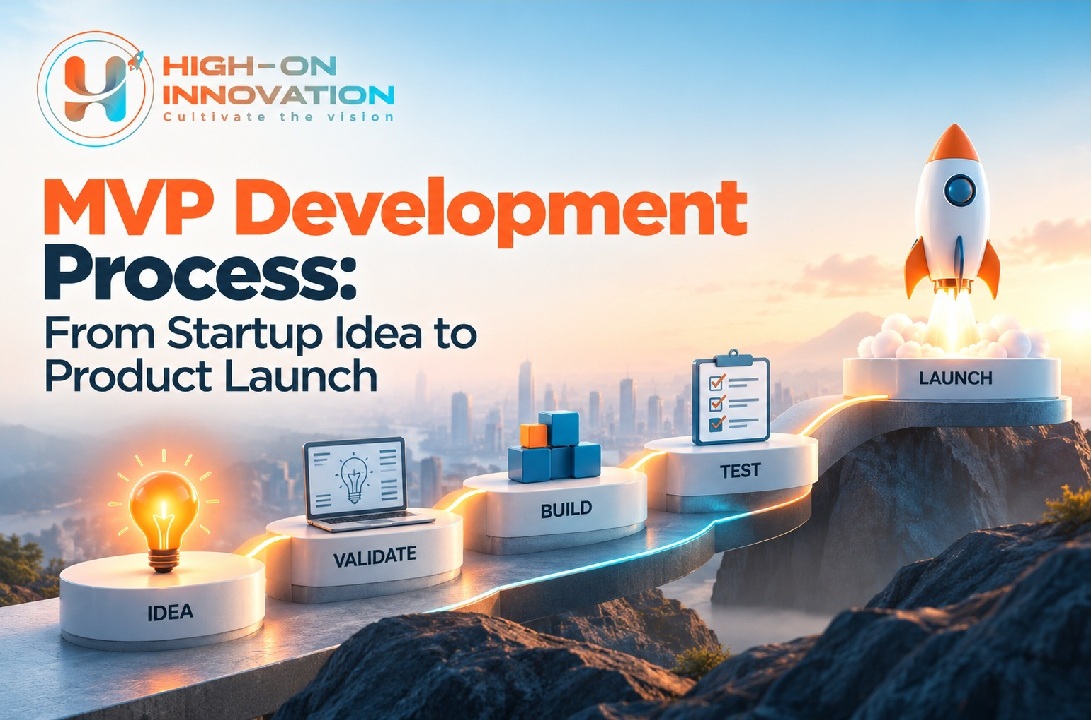
MVP Development Process: From Startup Idea to Product Launch
A great startup idea is only the beginning. Turning that idea into a functional product requires a structured MVP development process that validates assumptions, prioritizes essential features, controls development costs, and gets the product in front of real users quickly.
A Minimum Viable Product (MVP) is not simply a smaller version of a finished product. It is a focused product built around the core problem your startup wants to solve. The goal is to launch with enough functionality to attract early users, collect feedback, and determine whether the product has genuine market potential.
Popular Post
MVP Development for Early-Stage Startups: From Product Idea to Market Validation
Learn how MVP development for early-stage startups works, what to include in an MVP, development costs, technology, testing, launch, and how to validate your startup idea.
MVP Development Timeline: How Long Does It Take to Build an MVP?
For a startup, knowing how long MVP development takes is critical for planning investment, coordinating teams, preparing a launch strategy, and setting realistic expectations with stakeholders.
There is no universal MVP development timeline. A simple MVP with a limited number of features can be launched in a matter of weeks, while a complex SaaS platform, marketplace, fintech product, or AI-powered application may take several months.
MVP Development Process: From Startup Idea to Product Launch
A great startup idea is only the beginning. Turning that idea into a functional product requires a structured MVP development process that validates assumptions, prioritizes essential features, controls development costs, and gets the product in front of real users quickly.
A Minimum Viable Product (MVP) is not simply a smaller version of a finished product. It is a focused product built around the core problem your startup wants to solve. The goal is to launch with enough functionality to attract early users, collect feedback, and determine whether the product has genuine market potential.
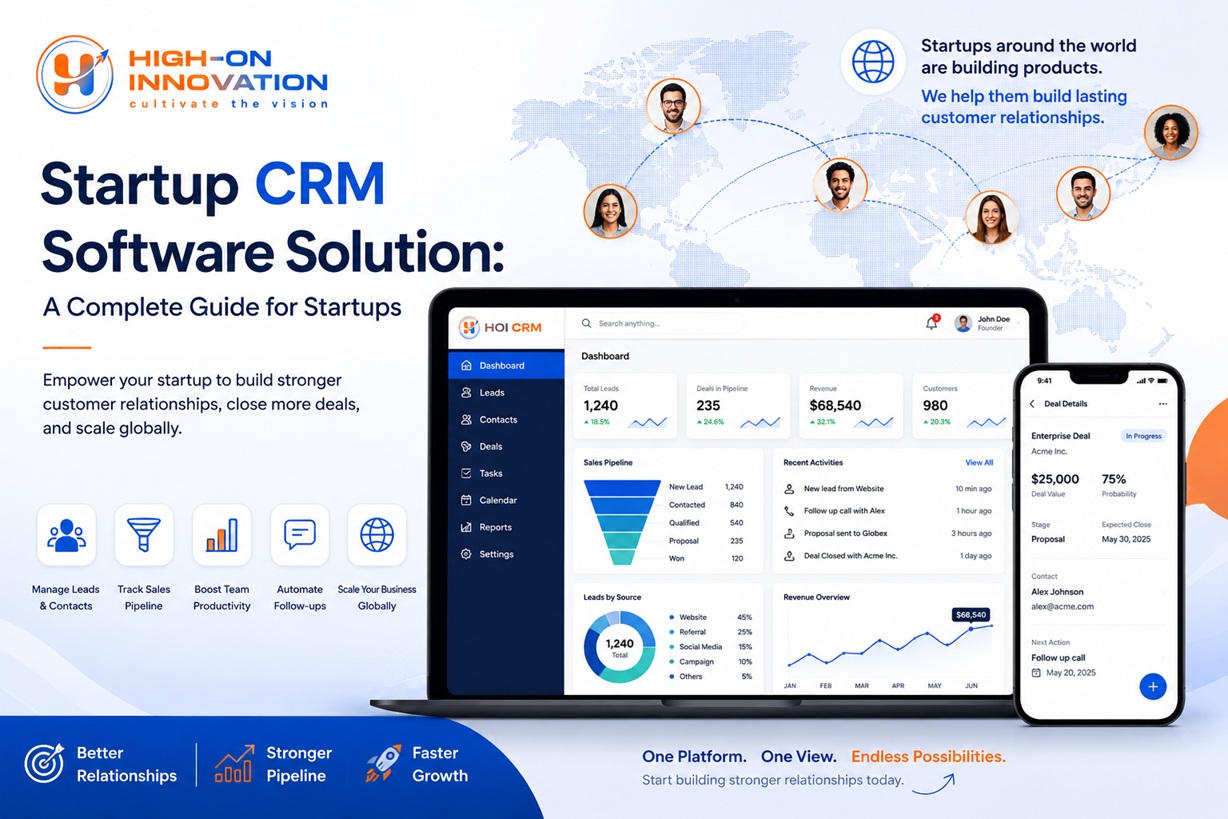
Startup CRM Software Solution: A Complete Guide for Startups around the world are building products
Startups around the world are building products, entering new markets, and scaling teams faster than ever. As a company grows, managing leads, customers, sales conversations, follow-ups, and business relationships through spreadsheets, email, and messaging apps becomes increasingly difficult. This is where a startup CRM software solution can become an important part of a company's growth infrastructure.