Manufacturing AI Implementation Guide: A Step-by-Step Roadmap to Successful AI Automation
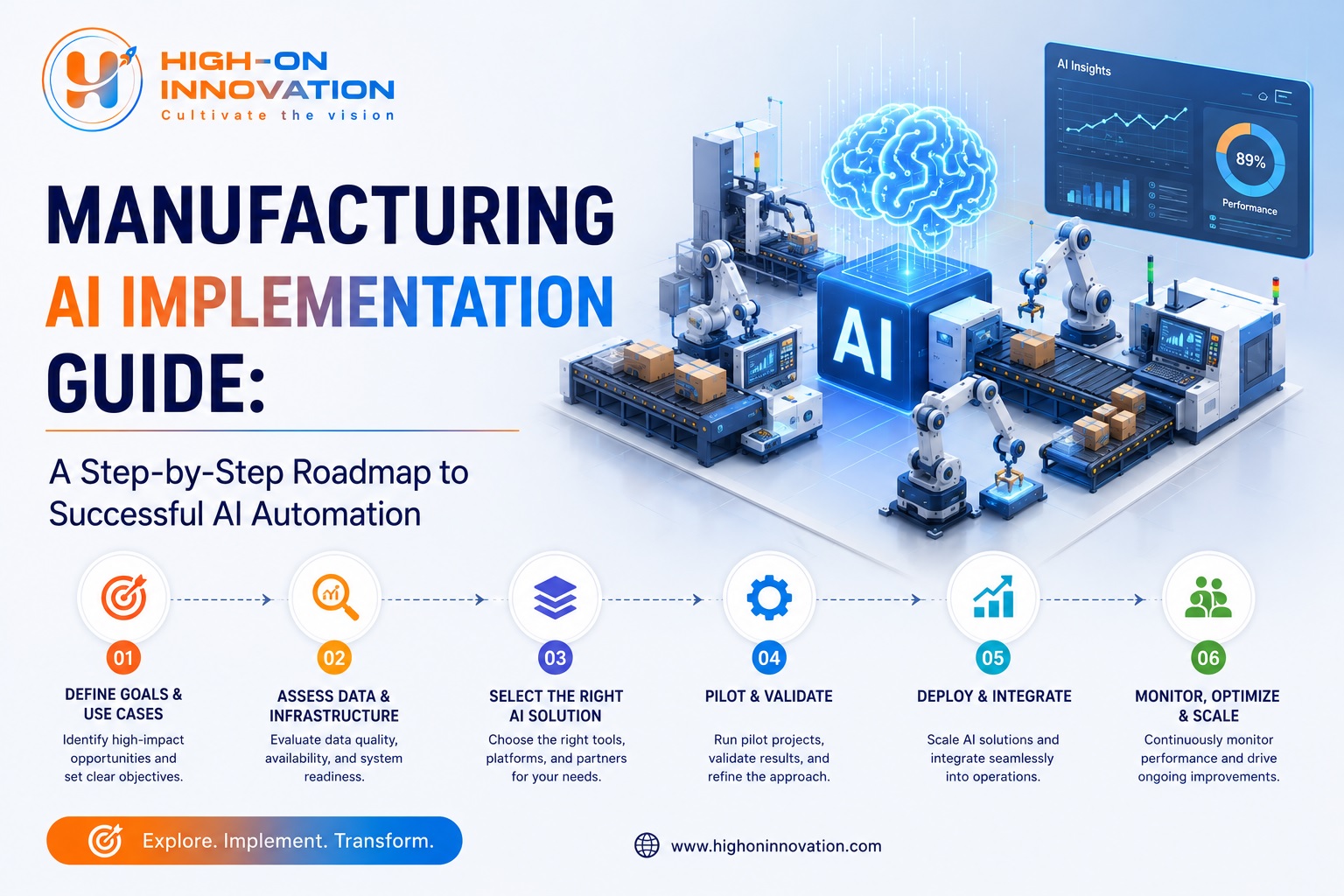
Artificial Intelligence (AI) has become one of the most transformative technologies in modern manufacturing. From production planning and inventory optimization to supply chain management and workflow automation, AI enables manufacturers to improve efficiency, reduce costs, and make smarter business decisions.
However, implementing AI is about much more than purchasing software. The success of an AI initiative depends on careful planning, well-defined business goals, quality data, employee adoption, and choosing the right implementation strategy.
Many AI projects fail because organizations focus on technology before understanding their operational challenges.
This guide provides a practical roadmap for implementing AI in manufacturing, helping startups, SMEs, mid-sized manufacturers, and large enterprises achieve measurable business outcomes.
What Is AI Implementation in Manufacturing?
Manufacturing AI implementation is the process of integrating artificial intelligence into business operations, production systems, and decision-making workflows to improve efficiency and automate repetitive tasks.
A successful implementation combines:
Business process analysis
Workflow automation
Data integration
Software implementation
Employee training
Performance monitoring
Continuous optimization
Rather than replacing existing operations, AI enhances them by making processes more intelligent and responsive.
Why Manufacturers Are Implementing AI
Manufacturers are adopting AI to solve common operational challenges such as:
Manual administrative processes
Inefficient production planning
Inventory inaccuracies
Supply chain disruptions
Slow decision-making
Limited operational visibility
Rising labor costs
Inconsistent customer follow-up
Data silos across departments
Difficulty scaling operations
AI addresses these issues by connecting systems, automating workflows, and providing real-time business intelligence.
Phase 1: Define Clear Business Objectives
Every successful AI implementation starts with business goals—not technology.
Ask questions such as:
Which processes consume the most time?
Where do manual errors occur?
Which departments experience frequent delays?
What information is difficult to access?
Which operational problems affect profitability?
Typical objectives include:
Reduce processing time
Improve production efficiency
Optimize inventory
Increase sales productivity
Improve customer service
Reduce operational costs
Enhance reporting
Improve decision-making
Well-defined objectives create a strong foundation for the implementation roadmap.
Phase 2: Analyze Existing Business Processes
Before introducing AI, document how work currently flows through the organization.
Review processes across:
Production
Scheduling
Capacity planning
Reporting
Machine utilization
Inventory
Stock management
Material planning
Warehouse operations
Supply Chain
Procurement
Vendor management
Logistics
Sales
Lead management
Quotations
Customer follow-up
Finance
Invoice processing
Purchase approvals
Reporting
Human Resources
Recruitment
Attendance
Leave management
Mapping current workflows helps identify bottlenecks and automation opportunities.
Phase 3: Identify High-Impact AI Opportunities
Not every process should be automated immediately.
Start with activities that are:
Repetitive
Time-consuming
Error-prone
Data-intensive
Dependent on approvals
Difficult to monitor manually
Common starting points include:
CRM automation
Workflow automation
Inventory management
Production planning
Procurement
Business reporting
Quick wins build confidence and demonstrate measurable ROI.
Phase 4: Evaluate Existing Technology
AI should enhance your existing systems—not replace everything.
Review current software such as:
ERP
CRM
Inventory management
Accounting software
Production management systems
HR platforms
Warehouse management software
Determine:
Which systems integrate easily?
Which processes remain manual?
Where does data duplication occur?
Which systems require modernization?
This assessment reduces implementation risks and costs.
Phase 5: Build a Data Foundation
AI depends on reliable, well-structured data.
Before implementation:
Standardize business data
Remove duplicate records
Correct inconsistencies
Define data ownership
Establish governance policies
Important data sources include:
Customer information
Inventory records
Production history
Supplier data
Financial transactions
Quality records
Clean data improves AI accuracy and decision-making.
Phase 6: Select the Right AI Solution
Manufacturers typically choose between:
Off-the-Shelf AI Platforms
Advantages:
Faster deployment
Lower upfront investment
Standard features
Vendor support
Limitations:
Limited customization
Generic workflows
Integration challenges
Less flexibility for unique manufacturing processes
Custom AI Solutions
Advantages:
Built around your workflows
Easier integration
Greater scalability
Higher user adoption
Supports competitive differentiation
Custom solutions are particularly valuable for manufacturers with specialized production processes or complex operational requirements.
Phase 7: Start with a Pilot Project
Launching AI across the entire organization at once increases risk.
Instead, begin with one department or process.
Examples include:
Automating purchase approvals
CRM workflow automation
Inventory forecasting
Production scheduling
Executive dashboards
A successful pilot provides measurable results and creates internal support for broader implementation.
Phase 8: Integrate Business Systems
AI delivers the greatest value when connected to existing applications.
Typical integrations include:
ERP
CRM
Inventory systems
Finance software
HR systems
Production management
Warehouse systems
Integrated systems eliminate duplicate data entry and provide a single source of truth across the organization.
Phase 9: Train Employees
Technology adoption depends on people.
Employees should understand:
Why AI is being implemented
How workflows will change
How the system supports daily work
What new responsibilities they will have
Practical training and ongoing support increase user adoption and reduce resistance to change.
Phase 10: Measure Performance
Implementation should be evaluated using measurable KPIs.
Track metrics such as:
Production efficiency
Process completion time
Inventory accuracy
Customer response time
Order fulfillment speed
Cost savings
Workflow cycle time
Employee productivity
Sales conversion
Customer satisfaction
These indicators demonstrate the value of AI and identify areas for further improvement.
Common Challenges During AI Implementation
Manufacturers may encounter several obstacles:
Resistance to Change
Employees may worry about new technologies disrupting established workflows.
Solution: Communicate clearly, involve teams early, and provide hands-on training.
Poor Data Quality
Incomplete or inconsistent data reduces AI effectiveness.
Solution: Clean and standardize data before deployment.
Legacy Systems
Older software may lack modern integration capabilities.
Solution: Use APIs, middleware, or phased modernization strategies.
Unrealistic Expectations
Some organizations expect immediate transformation.
Solution: Focus on incremental improvements and measurable milestones.
Lack of Internal Expertise
Many manufacturers have limited AI experience.
Solution: Work with an implementation partner that understands both AI and manufacturing operations.
AI Implementation Roadmap
A phased approach minimizes risk and accelerates value.
Phase 1 – Assessment
Evaluate business processes
Define objectives
Assess systems
Identify automation opportunities
Phase 2 – Planning
Design workflows
Prepare data
Select technology
Build implementation roadmap
Phase 3 – Pilot
Implement one high-impact use case
Train users
Measure results
Refine processes
Phase 4 – Expansion
Extend AI across departments
Integrate additional systems
Standardize workflows
Scale automation
Phase 5 – Continuous Improvement
Monitor KPIs
Optimize AI models
Expand automation
Review business outcomes regularly
Best Practices for Successful AI Adoption
Manufacturers consistently achieve better outcomes when they:
Start with clear business goals
Focus on solving operational problems
Prioritize high-impact processes
Build a strong data foundation
Involve employees throughout the project
Measure performance continuously
Scale gradually instead of attempting enterprise-wide implementation on day one
Choose solutions that integrate with existing systems
How HOI Supports Manufacturing AI Implementation
At High On Innovation (HOI), we help manufacturers implement AI with a practical, business-first approach. Our focus is not simply deploying technology but delivering measurable improvements in efficiency, productivity, and operational visibility.
Our implementation services include:
AI Automation
Manufacturing Process Automation
CRM Automation
Workflow Automation
Inventory Management Automation
Supply Chain Automation
Production Process Automation
Custom Software Development
Digital Transformation Consulting
ERP and Third-Party System Integration
We work closely with manufacturers to assess existing processes, identify automation opportunities, develop phased implementation roadmaps, and integrate AI into everyday operations with minimal disruption.
Final Thoughts
Implementing AI in manufacturing is not a single project—it is an ongoing journey of continuous improvement.
The manufacturers achieving the greatest success begin with clear objectives, automate high-value processes, invest in quality data, and expand strategically as they gain experience.
Whether your organization wants to improve production planning, automate workflows, optimize inventory, or strengthen customer management, a phased AI implementation strategy can deliver measurable business value while reducing risk.
With the right roadmap, committed leadership, and an experienced implementation partner, AI becomes more than a technology investment—it becomes a long-term competitive advantage that enables smarter decisions, more efficient operations, and sustainable growth.
Sandesh Gupta is the CEO of High-On Innovation, where he leads the company's strategic direction, operational excellence, and business innovation initiatives. With extensive experience in digital transformation, enterprise technology adoption, and business growth, he works closely with organizations to help them modernize operations, improve efficiency, and leverage emerging technologies for long-term success. His expertise spans digital transformation strategy, AI-driven business solutions, process optimization, and scalable technology ecosystems.
Comments
Loading comments…
Latest Market Trends

Sep 9, 2026
MVP Development Cost for Australian Businesses in 2026
A simple customer portal, booking application, SaaS dashboard, marketplace, AI-powered platform, fintech product, healthcare application, or enterprise workflow system can all be described as an "MVP", but their development requirements can be dramatically different.

Sep 3, 2026
How to Choose an MVP Development Company for Your Startup
Choosing the right MVP development company can have a major impact on your startup's first product launch. The right development partner does more than write code. They help translate your business idea into a focused product, identify technical risks, prioritize features, and create an MVP that can be tested with real users.

Sep 8, 2026
MVP Development Cost for Canadian Businesses in 2026: Complete Guide to Pricing, Features and Process
Discover MVP development cost Canada in 2026, including startup MVP cost, development factors, timelines, features, technology, compliance, and how to choose the right MVP development company.
Popular Post
MVP Development Cost for Australian Businesses in 2026
A simple customer portal, booking application, SaaS dashboard, marketplace, AI-powered platform, fintech product, healthcare application, or enterprise workflow system can all be described as an "MVP", but their development requirements can be dramatically different.
How to Choose an MVP Development Company for Your Startup
Choosing the right MVP development company can have a major impact on your startup's first product launch. The right development partner does more than write code. They help translate your business idea into a focused product, identify technical risks, prioritize features, and create an MVP that can be tested with real users.
MVP Development Cost for Canadian Businesses in 2026: Complete Guide to Pricing, Features and Process
Discover MVP development cost Canada in 2026, including startup MVP cost, development factors, timelines, features, technology, compliance, and how to choose the right MVP development company.
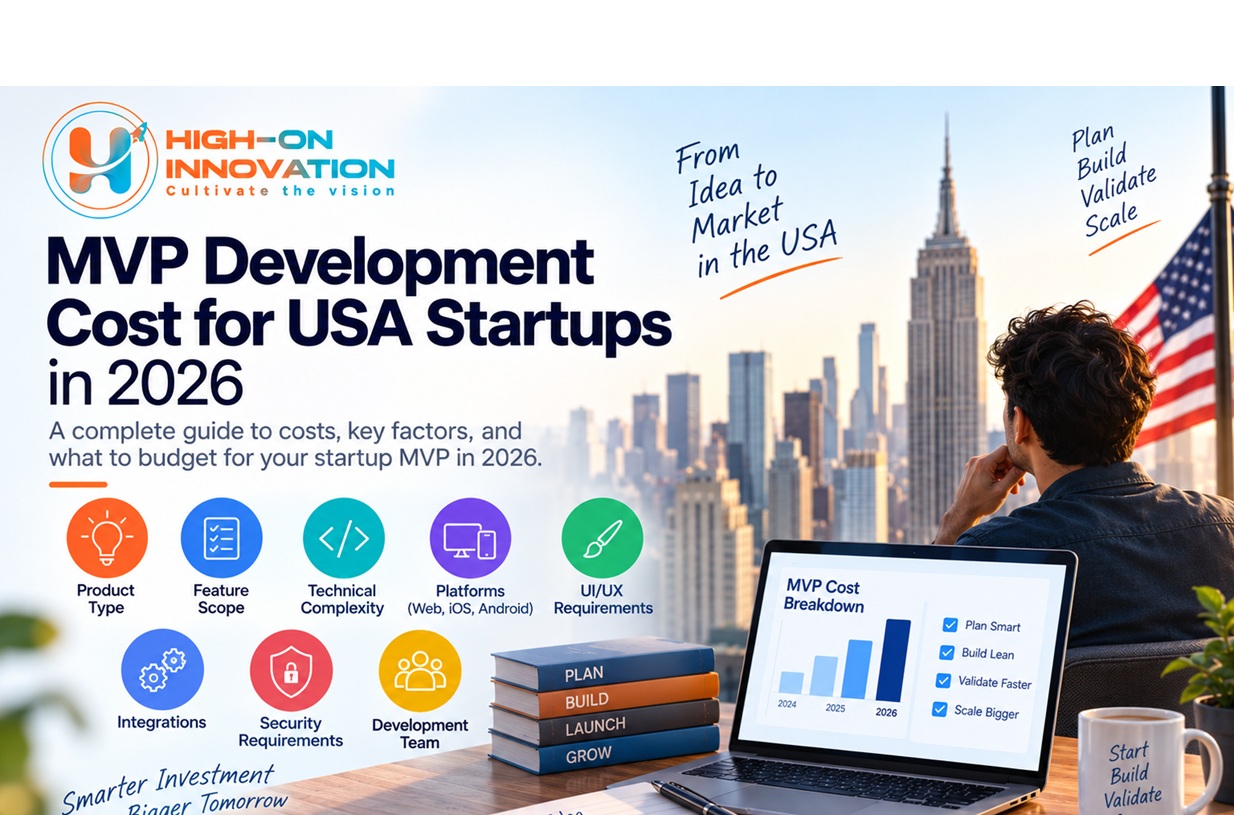
MVP Development Cost for USA Startups in 2026
An MVP, or Minimum Viable Product, gives founders a way to turn an idea into a usable product, launch it with real users, collect feedback, and understand whether the market actually wants the solution.