What Is Digital Transformation? A Beginner’s Guide for Businesses
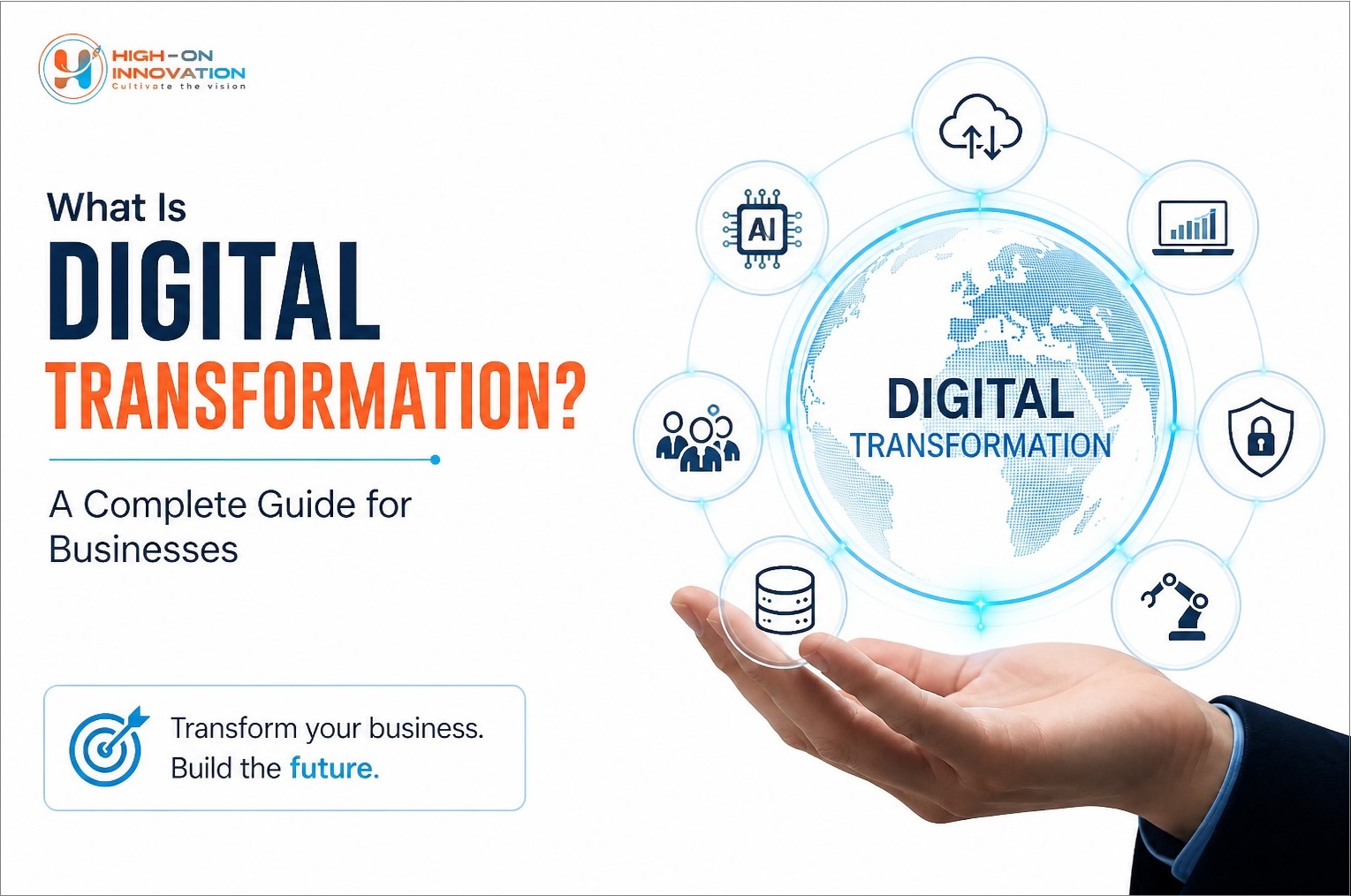
Key Takeaways
Digital transformation improves business efficiency, scalability, and customer experiences.
AI, automation, cloud computing, and analytics are major drivers of digital transformation.
Businesses can reduce costs and improve productivity through digital technologies.
Data-driven decision-making helps organizations respond faster to market changes.
Digital transformation supports long-term innovation and competitive growth.
Introduction
Businesses today are operating in a fast-changing digital environment where customer expectations, technology, and competition continue to evolve rapidly. Companies that rely only on traditional processes often struggle to scale, innovate, and deliver modern customer experiences.
This is where digital transformation becomes essential.
Digital transformation helps businesses modernize operations, improve efficiency, automate repetitive tasks, and create better experiences for customers using advanced digital technologies.
Whether you are a startup, growing business, or enterprise organization, understanding digital transformation is the first step toward building a future-ready business.
What Is Digital Transformation?
Digital transformation is the process of integrating digital technologies into different areas of a business to improve operations, customer experiences, decision-making, and overall business performance.
It is not only about adopting new software or tools. It involves changing how businesses operate, communicate, deliver services, and respond to customer needs in a digital-first world.
Digital transformation services can include:
Business automation
Cloud computing
Artificial intelligence (AI)
Data analytics
Mobile technologies
Customer experience platforms
Digital communication systems
The goal is to improve efficiency, scalability, innovation, and long-term business growth.
Why Is Digital Transformation Important?
Modern customers expect faster services, personalized experiences, seamless communication, and digital accessibility. Businesses that fail to adapt often fall behind competitors who embrace innovation and automation.
Digital transformation helps businesses:
Improve operational efficiency
Reduce manual work
Increase productivity
Enhance customer experiences
Support remote collaboration
Improve business scalability
Make data-driven decisions
Respond faster to market changes
Organizations that invest in digital transformation are more agile and competitive in today’s digital economy.
Key Technologies Driving Digital Transformation
Artificial Intelligence (AI)
AI helps businesses automate tasks, analyze customer behavior, improve decision-making, and create personalized experiences.
Examples include:
AI chatbots
Predictive analytics
Recommendation systems
Intelligent automation
Cloud Computing
Cloud technology allows businesses to store data, run applications, and collaborate online without relying on traditional infrastructure.
Benefits include:
Scalability
Remote accessibility
Lower infrastructure costs
Improved flexibility
Data Analytics
Businesses generate large amounts of data every day. Analytics tools help organizations understand trends, customer behavior, and operational performance.
Analytics improves:
Strategic planning
Sales forecasting
Customer targeting
Business intelligence
Automation
Automation streamlines repetitive business processes and improves productivity.
Businesses automate:
Customer support
Marketing workflows
HR operations
Billing systems
Inventory management
Internet of Things (IoT)
IoT devices collect and share real-time data that improves operational visibility and business efficiency.
Industries using IoT include:
Manufacturing
Healthcare
Logistics
Smart retail
Benefits of Digital Transformation
Improved Efficiency
Automation and digital workflows reduce manual work and operational delays.
Better Customer Experience
Businesses can deliver faster, personalized, and more convenient customer interactions.
Faster Decision-Making
Real-time data and analytics help organizations make smarter business decisions.
Increased Scalability
Digital systems make it easier for businesses to expand operations and manage growth.
Cost Reduction
Automation and cloud solutions reduce operational and infrastructure costs.
Enhanced Collaboration
Cloud-based tools improve communication between teams, departments, and remote employees.
Real Examples of Digital Transformation
Many businesses already use digital transformation to improve operations and customer experiences.
Retail
Online stores use AI-powered product recommendations and automated inventory systems.
Banking
Financial institutions offer mobile banking apps, digital payments, and AI fraud detection systems.
Healthcare
Hospitals use telemedicine platforms, digital records, and AI-assisted diagnostics.
Manufacturing
Factories implement IoT devices and automation for predictive maintenance and operational monitoring.
Education
Schools and institutions use virtual learning platforms and cloud-based collaboration tools.
Common Challenges in Digital Transformation
Although digital transformation offers major benefits, businesses may also face challenges during implementation.
Resistance to Change
Employees may struggle to adapt to new technologies and workflows.
Legacy Systems
Older systems can limit integration and scalability.
Cybersecurity Risks
Digital systems require stronger security measures and data protection strategies.
Budget Limitations
Some businesses may hesitate due to implementation costs.
Skill Gaps
Organizations may need digital training and technical expertise.
Proper planning and a clear strategy help businesses overcome these challenges successfully.
How Businesses Can Start Digital Transformation
Assess Current Operations
Identify outdated systems, inefficiencies, and business challenges.
Define Clear Goals
Set measurable objectives for growth, automation, customer experience, and productivity.
Prioritize Customer Experience
Focus on improving digital interactions and service delivery.
Choose Scalable Technologies
Adopt flexible digital solutions that support long-term growth.
Train Employees
Help teams adapt to new systems and technologies.
Measure Performance
Track KPIs and business outcomes regularly to improve strategies.
The Future of Digital Transformation
Digital transformation continues to evolve with technologies like:
Generative AI
Advanced automation
Machine learning
Blockchain
Intelligent analytics
Smart business ecosystems
Businesses that embrace digital innovation today will be better prepared for future market demands and customer expectations.
Companies investing in digital transformation are building stronger, more adaptable, and future-ready organizations.
Conclusion
Digital transformation is no longer optional for modern businesses. It has become essential for improving efficiency, enhancing customer experiences, driving innovation, and staying competitive in a rapidly evolving digital landscape.
From AI and automation to cloud computing and analytics, digital transformation helps organizations modernize operations and create sustainable long-term growth.
Businesses that begin their digital transformation journey today are positioning themselves for future success in an increasingly technology-driven world.
Frequently Asked Questions
What is digital transformation in simple words?
Digital transformation means using digital technologies to improve business operations, customer experiences, and overall efficiency.
Why is digital transformation important?
It helps businesses stay competitive, improve productivity, reduce costs, and deliver better customer experiences.
Is AI part of digital transformation?
Yes, AI is a major part of digital transformation that helps automate tasks and improve business intelligence.
What are examples of digital transformation?
Examples include mobile banking, AI chatbots, ecommerce platforms, cloud collaboration tools, and business automation systems.
Author Bio
Sandesh Gupta – CEO, High-On Innovation
Sandesh Gupta is the CEO of High-On Innovation, where he leads the company's strategic direction, operational excellence, and business innovation initiatives. With extensive experience in digital transformation, enterprise technology adoption, and business growth, he works closely with organizations to help them modernize operations, improve efficiency, and leverage emerging technologies for long-term success. His expertise spans digital transformation strategy, AI-driven business solutions, process optimization, and scalable technology ecosystems
Comments
Loading comments…
Latest Market Trends

Sep 9, 2026
MVP Development Cost for Australian Businesses in 2026
A simple customer portal, booking application, SaaS dashboard, marketplace, AI-powered platform, fintech product, healthcare application, or enterprise workflow system can all be described as an "MVP", but their development requirements can be dramatically different.

Sep 3, 2026
How to Choose an MVP Development Company for Your Startup
Choosing the right MVP development company can have a major impact on your startup's first product launch. The right development partner does more than write code. They help translate your business idea into a focused product, identify technical risks, prioritize features, and create an MVP that can be tested with real users.

Sep 8, 2026
MVP Development Cost for Canadian Businesses in 2026: Complete Guide to Pricing, Features and Process
Discover MVP development cost Canada in 2026, including startup MVP cost, development factors, timelines, features, technology, compliance, and how to choose the right MVP development company.
Popular Post
MVP Development Cost for Australian Businesses in 2026
A simple customer portal, booking application, SaaS dashboard, marketplace, AI-powered platform, fintech product, healthcare application, or enterprise workflow system can all be described as an "MVP", but their development requirements can be dramatically different.
How to Choose an MVP Development Company for Your Startup
Choosing the right MVP development company can have a major impact on your startup's first product launch. The right development partner does more than write code. They help translate your business idea into a focused product, identify technical risks, prioritize features, and create an MVP that can be tested with real users.
MVP Development Cost for Canadian Businesses in 2026: Complete Guide to Pricing, Features and Process
Discover MVP development cost Canada in 2026, including startup MVP cost, development factors, timelines, features, technology, compliance, and how to choose the right MVP development company.

MVP Development Cost for USA Startups in 2026
An MVP, or Minimum Viable Product, gives founders a way to turn an idea into a usable product, launch it with real users, collect feedback, and understand whether the market actually wants the solution.